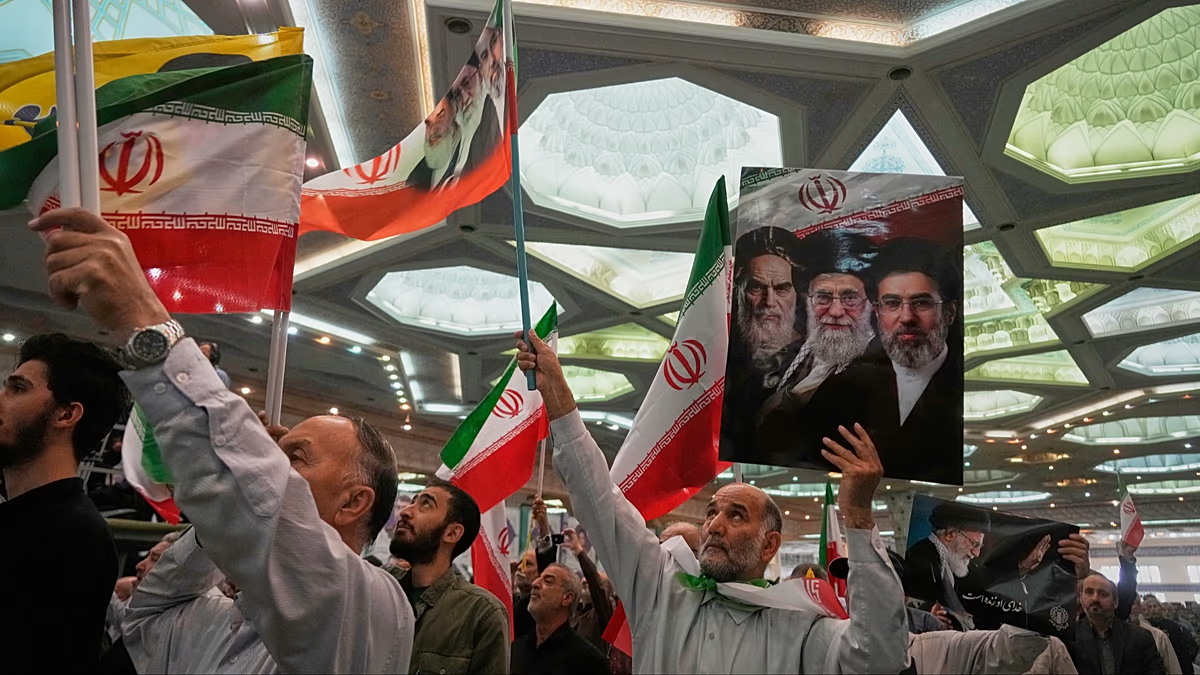


The ascension of Ayatollah Mojtaba Khamenei to Iran’s highest authority was, by necessity, a shrouded and somber affair, following the devastating strikes that killed his father. For nearly three months, his physical condition and the stability of the transition were subjects of intense international speculation, with reports of severe injuries and surgeries circulating widely. His first major public statement, delivered not as a speech but as a 14-page written message for Eid al-Adha, was therefore a moment of profound significance. In it, the 56-year-old leader immediately sought to define his era, not with overtures of reconciliation, but with a stark declaration of a new regional reality. He asserted that the era of regional nations serving as “shields” or staging grounds for American military power is irrevocably over. “The hands of time will not turn backwards,” he proclaimed, framing the United States as a waning force whose former dominance is being systematically eroded by the will of regional peoples. This was more than a rhetorical flourish; it was a foundational manifesto intended to cement his authority and signal unwavering continuity with his father’s legacy of confronting American influence.
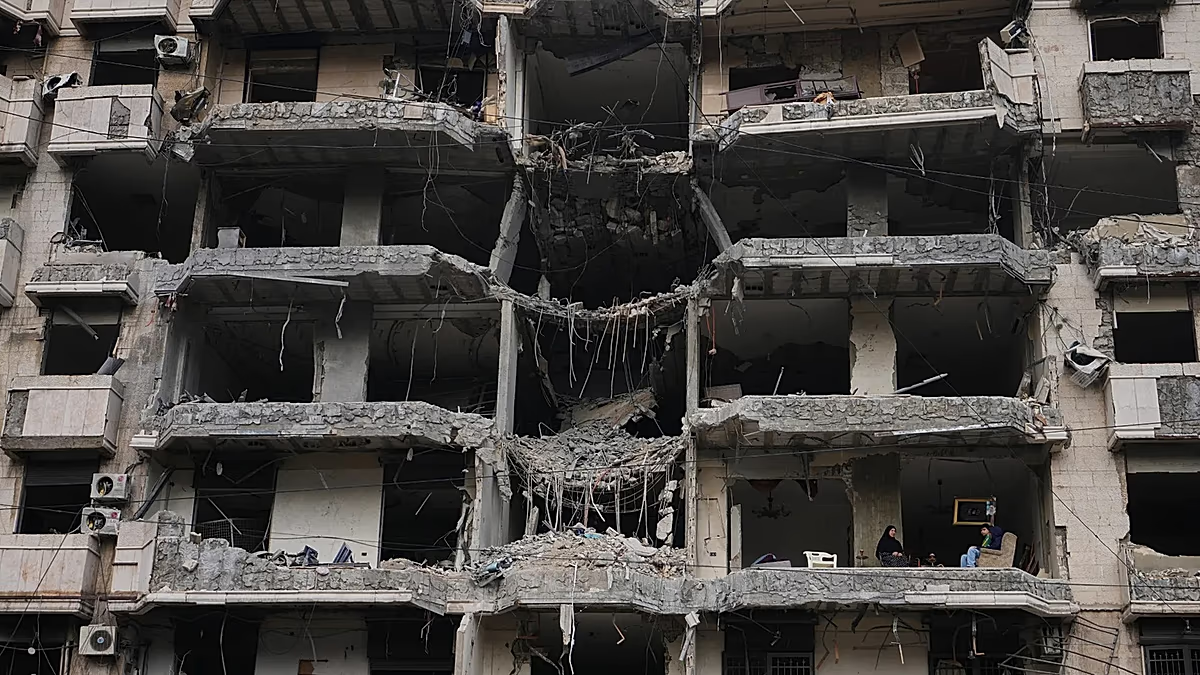
The timing of this manifesto was critically important, as it coincided with a sharp and dangerous military escalation. Overnight, U.S. Central Command had conducted strikes on missile sites and boats in southern Iran, near the strategic Strait of Hormuz, characterizing them as acts of “self-defence” within the boundaries of an existing ceasefire. Iran’s response was one of fury and contradiction. The foreign ministry condemned a “flagrant violation of the ceasefire,” while state media reported explosions in the port city of Bandar Abbas and, through domestic outlets, the deaths of four Islamic Revolutionary Guard Corps (IRGC) members. The IRGC itself claimed to have downed a U.S. drone in the midst of the confrontation. This volatile exchange, dancing on the razor’s edge of a wider conflict, served as the violent backdrop to Khamenei’s words. His message, praising the regional “Resistance Front” and glorifying Hamas’s October 7th attack as a divine storm that brought Israel’s “breath to its final count,” was clearly intended to be read alongside the news of fresh strikes. It wove the immediate clash into a larger narrative of an existential, generation-defining struggle.
The tensions were not confined to land. In the vulnerable waters of the Gulf of Oman, the UK Maritime Trade Operations centre reported an external explosion striking a commercial tanker near Muscat, causing a fuel leak. While no party immediately claimed responsibility, such incidents have become a perilous feature of the shadow war in Middle Eastern waterways, threatening global energy routes and creating constant deniable hazards. This maritime attack, occurring in the same 48-hour period, underscored how quickly and dangerously confrontations can proliferate across domains. Each side, while perhaps seeking to avoid a full-scale war, engages in high-stakes probes and retaliations, testing red lines and demonstrating resolve. The IRGC’s naval forces and its network of allied militias possess significant asymmetric capabilities to harass shipping, making the seas a persistent flashpoint where a miscalculation could ignite a broader conflagration.
Amidst this drumbeat of violence, a parallel and seemingly contradictory diplomatic thread persisted. Iranian negotiators, led by Parliament Speaker Mohammad Bagher Ghalibaf, were in Doha engaging with Qatari counterparts on a potential peace framework. The foreign ministry even acknowledged that “understandings on many issues” had been reached with Washington, though it tempered expectations by adding that a final agreement was not imminent. This duality—fighting and talking simultaneously—is a core feature of Iranian strategic doctrine. The military actions and Khamenei’s fiery rhetoric serve to bolster Iran’s bargaining position, projecting strength and reminding adversaries of the costly alternative to diplomacy. The quick recall of Ghalibaf to Tehran following the US strikes, however, illustrated how fragile these diplomatic channels are, perpetually vulnerable to being severed or paused by the next hostile act. It creates a dizzying cycle where progress at the negotiation table can be undone by actions in the desert or on the high seas.
The statements from Iran’s power centers following Khamenei’s message reinforced this uncompromising vision. Nasser Arasteh, deputy head of the ayatollah’s military advisory body, echoed and amplified the leader’s theme, stating bluntly that the United States “will have no place in the Persian Gulf” in the future, a reality to be achieved “either with war or without war.” This framing presents the American departure not as a subject for negotiation, but as an inevitable historical outcome. It suggests that Iran’s strategy is to steadily raise the costs of the U.S. military presence through persistent pressure, support for allied groups, and direct defensive actions, hoping to ultimately compel a withdrawal. The goal is not merely to win concessions within the existing system, but to fundamentally alter the regional security architecture by ejecting its primary external guarantor. Khamenei’s entire message is a bid to position himself as the leader who will see this generational mission through.
In conclusion, the debut of Ayatollah Mojtaba Khamenei on the world stage paints a picture of a region at a precarious and violent inflection point. His first major statement was a deliberate, forceful articulation of a world view that sees America in retreat and a new regional order emerging under Iranian-led resistance. This vision, however, is being contested in real-time by missile strikes, drone downings, and tanker attacks, even as tentative diplomatic talks flicker uncertainly in the background. The new leader appears committed to a path of defiant continuity, leveraging both military leverage and ideological certainty. The coming period will test whether this strategy can force the geopolitical shift he envisions, or whether it will instead lock Iran and its adversaries into a prolonged and increasingly direct conflict, with the people of the region and the stability of global oil markets caught in the middle. The message is clear: the shadow war has a new, committed architect, and the stakes could not be higher.