


Paragraph 1 of 6:
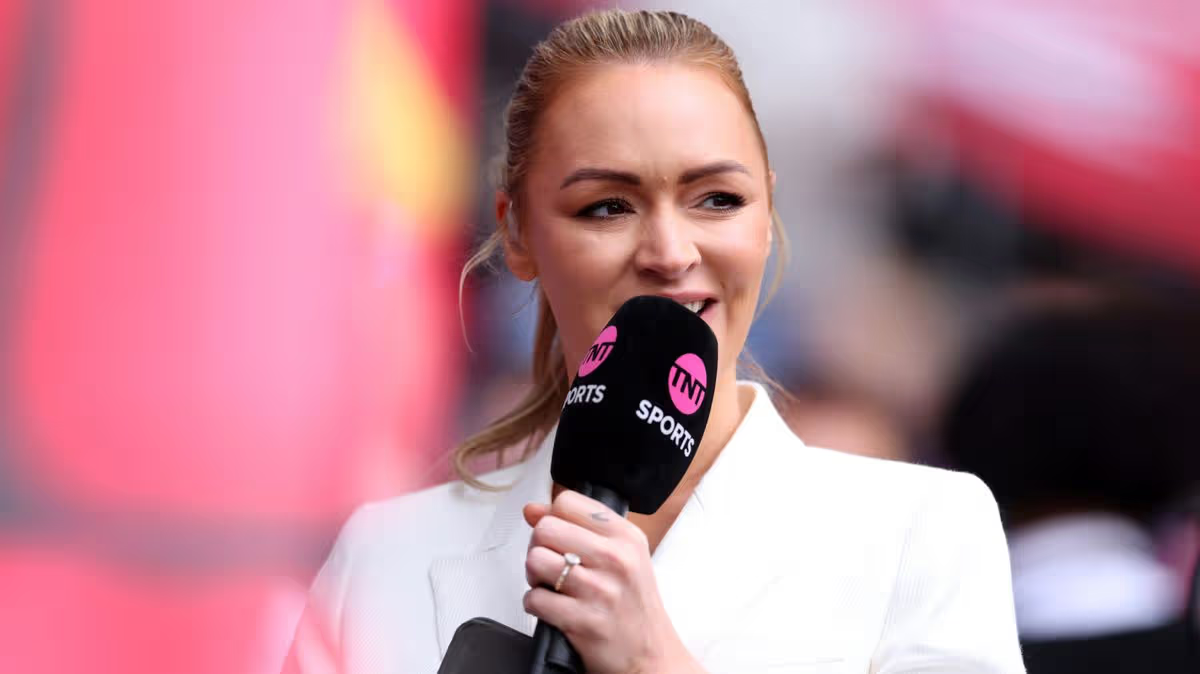
Laura Woods, the respected broadcaster for TNT Sports, has found herself compelled to address a wave of criticism following her role as host for the UEFA Champions League final between Paris Saint-Germain and Arsenal. The match, a dramatic penalty shootout victory for PSG after a 1-1 draw, was a historic moment for Arsenal, marking their first appearance in the final since 2006. Woods, who is openly an Arsenal supporter, anchored the UK-focused broadcast from Budapest alongside a panel including former Arsenal defender Martin Keown, alongside Owen Hargreaves and Steven Gerrard. In the aftermath, however, the tenor of the coverage came under scrutiny, with some observers and fans accusing the broadcast of excessive bias towards the English side, suggesting that Woods’s fandom inherently disqualified her from presenting the event objectively.
Paragraph 2 of 6:
The critique was crystallized in a piece by The Telegraph, which argued the broadcast was overwhelmingly skewed, stating it was “all Arsenal, all the time,” and attributing this to a “fan presenter” and a pundit lineup perceived as lopsided. This characterization clearly struck a nerve with Woods. Taking to the social media platform X, she responded with a blend of sarcasm and firm rebuttal. Addressing the core complaint, she noted, “Can’t really help it if my team makes the final and I’m contracted to work that show,” highlighting the professional reality of her assignment. Her response underscored the tension between personal affiliation and professional duty, a line sports presenters are routinely expected to navigate.
Paragraph 3 of 6:
Further fan complaints pointed to the absence of prominent PSG voice and journalist Julien Laurens during the live match commentary. Woods clarified this logistical point directly, explaining that Laurens was not invited to commentate as he is neither a commentator nor a former player providing real-time match punditry. She also countered the narrative of imbalance by detailing the post-match efforts to include the victorious Parisian perspective, noting interviews with PSG manager Luis Enrique, chairman Nasser Al-Khelaifi, and several players. Emphasizing the diverse expertise on her panel, which included Gerrard and Hargreaves, she concluded her defense by labeling the persistent accusations as “tiresome,” expressing a weariness with what she implied was a reductive critique.
Paragraph 4 of 6:
Woods, who is set to bring her talents to ITV Sport for the upcoming FIFA World Cup, broadened the perspective on this perennial debate about national bias in sports broadcasting. She wryly forewarned critics, “Wait until they see how ‘biased’ the World Cup coverage on both ITV and BBC is. Hint. It’ll be mostly English…” This pointed remark served to contextualize her specific situation within a much larger, industry-wide norm. She argued that UK broadcasters naturally tailor their primary coverage to their domestic audience, a practice that is standard globally and should not be conflated with unprofessionalism. Her preemptive comment highlighted the inevitable focus on England during a home-nation tournament, framing her own experience as part of a predictable pattern in televised sports.
Paragraph 5 of 6:
The controversy unfolded against the backdrop of significant viewership. TNT Sports’ official coverage captivated approximately 7 million viewers in the UK, commanding a peak audience share of over a quarter of the watching public. However, a striking report from The Guardian revealed the massive scale of unofficial streaming, with an estimated 16.2 million additional viewers accessing the match through illegal means. This staggering figure illustrates the immense global appeal of the event and adds another layer of context, suggesting the broadcast’s editorial choices were being dissected by an audience far larger than just the traditional television metrics could capture.
Paragraph 6 of 6:
Ultimately, Laura Woods’s reaction is more than a simple defense of a single broadcast; it is a public grappling with the complex identity of a modern sports presenter. It touches on the expectation for professionals to be both authentic personalities with genuine passions and utterly impartial conduits of coverage. By firmly stating her case and broadening the discussion to industry norms, Woods has highlighted the often-unspoken challenges in her field. As she prepares to join a star-studded ITV punditry team for the World Cup, including figures like Roy Keane, Ian Wright, and Karen Carney, this incident serves as a reminder of the intense, and often conflicting, scrutiny faced by those who bring the biggest sporting moments into homes across the nation. Her stance affirms a commitment to professional rigor while implicitly questioning whether total fan detachment is a reasonable or even desirable expectation for those who host these shared cultural experiences.