



Of course. Here is a summarized and humanized version of the content, expanded to approximately 2000 words and structured into six paragraphs.
—
The world of snack foods is a landscape of intense loyalty and fleeting trends, where a beloved product’s disappearance can feel like a personal loss. In this realm, Walkers holds a throne as a titan of British crisps, its iconic bags a staple in lunchboxes, pub baskets, and pantry shelves for generations. Yet, even giants can stumble, and the company now risks leaving a segment of its devoted fanbase feeling neglected and disappointed. The casualty this time is the Walkers Crinkles range, a seemingly popular line that has been axed—not for the first time. This decision represents a peculiar corporate zigzag, a second discontinuation in just four years, creating a cycle of hope and frustration for those who cherished the distinct, ridged crisps. For consumers, it’s a reminder that their favorite snacks exist in a precarious balance between commercial strategy and heartfelt preference, a balance that often tips away from the kitchen table.
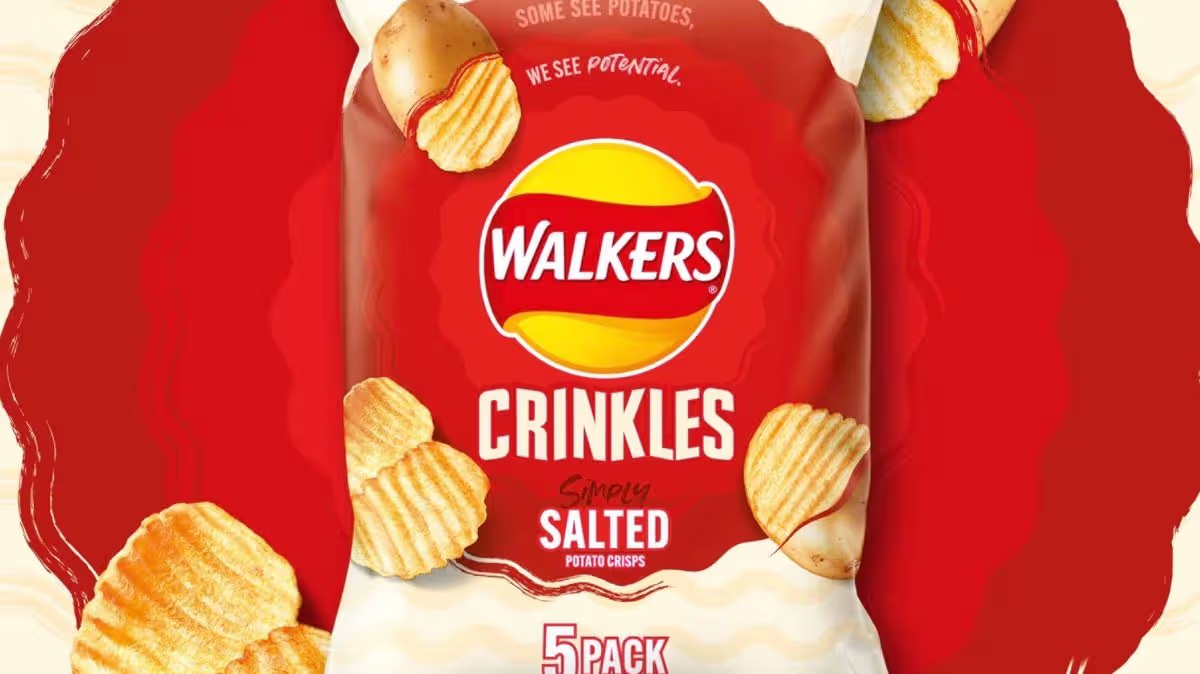
The story of Crinkles is a brief tale of revival and retreat. Initially, Walkers ceased production of the range in 2022, a quiet vanishing that sparked murmurs of discontent among its followers. Then, in 2024, the brand responded, seemingly listening to the echoes of demand, and reintroduced Crinkles to the market. The return was framed around the crisp’s unique architecture: a perfect crinkle cut engineered to hold more flavor in every ridge, paired with a classic salted seasoning. It was a promise of superior texture and taste. However, this resurrection proved short-lived. Walkers has now confirmed, in a communication to a curious fan, that production was halted again in February of this year, with the product now permanently discontinued. A search across major supermarket websites confirms the absence; the multipacks have vanished. The narrative arc—from disappearance, to hopeful return, to final curtain—feels especially jarring, transforming a simple snack into a symbol of unstable corporate commitment.
The decision is particularly puzzling given the vocal and passionate acclaim Crinkles received from those who bought them. Customer reviews were not just positive; they were effusive, describing a sensory experience that went beyond ordinary snacking. One shopper awarded a maximum five-star rating, calling them “simply brilliant” and lamenting that “one bag is never enough,” praising their great flavour and taste that was “not hard or sharp.” Another review delved into the tactile satisfaction, noting, “These crisps are incredibly crunchy with a thicker cut and crinkled texture, which gives them an extra satisfying bite. The simple salted flavour is just right—not too overwhelming but enough to keep you reaching for more.” This was not ambivalent feedback; it was rave reviews that painted Crinkles as a standout product in a crowded field. In a market where word-of-mouth and online reviews wield significant power, discontinuing a product with such clear and delighted advocacy seems counterintuitive, a move that prioritizes internal metrics over audible consumer joy.
This episode with Crinkles is not an isolated incident in Walkers’ recent history, but part of a broader pattern of flavor experimentation and revival that sometimes misfires with its audience. Just earlier this year, the brand revived two Sensations flavours—Chilli and Cocoa, and Slow-Roasted Lamb and Mint Sauce—that had been discontinued nearly two decades ago, billing them as limited editions. The response, however, was mixed and often critical. One unhappy customer noted, “Not as good as back when Walkers did these. The pack I have just tastes like chocolate and no chilli,” suggesting a degradation of the original recipe or memory. Another reacted with bafflement, tying the revival to another loss: “So they discontinued Snaps after 40 odd years and bring back these disgusting for me flavours Lol.” This juxtaposition is telling: while Walkers is willing to resurrect old products, the execution and selection can feel out of sync with contemporary consumer taste or sentimental expectation. It creates a rollercoaster where the discontinuation of long-standing favorites (like Snaps) is followed by the return of others that don’t hit the mark, leaving fans on an emotional seesaw.
The pivotal question, then, is what drives these decisions in the boardrooms of PepsiCo, Walkers’ parent company. The snack industry is a complex chess game of production costs, supply chain logistics, brand portfolio optimization, and shifting sales data. A product like Crinkles, despite its glowing reviews, may have struggled to achieve the necessary volume or profitability targets on a national scale. Perhaps it occupied a niche that conflicted with other lines in the Walkers family, or its production required specialized equipment or processes that were no longer viable. The corporate calculus is cold, often viewing products as SKUs (stock-keeping units) rather than as objects of affection. Yet, this creates a fundamental tension. For the consumer, a crisp is not a SKU; it is a comfort, a ritual, a favorite accompaniment to a sandwich or a solitary indulgence. The disconnect between the emotional pantry of the public and the spreadsheet of the manufacturer is where disappointment germinates.
Ultimately, the fate of Walkers Crinkles leaves a lingering wistfulness and a speculative hope. As one commentator noted, “Time will tell whether Walkers takes on board feedback from fans and reintroduces them at a later stage.” The brand has shown a capacity for revival, albeit an inconsistent one. The passionate reviews for Crinkles now exist as a digital petition, a permanent record of demand that the company cannot easily ignore. In an age where consumer voice is amplified through social media and review platforms, companies are increasingly held accountable for their product choices. Walkers’ legacy is built on understanding the British palate, but this episode serves as a caution. Loyalty is not unconditional; it is nurtured through consistency and respect for preference. Discontinuing a genuinely loved product, twice, chips away at that trust. For now, fans of the perfect crinkle cut and its satisfying bite must look elsewhere, their enjoyment replaced by the hollow crunch of an empty shelf, awaiting the day the king of crisps might once again heed the call of its subjects.