



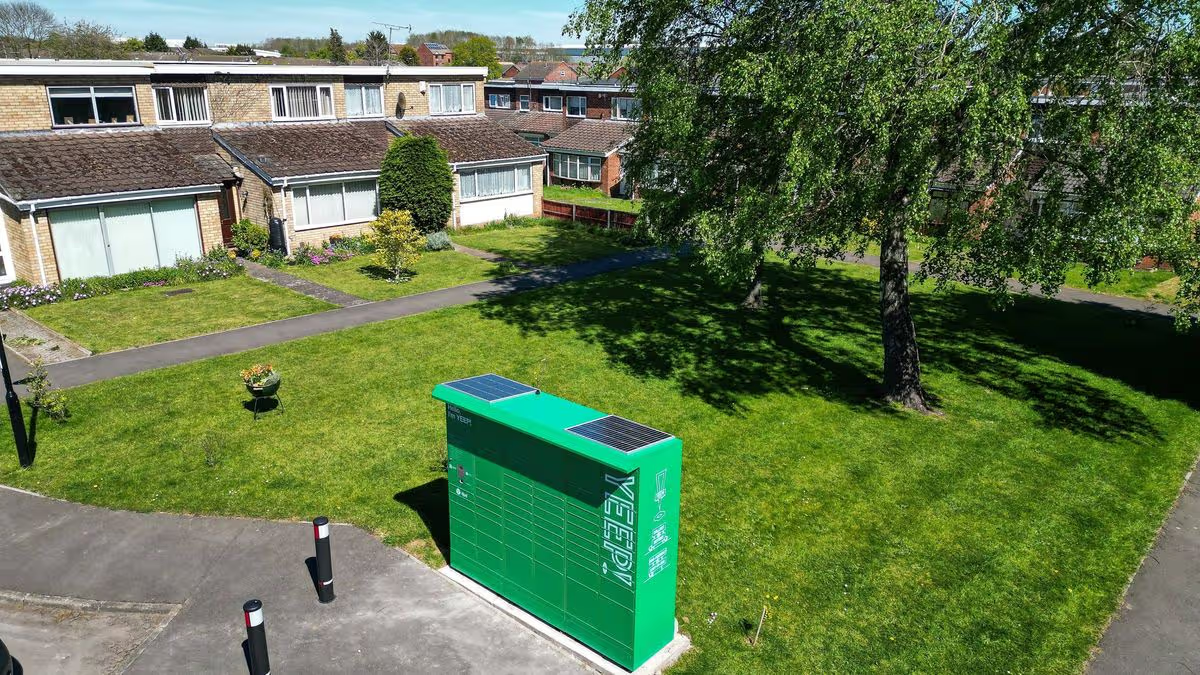
In a quiet residential cul-de-sac in Coventry, a sudden and jarring addition has sparked confusion and anger among homeowners, transforming a well-kept neighborhood into a scene of frustration. Residents of Arne Road in Walsgrave were baffled when an enormous, bright green parcel locker appeared without warning on their peaceful street in early April. Described as being unceremoniously “plonked” in place, the 8-foot-tall structure belongs to the delivery company Yeep! and is designed to be both solar-powered and battery-operated. However, its location—half a mile from the nearest shop, in the heart of a residential area with only homes around—has left everyone questioning its purpose. To make matters worse, locals claim the locker has not been used a single time since its installation, standing as an unused “eyesore” just yards from their living room windows.
The sense of betrayal among residents is palpable, fueled by what they describe as deliberate deception regarding the locker’s installation. Homeowners like John and Suzanna Davies explain that they were initially told a concrete base was being laid for a new salt box—a community resource they welcomed, especially during icy winters. Instead, they awoke to find the garish green locker occupying that very spot. John, 77, expressed the collective dismay, stating, “He’s completely pulled the wool over our eyes so he could drop it in there without us knowing.” The locker now sits on a small parcel of lawn that residents themselves maintain with pride, in an area where gardens are kept “prim and proper.” This breach of trust has united the neighborhood in opposition, as they grapple with the structure’s impracticality and the underhanded way it appeared.
Beyond the feeling of deception, the locker presents daily practical and aesthetic problems for those living nearby. Suzanna Davies, 57, returned from holiday to find the locker “plonked in the middle” of their cherished environment. The community takes collective pride in maintaining the green spaces, with residents tending flowers and sharing lawn-mowing duties—a task now complicated by the obstructive box. Moreover, the street is designated for resident parking only, leading to fears that delivery traffic could increase congestion and safety risks. For families, the thought of unfamiliar vehicles frequently entering their quiet cul-de-sac is unsettling, disrupting the safety and tranquility they have long valued.
Safety concerns, particularly for children, weigh heavily on residents’ minds. Lynda Congrave, 79, who has lived on Arne Road for four decades, now finds the locker directly outside her living room window, blocking her view of the street and her neighbors. She voices a fear shared by many: “I’m all concerned about the young children who play around here.” With the potential for delivery drivers to speed in and out, parents worry that kids playing nearby could be at risk of accidents. The locker’s placement seems not only inconvenient but dangerously ill-conceived for a family-oriented neighborhood where children often play freely. These practical hazards amplify the residents’ conviction that the locker serves no logical purpose in their isolated residential spot.
In response to the outcry, Coventry City Council has launched an investigation to determine whether the locker was erected without proper planning permission. A council spokesman confirmed that officers are looking into the matter and have contacted both the landowner and Yeep! While the investigation proceeds, the locker remains—a symbol of poor planning and community oversight. Residents are left in limbo, hopeful for its removal but frustrated by the slow process. They argue that even if authorization were granted, the location defies common sense, noting that a bingo hall half a mile away already hosts lockers near supermarkets, making this isolated installation redundant.
The situation on Arne Road highlights a broader tension between modern convenience and community integrity. While parcel lockers represent a growing trend in contactless delivery, their placement must consider existing neighborhoods’ character and needs. For the residents here, the unused green box is more than an eyesore; it is a violation of their trust, a threat to their safety, and a poor substitute for the salt box they were promised. As the council investigation continues, the community’s resolve stands firm—a testament to their commitment to preserving the quiet, caring environment they call home. Their experience serves as a cautionary tale about the importance of transparency and thoughtful planning in the integration of new services into residential life.