



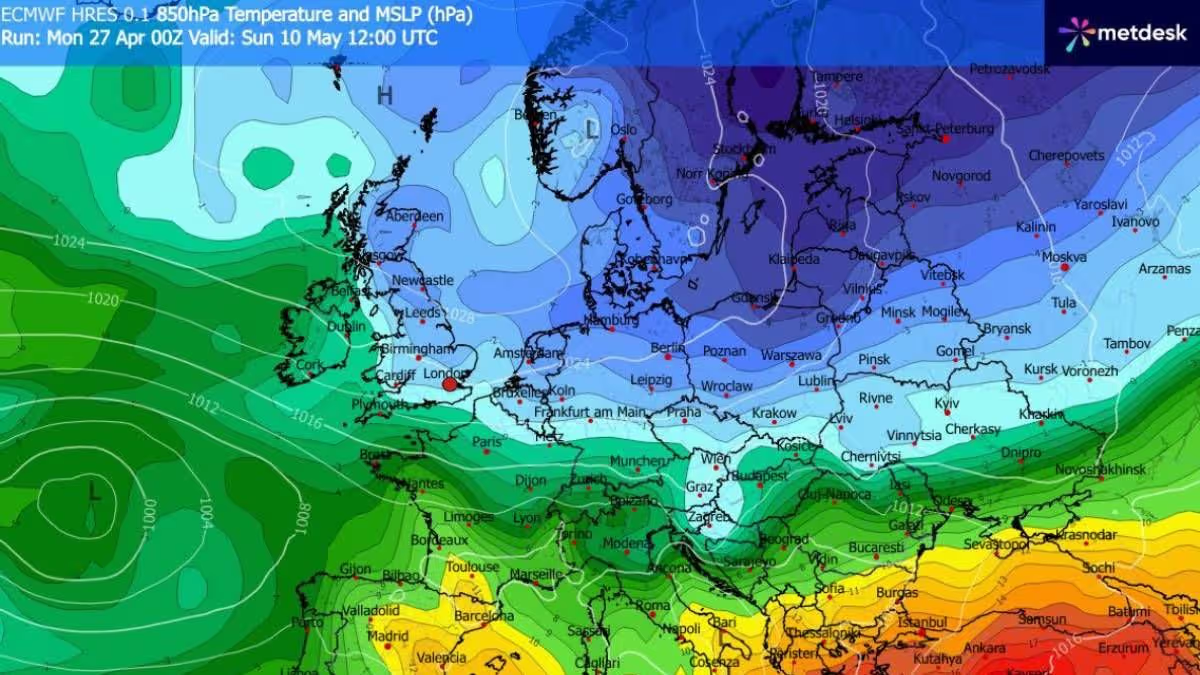
A surprising icy turn is on the horizon for UK weather, with the latest meteorological charts painting a stark picture of an impending Arctic chill. After a spell of relative warmth, forecast maps from services like WXCharts are awash with ominous shades of icy blue, signalling a cold blast poised to sweep across the nation as we move into early May. This unseasonal plunge threatens to deliver freezing, sub-zero temperatures, particularly targeting Scotland’s northernmost regions. Cities such as Aberdeen and Dundee are anticipated to bear the brunt of this snap, with projected lows sinking to a bitter -3°C in the early hours of Thursday, 9th May. This abrupt transition serves as a potent reminder of British weather’s enduring volatility, even as the calendar suggests a steady march towards summer.
The frigid grip of this incoming system is forecast to extend far beyond the Scottish Highlands, casting a widespread chill across the entirety of the UK. On that same morning of the 9th, the cold is expected to penetrate deep into England, with southern areas struggling to rise above freezing and the north-west, including regions around Manchester, seeing temperatures languish between a mere 2°C and 4°C. This extensive blanket of cold air will make for a notably crisp and frosty start for millions. The shift begins earlier, however, as from Tuesday the 28th of April, a thick canopy of cloud is predicted to cover almost the entire country, heralding the end of the recent warmer interlude and setting the stage for the significant temperature drops to follow.
In response to these detailed model projections, the Met Office’s broader outlook for the period covering the 9th and 10th of May characterises conditions as “changeable.” This official forecast anticipates low pressure systems dominating, which would increase the likelihood of showers, longer spells of rain, and periods of strong wind. Yet, it also cautiously notes the potential for dry interludes with warm sunshine, alongside the risk of brief morning fog patches. This narrative of variability underscores the complex battle between different air masses during this period, where the promised Arctic incursion will contend with more typical spring weather, leading to an unpredictable and potentially discontinuous cold spell.
A tally of fourteen major cities finds themselves specifically in the path of this anticipated chill. In Scotland, the list includes Aberdeen, Dundee, Glasgow, and Edinburgh. Across England, the cold is forecast to affect a string of urban centres from Newcastle and Blackpool in the north, through Manchester, Stoke-on-Trent, and Birmingham in the Midlands, to Ipswich and Norwich in the east, and Bristol in the south-west. In Wales, Cardiff is also highlighted for notably low temperatures. This widespread geographical spread illustrates that few areas will be left entirely untouched by the descending cold, making it a nationally significant weather event rather than a localised phenomenon.
The immediacy of the change is brought into sharp focus by the temperature drops expected even before the peak of the cold snap. By next Tuesday, cities are poised to feel a distinct nip in the air. Manchester and London are looking at highs of just 9°C, with Cardiff at 10°C and Plymouth at 11°C. Further north, Aberdeen is forecast for a cool 8°C and Glasgow 10°C, while Belfast in Northern Ireland can also expect 10°C. These figures represent a stark cooldown from recent conditions and act as a prelude to the more severe frosts potentially arriving the following week.
Ultimately, this forecast pattern presents a classic springtime dilemma for Britons: the juxtaposition of increasing daylight and the lingering potential for winter’s bite. While the Met Office’s emphasis on changeability suggests the cold may not be unrelentingly persistent, the risk of frosts, particularly in northern and sheltered areas, is a significant consideration for gardeners, farmers, and anyone venturing out early. It is a timely cue to keep the warmer layers accessible and to remain apprised of local forecasts, as the UK’s weather demonstrates its perennial capacity for surprise, challenging our expectations of seasonal norms with a vivid splash of Arctic blue on the map.