




Of course. Here is a humanized and expanded summary of the article, structured into six paragraphs.
Pancreatic cancer remains one of the most challenging and feared diagnoses, in large part because of its stealthy nature. Each year in the UK, around 10,500 individuals receive this life-altering news. The disease is becoming an increasing concern, with incidence rates having risen by approximately 8% over the last ten years—a trend that shows no sign of slowing. Experts project it will soon rank among the nation’s leading cancer killers. This ominous rise is compounded by a critical problem: pancreatic cancer is notoriously difficult to catch in its initial, more treatable stages. The symptoms are often vague, easily dismissed as everyday ailments, leading many to only discover the illness once it has progressed, severely limiting treatment options and hope.
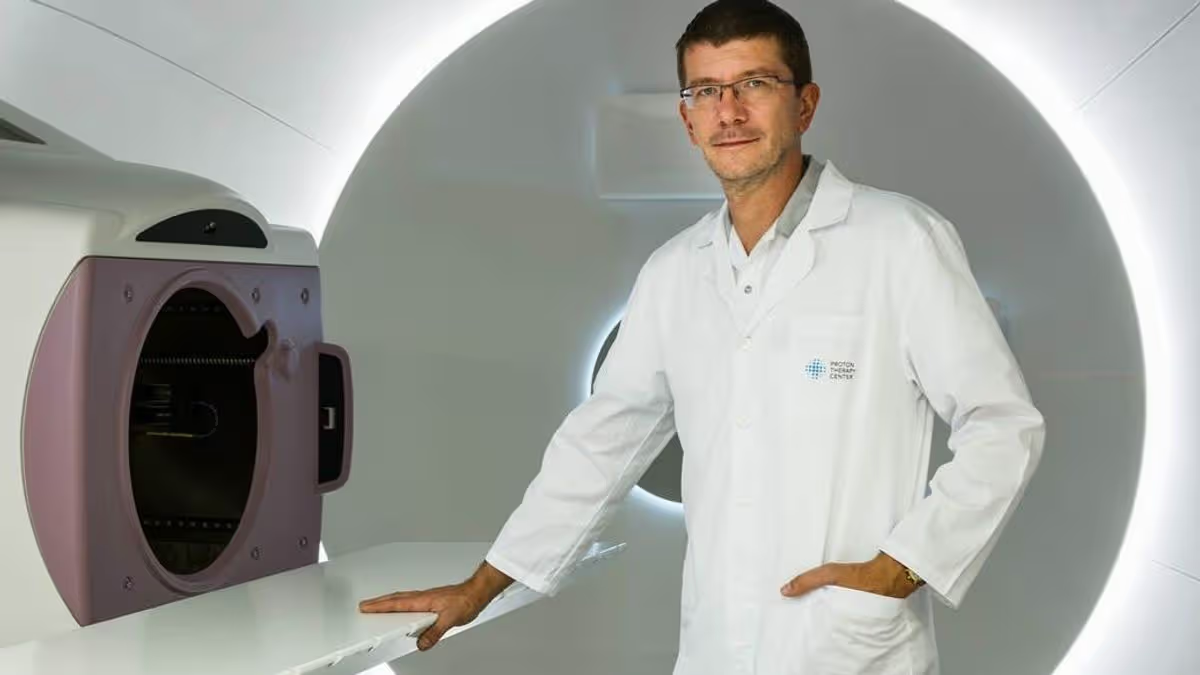
One of the most commonly overlooked, yet significant, early warning signs is a specific type of back pain. As explained by Dr. Jiri Kubes, Medical Director at the Proton Therapy Center, the pancreas is located deep within the abdomen, nestled close to the spine. Because of this anatomy, pain originating from the pancreas can radiate to the back, making it easy to mistake for a muscular strain, a result of poor posture, or general wear and tear. This isn’t typically a sharp, acute pain that follows a specific movement. Instead, Dr. Kubes describes it as a dull, persistent ache in the upper abdomen or mid-back—a discomfort that lingers stubbornly and isn’t relieved by normal remedies like rest or over-the-counter pain relievers.
The particular insidiousness of this symptom lies in its non-specific quality. Most back pain, thankfully, is not cancer. We all experience it from time to time. However, the red flag waves when the pain is unexplained, constant, and detached from physical activity. It’s the kind of background ache that becomes a new, unwelcome normal, often worsening when lying down or after eating. This subtlety is what allows it to blend into the backdrop of a busy life, leading individuals to rationalize it away until other, more alarming symptoms begin to cluster.
This leads to the broader challenge of pancreatic cancer: its signs are rarely solitary and often develop as a gradual, confusing constellation. Alongside that persistent backache, a person might notice unexplained weight loss—not from dieting, but a sudden drop in appetite or a feeling of fullness after eating very little. Profound fatigue that sleep doesn’t cure, digestive changes like new indigestion or nausea, and darkening urine can also appear. In some cases, jaundice—a yellowing of the skin and the whites of the eyes—becomes the first noticeable sign. The tragedy is that individually, each symptom can be attributed to countless less serious conditions, from stress and mild infections to gallbladder issues. This ambiguity often causes dangerous delays, as people wait, hoping the bothersome signals will simply fade on their own.
Given this reality, the crucial question becomes: when should someone actually seek medical advice? The key message from experts like Dr. Kubes is one of proactive awareness rather than panic. If you experience ongoing back or abdominal pain that has no clear cause, does not improve with time, and is particularly persistent, it warrants a professional evaluation. This is especially true if this pain is accompanied by any of those other systemic signs—unexplained weight loss, jaundice, or a significant shift in appetite or digestion. The mantra is simple: it is always better to rule out something serious through early assessment than to dismiss potential warnings until it is too late.
In the face of rising rates, awareness is our most powerful tool. Dr. Kubes emphasizes that recognizing these potential early warnings and acting upon them swiftly can make a profound difference in outcomes. While the statistics are daunting, they underscore the importance of listening to our bodies and advocating for ourselves within the healthcare system. Pancreatic cancer’s stealth makes it formidable, but by understanding its vague language—particularly that specific, lingering backache—we empower ourselves and our loved ones to seek answers at the earliest possible moment, where hope and options are greatest.