



Paragraph 1: A Sudden Act of Violence on a Scottish Morning
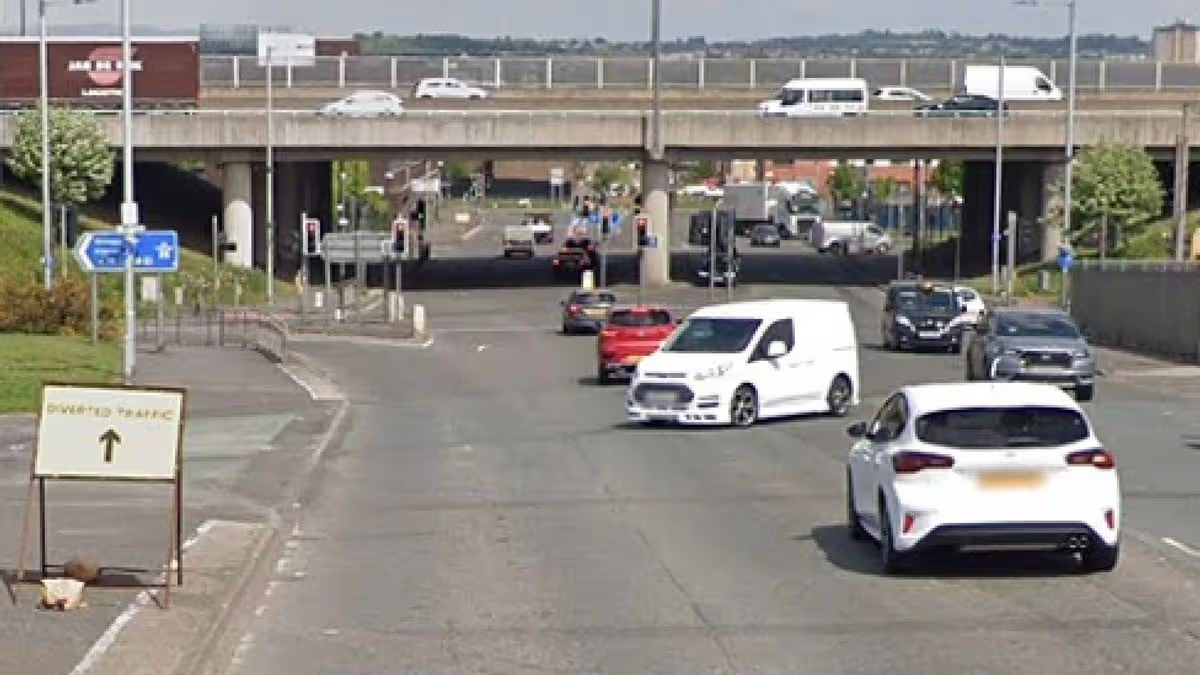
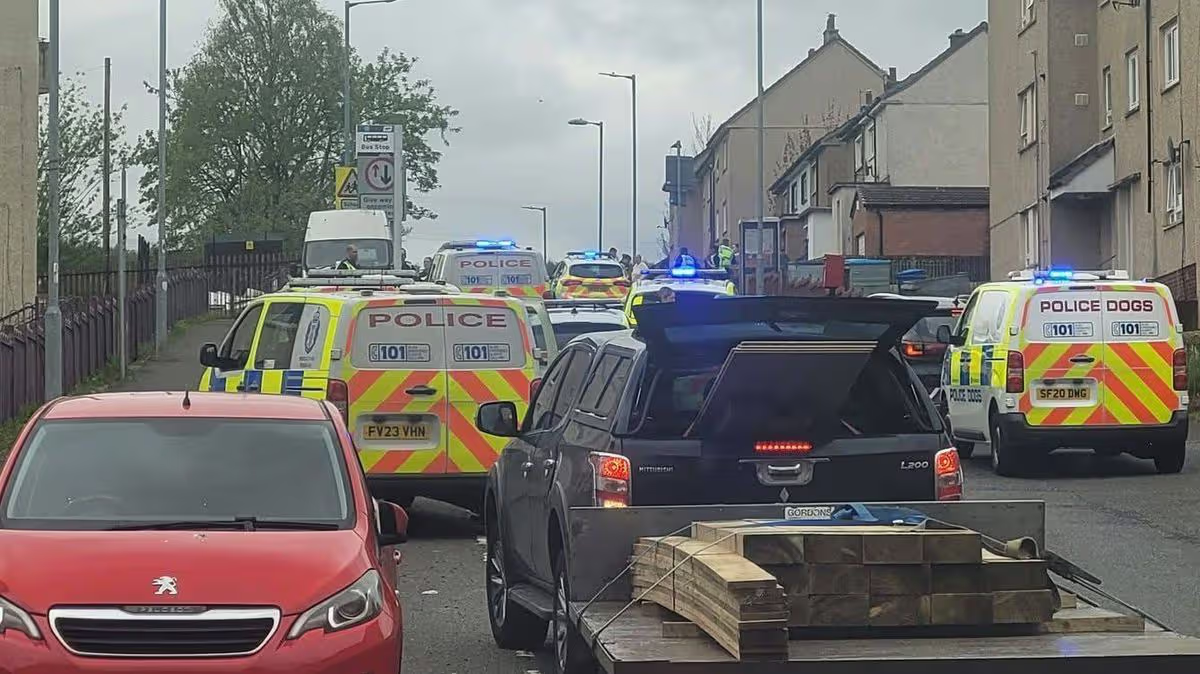
In a quiet corner of Hamilton, Scotland, the morning of Tuesday, April 28th was shattered by an act of reckless defiance. Shortly after 9:30 a.m., on the unassuming stretch of Fleming Way, what should have been a routine police interaction escalated into a chaotic and dangerous sequence of events. Officers had approached a vehicle, a mundane beginning to a day that would soon spiral into trauma. Without warning, the driver chose not to comply but to flee, transforming the car from a simple mode of transport into a weapon. In that first, violent moment of departure, the vehicle struck one of the attending police officers—a person simply doing their job—inflicting the first injuries of an incident that would send shockwaves through the local community.
Paragraph 2: The Chain Reaction of Chaos and Collateral Damage
The driver’s desperate attempt to escape did not end there. Having injured the first officer, the car sped away only to meet a brutal and abrupt halt a short distance away. It smashed into a stationary vehicle, an innocent bystander in metal and glass. This secondary collision was not a clean getaway but a devastating crash, and its force created further victims. From this wreckage, a second police officer and a 22-year-old male passenger who had been in the fleeing car were injured. In mere moments, three lives were violently altered: two public servants struck in the line of duty and a young man caught up in the driver’s catastrophic decisions.
Paragraph 3: The Aftermath: Scramble for Care and a Community Disrupted
The immediate priority, after the screech of tires and the crush of metal, was the preservation of life. Emergency services, likely already on their way, converged on Fleming Way. All three injured individuals—the two officers and the young passenger—were rushed to the hospital for urgent medical attention. In a small mercy amidst the turmoil, authorities have confirmed that none of the injuries are believed to be life-threatening. This detail offers a fragile thread of comfort to the families and colleagues involved, though it does little to diminish the pain, fear, and physical recovery they now face. Meanwhile, the scene itself became a locus of disruption, with the road forced to close, severing a vein of the town’s daily flow as the real-world consequences of the crash began to settle.
Paragraph 4: The Hunt and the Arrest of a Young Driver
While medics tended to the wounded, the focus of the investigation turned to finding the driver, who had fled the crash scene on foot. The search was a tense and urgent effort to ensure accountability and public safety. This effort proved successful, as police later traced and apprehended an 18-year-old man in connection with the entire alarming episode. Notably, this young driver was also taken to the hospital as a precautionary measure, a complex detail that underscores how a single impulsive act can ricochet, impacting even its perpetrator with potential harm. He now sits in custody, arrested on suspicion for a litany of serious offenses stemming from the alleged hit-and-run.
Paragraph 5: The Scene Today: A Silent Testament Under Investigation
As the sun rose on Wednesday, April 29th, Fleming Way did not return to normalcy. The road remains firmly closed, a silent and stark testament to the previous day’s violence. Behind cordons, collision investigators meticulously carry out their painstaking enquiries. Every skid mark, every fragment of debris, and the grim positions of the vehicles are being analyzed, pieced together to reconstruct the precise narrative of those terrifying seconds. This forensic pilgrimage is crucial, not only for the impending legal proceedings but also to provide answers and a sense of procedural closure to those harmed and to the community witnessing the aftermath.
Paragraph 6: The Human Story Behind the Official Statement
The official statement from Police Scotland lays out the cold, factual chronology: the car making off, the officer injured, the collision with a stationary vehicle, the additional injuries, the arrest. But within this clinical summary beats a very human story. It is a story of public servants who put on their uniforms each day not knowing what confrontation they might meet—a reality thrown into sharp relief by their hospital beds. It is a story of a young passenger, perhaps unprepared for the journey his day would take, now nursing wounds. It is a story of families receiving phone calls they never wished for, and a community reminded of the fragility of order. While the road will eventually reopen and the headlines will fade, for those directly involved, the echoes of that Tuesday morning on Fleming Way will resonate for a long time to come.