



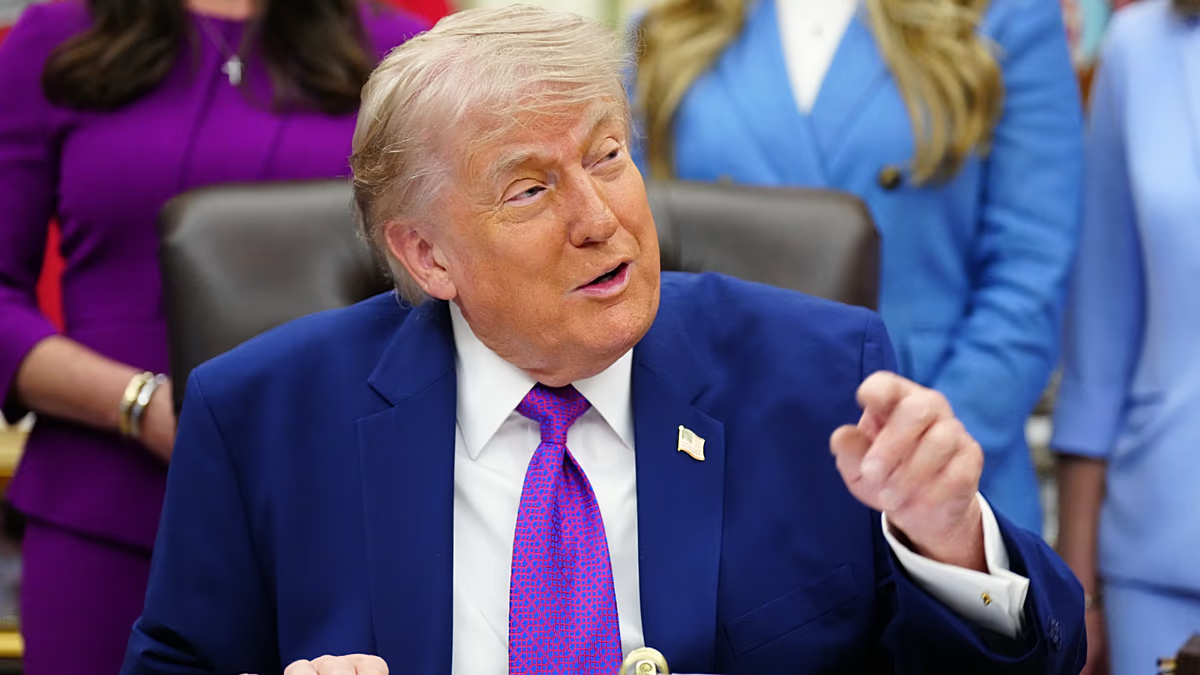
An unprecedented level of detail regarding the trading activity within the investment portfolio tied to US President Donald Trump has been revealed through a recent financial disclosure filing. Submitted in late March 2026, the documents list an extraordinary volume of over 3,600 individual transactions executed in just the first three months of that year. While federal ethics forms only require broad valuation bands, the cumulative worth of these trades is staggering, estimated to be between $220 million and as much as $750 million. This disclosure immediately reignites perennial questions about the ethics of elected officials participating in the stock market. While presidents are not barred from trading and no allegations of insider trading have been made, the sheer scale and frequency of these moves naturally invite scrutiny, especially as Trump’s personal assets are managed by his adult sons and brokers, leaving the direct source of trading instructions unclear.
The filings paint a picture of a portfolio heavily concentrated in the titans of Wall Street, particularly within the technology and artificial intelligence sectors. Purchases of giants like Nvidia, Microsoft, and Broadcom were disclosed in chunks valued between $1 million and $5 million each. A wider array of companies, including AMD, Intel, Goldman Sachs, and Alphabet, saw buy orders in the $500,000 to $1 million range. The report also details hundreds of sales, ranging from smaller amounts up to a massive $25 million. Crucially, an analysis of the holdings suggests that, by the time of the disclosure, Trump was sitting on significant paper profits—reportedly 20% or more on almost all the listed positions. Notably, stocks like AMD, Intel, and Bloom Energy showed profits exceeding 100%.
A particularly striking pattern emerges from the transaction dates. The filings indicate a aggressive buying spree during a sharp market dip in March 2026, coinciding with the start of a conflict involving Iran. The S&P 500 fell over 8% during that period, bottoming near the end of the month before embarking on a robust recovery. Trump’s portfolio appears to have capitalized on this downturn, buying heavily during the decline. This timing, while potentially a savvy market move, further fuels the debate over whether officials with access to the highest levels of geopolitical intelligence should be permitted to make such trades during times of global instability.
This revelation arrives amidst a live and bipartisan political effort to curb stock trading by public officials. The most prominent legislative vehicle is the “Restore Trust in Congress Act,” introduced in September 2025. This bill, and a companion Senate version, aim to ban members of Congress, their spouses, and dependent children from owning or trading individual stocks. Support has grown, with over 120 co-sponsors in the House and a discharge petition attempting to force the bill to the floor. However, a key debate now centers on whether such restrictions should extend beyond Congress to include the President and Vice President. Some Democratic-backed proposals explicitly aim to cover the executive branch, citing concerns directly related to Trump’s disclosures.
The legislative path is fraught with contention despite widespread public support for tighter rules. Lawmakers disagree on critical details: should officials be forced to fully divest their existing holdings, or merely stop new purchases? Should spouses and adult family members be included? Most politically sensitive is the question of applying any ban to the sitting President. Other proposals, like the ETHICS Act which advanced in the Senate, do include the President, but compromises and carve-outs for certain investment types have complicated its progress. While several proposals have gained momentum, the fundamental disagreements have prevented a comprehensive ban from becoming law.
Ultimately, Trump’s 2026 disclosure acts as a potent catalyst, injecting concrete data and immense scale into an already simmering ethical debate. It showcases a leader actively engaged in a high-volume, high-value portfolio that profited from market volatility linked to international conflict. This tangible example strengthens the argument of reformers who believe that the potential for conflicts of interest—or even the appearance of them—is too great for those at the highest levels of government. Whether this specific disclosure provides the final impetus needed to break the political logjam and pass a law encompassing the presidency remains the central unanswered question. The filings have undeniably shifted the focus from abstract principle to a very concrete, and very large, example.