


A Beautiful Game Marred by Ugly Scenes
The culmination of a fiercely contested Scottish football season, a moment meant for pure sporting celebration, was instead overshadowed by distressing scenes of chaos and violence. As Celtic scored a dramatic stoppage-time winner to secure the league title at their home ground, Celtic Park, a flood of overjoyed supporters surged onto the pitch. What followed was not jubilation but a frightening ordeal for the visiting Heart of Midlothian players, who found themselves trapped in a maelstrom of unchecked emotion. The match, a showcase of athletic drama, ended not with respectful handshakes but with a desperate scramble for safety, marking the day with a dark stain.
First-Hand Accounts of Fear and Confusion
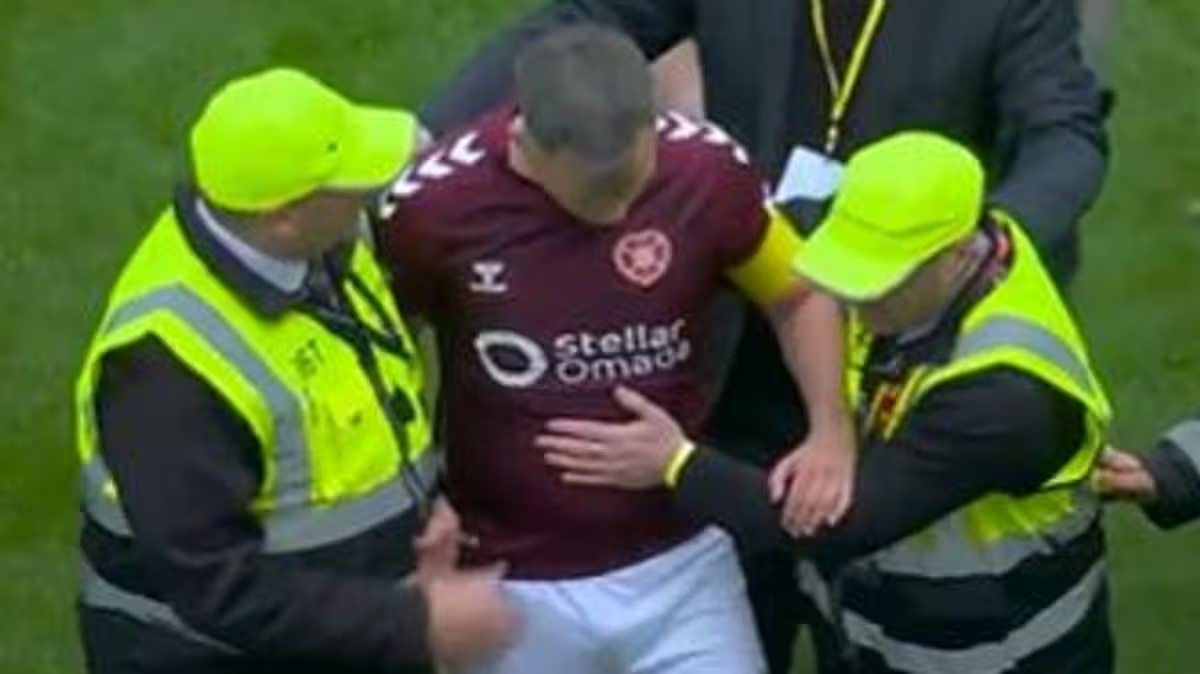
Christian Borchgrevink, a Hearts player who was an unused substitute that day, provided a chilling, first-hand account of the bedlam. He described a scene of “complete chaos” that unfolded with terrifying speed. Before the players could even process the late, gut-wrenching goal that had lost them the match, they saw their teammates being encircled by a growing throng of fans. Borchgrevink and others from the bench rushed onto the field not to celebrate, but to form a protective shield around their colleagues. While he confirmed everyone ultimately made it back to the dressing room, he starkly noted they did so “with a bit of blood here and there,” a sobering testament to the physical nature of the clashes. The disorientation was so profound that the players did not even know if the match had been officially concluded as they were hurriedly escorted off.
A Club’s Outrage and a Call for Accountability
In the aftermath, Heart of Midlothian Football Club issued a furious statement, labeling the events “shameful” and confirming “serious physical and verbal abuse” directed at their players and staff. The club explicitly called for “the strongest possible action” from the football authorities and police, emphasizing that the safety of participants is a non-negotiable aspect of the sport. This sentiment was echoed by former Hearts player Ryan Stevenson in media analysis, who stressed that while fan passion is understandable, “a line had been crossed.” He articulated a fundamental principle of sportsmanship: players must be afforded safety and respect on the field, a boundary he felt was tragically violated by the intimidating and close-contact behavior of some individuals in the crowd.
The Bitter Aftertaste of Sporting Heartbreak
For the Hearts players, the incident compounded the profound sporting disappointment of the result itself. Borchgrevink articulated this dual hurt, stating it was “brutal” to have led the title-deciding match for so long only to lose at the very finish line. The emotional devastation of a last-minute defeat is a heavy enough burden for any athlete; to then face a hostile pitch invasion transforms that disappointment into trauma. The players’ immediate concerns, after ensuring their own well-being, extended to their families and supporters in the stadium, adding a layer of personal anxiety to the professional setback. The day became less about a game of football and more about survival and accounting for loved ones.
A Broader Problem Demanding a Concerted Solution
These appalling scenes are not an isolated incident in football, but part of a worrying pattern of pitch invasions and confrontations that have resurfaced across the UK in recent seasons. Each event sparks a familiar cycle of condemnation, investigation, and promises of reform, yet the problem persists. It presents a complex challenge for clubs, authorities, and fan groups alike, involving stadium security design, crowd management strategies, and the cultivation of a culture where passion never morphs into persecution. The call from Hearts for “strongest possible action” is a demand for this cycle to be broken with concrete, effective measures that prioritize safety above all else.
Reclaiming the Spirit of the Sport
At its core, football is a shared drama of triumph and despair, a spectacle that should unify communities in shared passion, not divide them through fear. The images from Celtic Park—of players being surrounded, of confrontations replacing congratulations—stand in direct opposition to this spirit. The true victory for the sport lies not only in addressing the failures of security that allowed this to happen but also in reaffirming the sacred boundary between the arena of play and the realm of fandom. All stakeholders must now work diligently to ensure that the lasting memory of future title celebrations is one of untainted joy and mutual respect, allowing the beautiful game to once again shine without a shadow of violence.