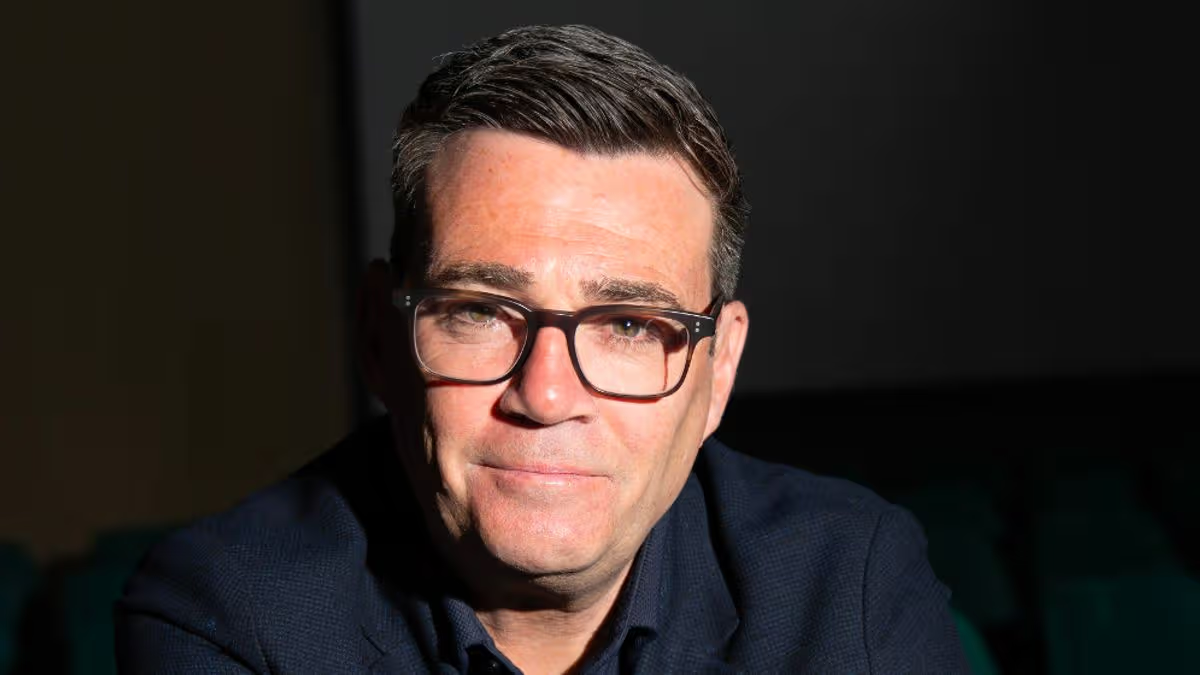

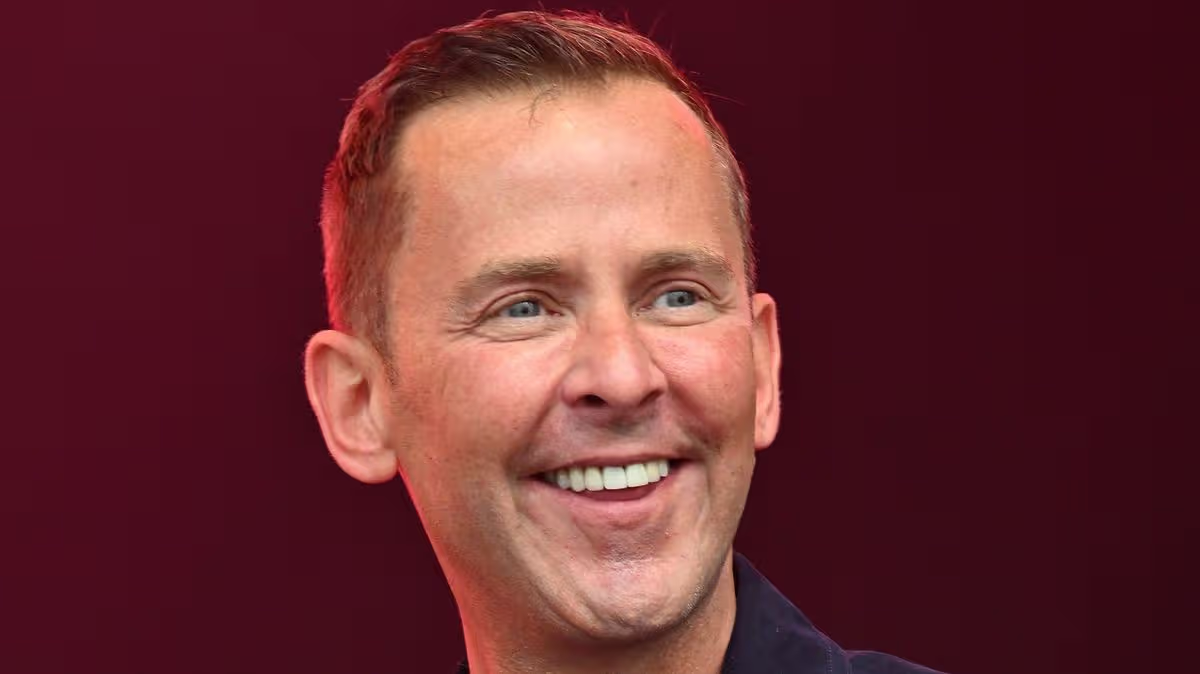


In his first comprehensive interview since declaring his intention to stand for Parliament in Makerfield, Andy Burnham presented a sweeping and urgent vision for the nation. The Greater Manchester Mayor, a figure long rumoured to be a future Labour leader, framed his political return not merely as a by-election campaign, but as a fundamental battle for the soul of both his party and the country. He spoke directly to Mirror readers, offering a “new path for Britain” designed as a decisive “circuit breaker” from the political and economic status quo that has dominated for decades.
Burnham’s blueprint is rooted in a profound critique of Britain’s trajectory since the mid-1980s. He argues that a consecutive chain of deindustrialisation, deregulation, privatisation, and austerity has systematically drained economic and social power from communities like Makerfield, leaving ordinary people without financial breathing space. The result, he contends, is an economy that simply “isn’t working for ordinary people,” making simple pleasures like a holiday or a pint unaffordable. His alternative path is built on three pillars: a bold programme of reindustrialisation to rebuild the economic base of regions outside London; taking stronger public control of essential utilities like energy and water; and launching a council house building programme on a scale not seen since the post-World War II era, stating bluntly that there will be no national stability until the housing crisis is ended.
This platform is inextricably linked to his personal political identity and his critique of the current Labour Party. His campaign slogan, “For Us,” is a deliberate echo of his long-standing advocacy for his roots in the North. He rejects the speculation about his motives, insisting his choice to run in Makerfield was never in doubt because he is “rooted and local.” For Burnham, “For Us” explicitly means not being “for a political and economic system that is for the wealthiest.” He positions this by-election as part of a “campaign to change Labour” itself, aiming to restore it to the party that working-class communities “once knew,” a party solidly on their side.
He extends this critique of the current path to a forceful condemnation of Nigel Farage and Reform UK. Burnham draws a direct historical line, comparing their policies to the “devastation” overseen by Margaret Thatcher in the 1980s, noting that the leadership of Reform were “the arch Thatcherites” of that era. He hopes the campaign will expose Reform’s true character and believes people need to understand what they actually stand for. This framing elevates the contest beyond a simple partisan battle into a choice between repeating a painful historical pattern or embarking on his proposed new direction.
To achieve this new direction, Burnham advocates for a deeper transformation of political culture. He calls for a “new politics” that is more collaborative and “place first, less party first,” modelled on his approach in Greater Manchester. This includes his repeated backing for proportional representation in Westminster elections, which he believes fosters a different, more cooperative way of thinking. Alongside this, he proposes education reforms to establish technical education as an equal and respected alternative to the academic university route, creating a skilled foundation for reindustrialisation.
In a final personal pledge to symbolise his commitment to public service, Burnham vowed to continue donating a portion of his salary if elected as an MP—a practice he has maintained throughout his nine years as Mayor. This gesture underscores his narrative of consistent advocacy. While insisting he is “not presumptuous” about future leadership, he framed his entire career—from fighting for miners’ compensation and Hillsborough justice to confronting Boris Johnson’s pandemic policies—as leading a fight against a mentality that treats regions outside London as “second-class citizens.” His mission, he stated, is to “keep trying to take that fight to the highest level I can,” making the Makerfield by-election a potential stepping stone in a larger campaign to redefine the nation’s economic, political, and moral compass.