



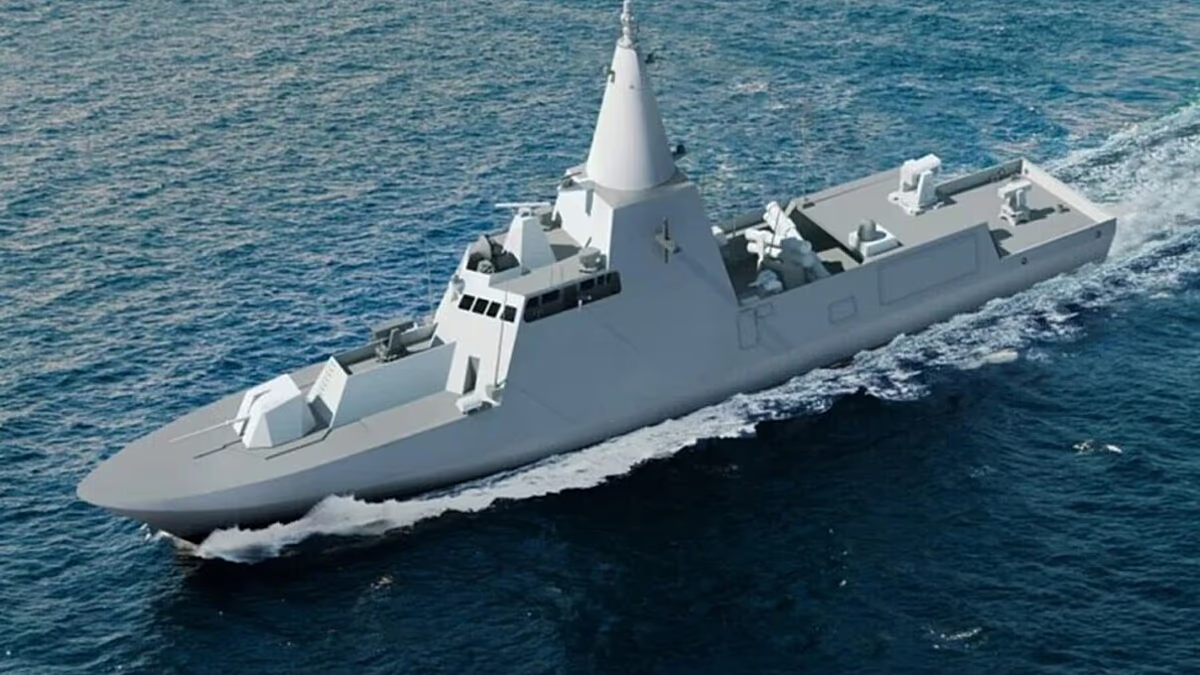
Italy’s strategic and military footprint in the Persian Gulf is deepening, marked by a significant new chapter in its longstanding partnership with Kuwait. This collaboration has moved beyond simple diplomacy into tangible, high-value defense projects. A prime example is the recent contract signed by the Italian defense giant Leonardo with Abu Dhabi Ship Building (ADSB), a key player within the UAE’s EDGE Group. The agreement centers on equipping a new generation of naval vessels for Kuwait. Under its “Al Dorra” modernization program, Kuwait has commissioned eight advanced FALAJ 3 Offshore Patrol Vessels (OPVs) to be built in the UAE. Leonardo’s role is to provide the technological backbone for these ships, supplying sophisticated combat systems that will form the core of their operational capability. This deal is a concrete manifestation of the growing trust and intertwined interests between Italy and the Gulf states, positioning Italian industry as a preferred provider of cutting-edge military technology.
The naval contract is just one piece of a broader mosaic of cooperation. Italy and Kuwait have been steadily strengthening their bilateral ties, particularly in the aerospace sector. Last year, the air forces of both nations renewed a crucial partnership focused on the Eurofighter Typhoon, a premier fighter jet largely built by Leonardo. This three-year agreement encompasses pilot training, expertise in electronic warfare, and coordinated operational management. It builds upon a major 2016 deal in which Kuwait purchased 28 of these advanced aircraft, most of which are now actively serving in the Kuwaiti Air Force. Furthermore, Kuwait’s Defence Ministry has extended a support contract with Leonardo Aviation Services, ensuring maintenance, logistics, and local training at the Ali Al Salem air base until at least 2029. These sustained engagements demonstrate a relationship that has evolved from a one-time sale to a comprehensive, long-term strategic alliance.
Italy’s commitment to the region is also physically embodied by an active military presence in Kuwait itself. Approximately 320 Italian troops are deployed at the Ali Al Salem air base, contributing to international coalition efforts. Their mission, as outlined by the Italian Defence Ministry, is to support operations aimed at ensuring the lasting defeat of terrorist groups like Daesh. This contingent operates both MQ-9A “Predator” reconnaissance drones and F-2000A “Eurofighter” jets, conducting vital surveillance and intelligence-gathering over Iraq. This work is fundamentally dedicated to enhancing security for both civilian populations and military personnel operating in a volatile area. The presence is not without risk, as evidenced when an Italian drone at the base was damaged in an attack linked to regional tensions last March. Despite such challenges, the Italian forces continue their mission and further engage in joint exercises with the Iraqi Air Force, promoting regional cooperation and shared expertise in the service of stability.
Returning to the landmark naval deal, the specifics underscore the depth of technological integration. The contract, valued at approximately 320 million euros, will see Leonardo furnish the brains and key brawn for Kuwait’s new patrol vessels. This includes the central nervous system—the Combat Management System (CMS)—along with formidable hardware like the 76 mm SUPER RAPIDO naval gun, capable of firing precision-guided STRALES ammunition, and the powerful KRONOS NAVAL HP radar. This package transforms the OPVs from mere patrol boats into highly capable, networked combat platforms. The partnership with ADSB is itself a testament to decades of collaboration; over the past twenty years, this Italian-Emirati cooperation has delivered around thirty naval units. The new contract reinforces a successful model, blending Italian engineering and systems integration with regional shipbuilding prowess.
This successful model is now being institutionalized for the long term. The strengthening partnership between Leonardo and the EDGE Group is accelerating the creation of a formal joint venture, announced in mid-2025 and set to become operational in 2026. The new company will be majority-owned (51%) by the Emirati group, with Leonardo holding a 49% stake, and will be based in the United Arab Emirates. Its scope is ambitious, covering the full spectrum from design and production to training and sustainment. Crucially, the project involves granting intellectual property licenses and focuses on developing a highly skilled local workforce. This represents a strategic evolution from an export relationship to a true industrial partnership, embedding Italian technology and know-how within the Gulf’s own defense industrial base. It is a competitive model designed to secure a permanent and growing footprint in a critical global market.
In conclusion, Italy’s engagement in the Persian Gulf, exemplified by its ties with Kuwait, is multifaceted and deepening. It seamlessly intertwines frontline military contributions to regional security with robust, long-term industrial and defense cooperation. From the airbase at Ali Al Salem, where Italian pilots and technicians work alongside Kuwaiti and coalition partners, to the shipyards of Abu Dhabi, where Italian combat systems are integrated into new Emirati-built vessels for a third nation, Italy is demonstrating a sophisticated and layered approach. The culmination of this strategy is the forthcoming joint venture, which promises to lock in this collaborative future. By combining operational military support with advanced technology transfer and industrial co-creation, Italy is not just selling equipment but is building enduring partnerships, securing its role as a reliable and technologically advanced ally in a strategically vital region.