



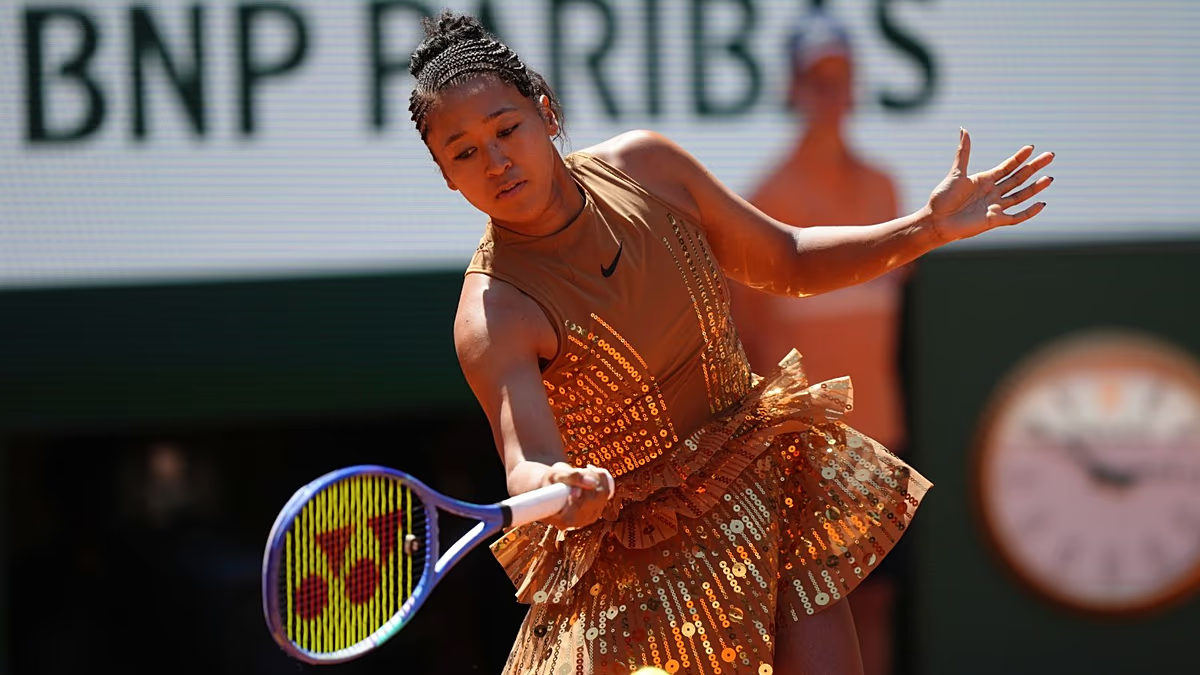
In a dazzling start to her French Open campaign, Naomi Osaka not only secured a decisive victory over Laura Siegemund but also captivated the audience with a striking fashion statement. The former World No. 1 emerged onto the Court Suzanne-Lenglen in a ceremonial black skirt and beaded bodice, which she removed to reveal a stunning, sequined gold playing dress. Osaka herself likened the effect to the sparkling Eiffel Tower at night, describing the outfit as “very couture.” The ensemble, a collaboration between Nike and Swiss designer Kevin Germanier, underscored her view that athletes are entertainers, and Grand Slam walk-ons are a prime opportunity for expression. While she admitted a playful worry that the dress’s reflectiveness might risk an umpire’s intervention, her confidence in blending high fashion with sport was clear.
This moment is part of a broader pattern for Osaka, who has consistently used her court appearances to make bold stylistic statements. From the red roses in her hair at the US Open to a jellyfish-inspired outfit in Melbourne, she has framed fashion as a personal language. As someone who has spoken openly about anxiety and mental health, Osaka finds a liberating voice in her clothing, stating she can be “as loud with colours or patterns or fabric as I want.” For her, and for fans who relate to her, these choices are a joyful and dramatic element of the sport, a means of communication beyond words.
However, the reception to such displays often reveals a persistent, troubling undercurrent in tennis. The internet’s reaction to Osaka’s gold dress was predictably divided, with a segment of commentary condemning the outfit as disrespectful to the sport’s traditions or simply too flashy. This criticism fits into a long history of policing women’s athletic attire, where female players face a paradoxical scrutiny: outfits deemed too bold are accused of turning the court into a runway; those considered too revealing are labeled provocative; and more conservative choices are sometimes criticized as lacking effort or flair. It is, as history shows, a lose-lose dynamic deeply intertwined with sexism.
The past offers clear echoes of this conflict. In 1985, Anne White was instructed to wear something more “appropriate” after playing in a white spandex bodysuit at Wimbledon. In 2018, Serena Williams’ functional catsuit—designed for post-pregnancy health—was banned by the French Open, leading her to wear a tutu at the US Open. These incidents highlight how discussions about women’s clothing often stray from practicality or personal expression into moralistic judgment. While there has been progress, such as the WTA modernizing its dress code to allow leggings and compression shorts, the underlying tensions remain.
Amid this backdrop, Osaka’s approach is both a personal triumph and a challenge to outdated norms. Commentator Annabel Croft noted that wearing such an extraordinary outfit requires immense confidence and the ability to deliver top-tier tennis alongside it—a challenge Osaka meets. Her fusion of elite performance with unabashed self-expression reclaims space on the court for individuality. It signals that athletic excellence and personal style are not mutually exclusive but can coexist powerfully.
Ultimately, the debate over what women wear in tennis transcends fabric and design; it touches on who controls an athlete’s narrative. For those unsettled by Osaka’s sparkling dress, the issue may not be the outfit itself but a discomfort with women confidently owning their image in a global arena. As Osaka continues to shine, her choices remind us that sport evolves not just in technique but in culture. The true “unsportsmanlike behavior” lies not in a sequined dress, but in attempts to silence expression through archaic criticism. Let Osaka, and all athletes, sparkle in their own light.