

A Unified European Front: Navigating Diplomacy and Support for Ukraine
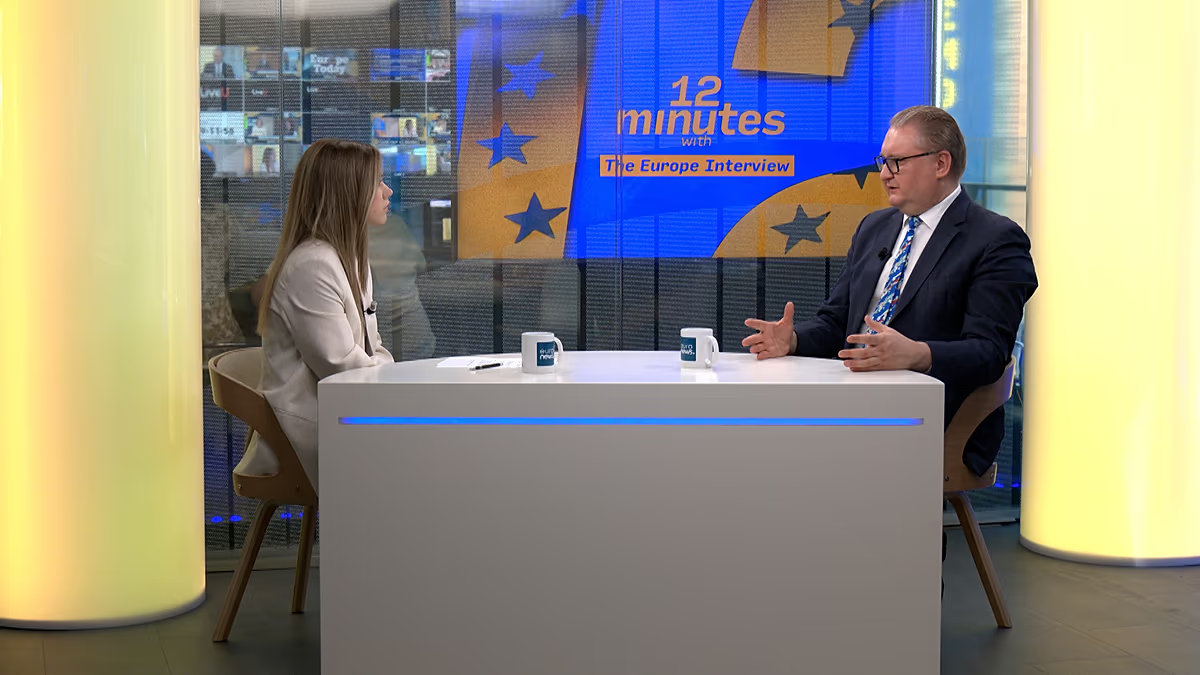
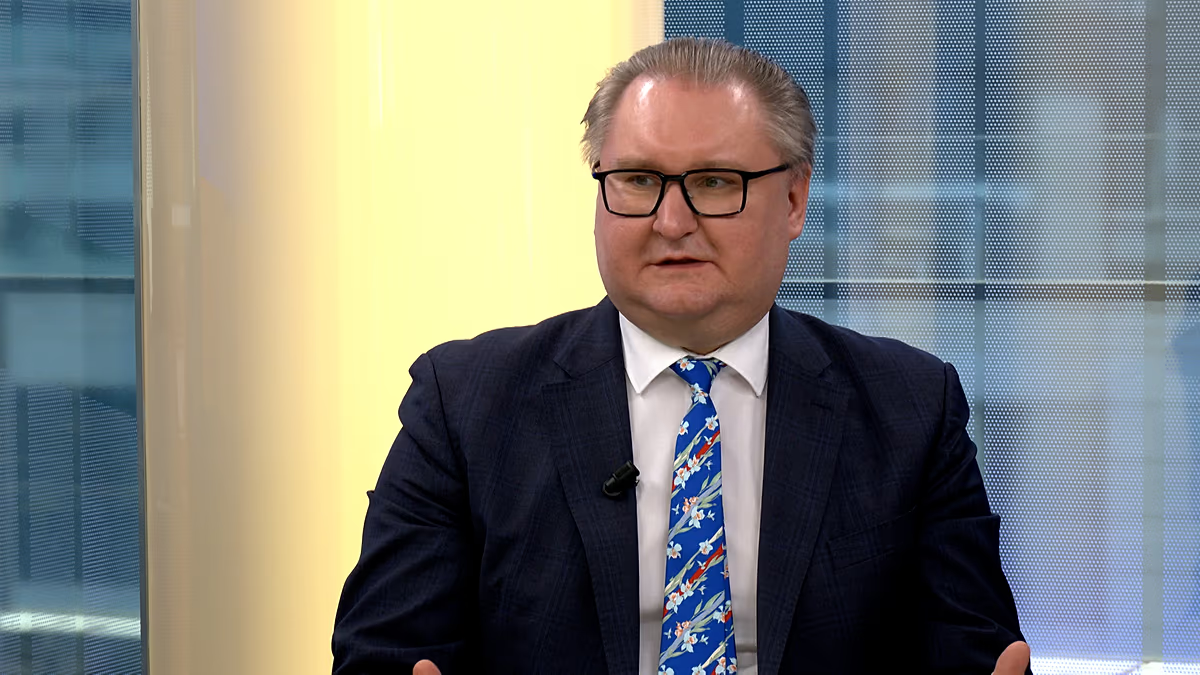
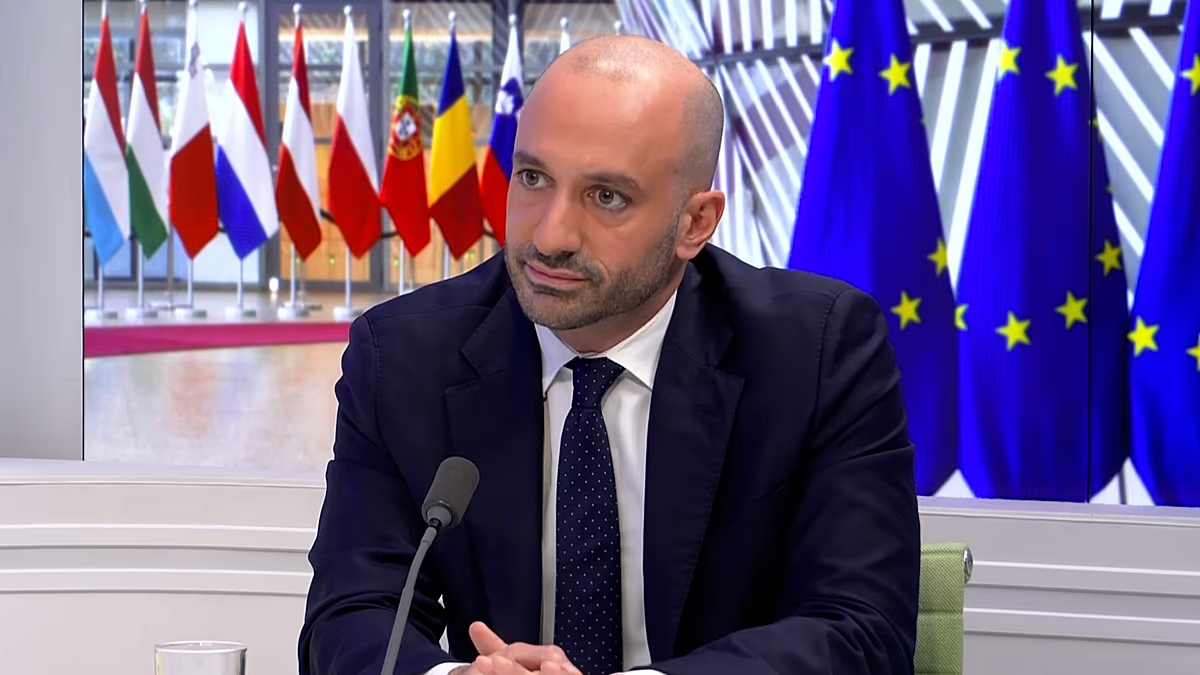
As the conflict in Ukraine stretches into another year, European leaders are engaged in a complex and delicate debate over how to balance unwavering support for Kyiv with the potential necessity of direct diplomatic engagement with Moscow. This internal discussion was brought into sharp focus by recent comments from France’s EU Affairs Minister, Benjamin Haddad. While advocating that Europeans should ultimately be prepared to establish their own diplomatic channel to Russia, Haddad underscored that the immediate and overwhelming priority must remain supporting Ukraine’s defense and increasing pressure on the Kremlin. His remarks highlight a strategic tension within the EU: the desire to explore all avenues for peace, tempered by a sober recognition of Russia’s current belligerence and the risks of premature negotiation.
Haddad’s stance is firmly rooted in a perception of Russian intransigence. He argues that Moscow is “not engaging seriously in diplomacy” and shows no genuine interest in a ceasefire or a just peace. Instead, he suggests, Russia had banked on a strategy of dividing European nations and weakening their collective resolve—a strategy he believes has backfired spectacularly. From Haddad’s perspective, the EU’s response to the invasion has demonstrated remarkable unity and strength, with European states providing the bulk of international support to Ukraine. Furthermore, he points to diplomatic setbacks for Russia, such as Armenia’s pivot toward Europe, as evidence that Moscow is “losing ground everywhere” beyond the battlefield.
This context sets the stage for a pivotal discussion scheduled among EU foreign ministers regarding whether to break the diplomatic isolation imposed on Russia since 2022. The idea of a distinct European diplomatic track has found some high-profile advocates, most notably French President Emmanuel Macron and Italian Prime Minister Giorgia Meloni. They have argued that direct European dialogue with Russian President Vladimir Putin could be “useful,” especially given that U.S.-brokered talks have stalled, raising concerns that Europe’s fundamental security interests are being negotiated on its behalf by Washington. However, Macron’s own attempt at outreach, via his diplomatic advisor’s visit to the Kremlin in February, was publicly rebuffed by Russian Foreign Minister Sergei Lavrov, illustrating the profound challenges of such engagement.
Consequently, a more cautious and skeptical approach has gained traction, particularly among Eastern European nations with historic experience of Russian aggression. Haddad’s recent comments, emphasizing pressure over dialogue, align more closely with this viewpoint. Estonian Foreign Minister Margus Tsahkna has warned that direct EU talks could dangerously recast the bloc as a “neutral mediator,” potentially creating expectations of sanctions relief for Moscow. Latvian President Edgars Rinkēvičs similarly cautioned that Russia would likely manipulate any outreach as a “PR game,” leaving the EU with little to show for its efforts. This camp fears that pursuing diplomacy at this juncture could undermine both the moral clarity of Europe’s position and the strategic pressure essential for Ukraine’s success.
Parallel to the diplomacy debate is the equally complex issue of Ukraine’s future within the European family. Haddad voiced clear support for Ukraine’s bid for EU membership, acknowledging it as a crucial element of the country’s long-term security guarantees. However, he navigated around specific proposals, such as the German suggestion of granting Kyiv an “associate” status with a Council seat but no vote. This idea has been met with skepticism in some quarters, including France, which has long championed strict accession criteria to maintain the integrity of the Union. Haddad stressed the importance of sending a strong signal of solidarity to the Ukrainian people while perfecting a model of “gradual integration,” a nuanced position that seeks to balance political urgency with procedural rigor.
In essence, the European discourse, as reflected in Haddad’s interview, reveals a bloc striving to chart a coherent and effective course through a prolonged crisis. The consensus remains firmly on sustaining military, economic, and humanitarian aid to Ukraine as the foundational pillar of policy. Yet, beneath the surface, there is a growing, if cautious, deliberation about the shape and timing of a European diplomatic initiative. The path forward requires walking a fine line: maintaining a united front that keeps pressure on Russia, offering Ukraine a tangible and hopeful European perspective, and preparing for a day when diplomacy might bear fruit—all while recognizing that for now, according to key European voices, the Kremlin remains an unwilling and disingenuous partner for peace.