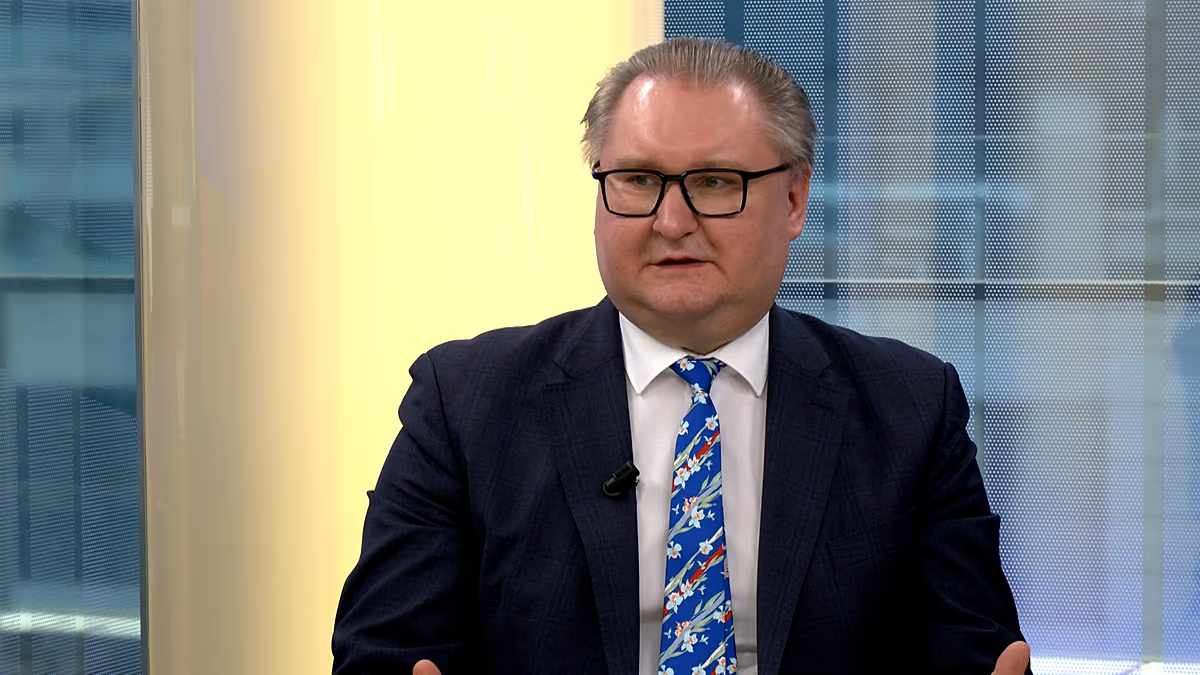



The changing face of our continent’s summer is no longer a distant forecast but a present and pressing reality. Carlo Buontempo, Director of the Copernicus Climate Change Service, articulates a shift that many of us have felt intuitively in recent years: heatwaves are no longer an occasional inconvenience or a phenomenon confined to the sun-drenched Mediterranean. They have become “much more common” and are now a shared experience, impacting communities from the vineyards of Portugal to the forests of Germany and the urban centres of the United Kingdom. This geographical expansion is perhaps one of the most telling signs of a broader climatic transformation. Regions historically unaccustomed to prolonged, intense heat are now finding themselves grappling with its effects, a stark reminder that the changing climate does not respect old borders or historical weather patterns.
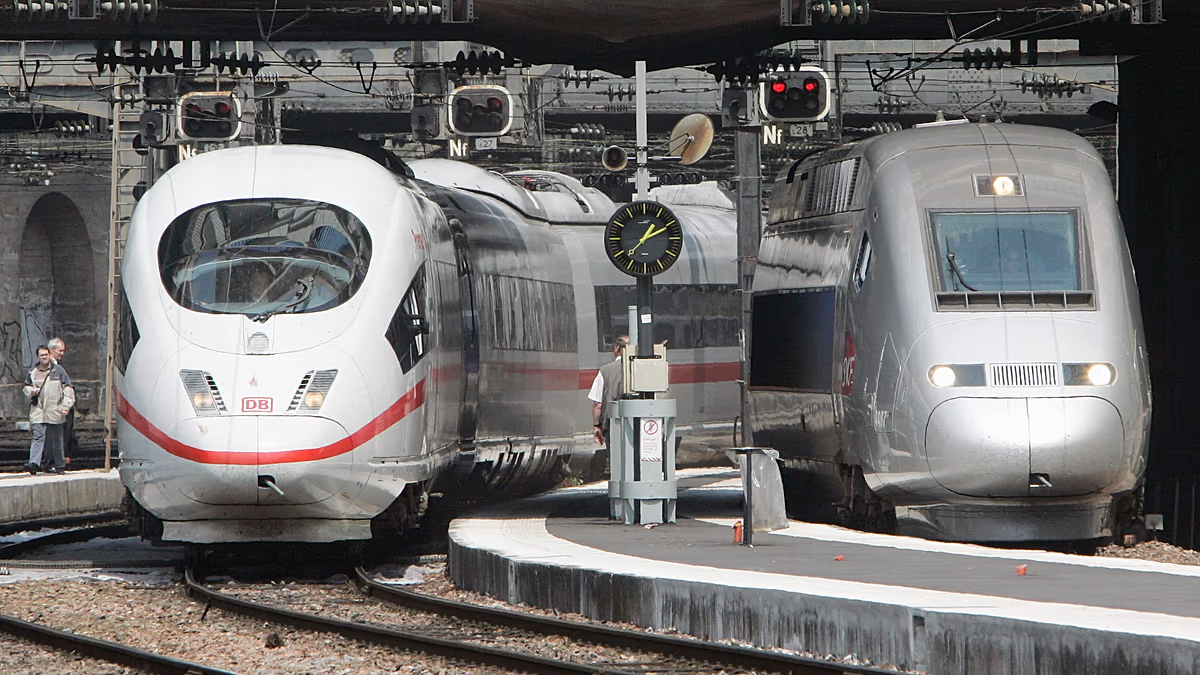
What makes this new reality particularly challenging is the compound nature of these events. As Buontempo warns, climate change is not merely increasing the frequency of heatwaves; it is actively altering their very character, making them “last longer” and increasing their “intensity.” A heatwave is no longer just a string of three hot days. It can now stretch into weeks of relentless, oppressive heat that strains every aspect of society. This extended duration deprives people, ecosystems, and infrastructure of crucial recovery time. Nights, which once offered a reprieve, are warmer, turning cities into heat islands where buildings and pavement release stored heat, offering little rest for the elderly, the vulnerable, and those without adequate cooling. The intensity, meanwhile, pushes temperatures to levels for which our systems were not designed—melting roads, buckling railway lines, and overwhelming energy grids as demand for air conditioning soars.
Behind this sobering analysis lies a fundamental scientific truth: our atmosphere, thickened by decades of greenhouse gas emissions, now traps more of the sun’s energy. This accumulated energy acts like a loaded spring, making extreme heat events not just possible but probable and more severe. Each heatwave is now unfolding in a world that is, on average, significantly warmer than it was just a few decades ago. This means that what we once considered a record-shattering temperature is becoming a benchmark that may soon be exceeded. The data curated by services like Copernicus provide the unequivocal evidence that these are not random weather anomalies but the expected symptoms of a planet in flux, where the statistical curve of temperature has shifted irreversibly to the right.
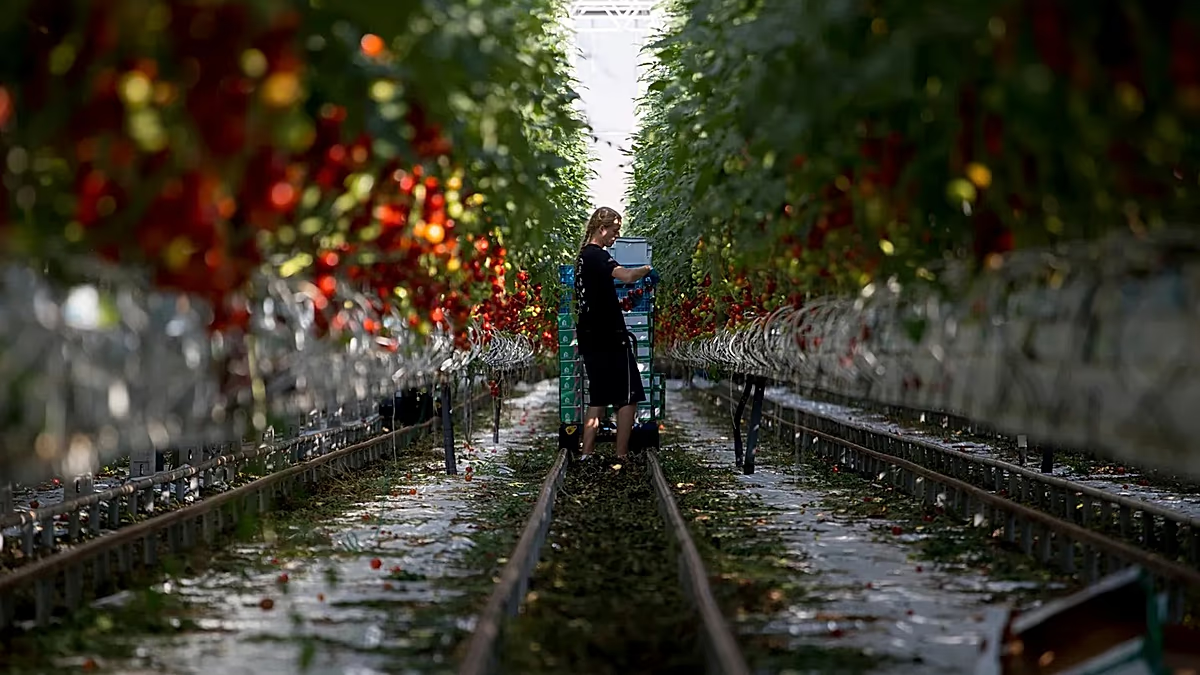
The human and environmental toll of this new paradigm is profound and multifaceted. Beyond the immediate danger of heatstroke and the strain on healthcare systems, prolonged heat decimates agriculture, withering crops and threatening food security. Rivers and reservoirs dwindle, forcing restrictions on water use and exposing tensions over this vital resource. Wildfires, fuelled by drought-parched vegetation, become more frequent, fiercer, and harder to control, turning forests into tinderboxes and blanketing entire regions in hazardous smoke. Economically, productivity plummets in extreme heat, and the costs of damage and adaptation mount into the billions. This is not a future cost; it is a present and growing bill that societies are already paying, with the most severe impacts often falling on those least equipped to bear them.
Confronting this escalating challenge demands a dual response that is both urgent and sustained. First, we must dramatically accelerate our efforts to mitigate climate change at its source. This means a decisive global shift away from fossil fuels toward renewable energy, embracing energy efficiency, and transforming key industries. Every fraction of a degree of warming avoided will lessen the future severity and frequency of these extremes. Second, and with equal vigour, we must invest in adaptation to protect our communities from the heat that is already inevitable. This includes redesigning our cities with green spaces and cooling materials, strengthening early warning systems for vulnerable populations, updating building codes, and ensuring our critical infrastructure—from hospitals to power plants—is resilient to sustained high temperatures.
Ultimately, the message from climate scientists like Buontempo is a clarion call to move beyond viewing heatwaves as mere summer news items. They are direct and tangible manifestations of a global climate crisis, rewriting the rules of European summers. To ignore this evidence is to choose a path of increasing risk and hardship. However, to acknowledge it is to seize the agency we still possess. By combining resolute action to curb emissions with intelligent, compassionate strategies to adapt our societies, we can chart a course toward a future where communities are safer and more resilient. The heat is on, in every sense, and our collective response will define the livability of our continent for generations to come.