


Summary of the Golders Green Road Fire Incident
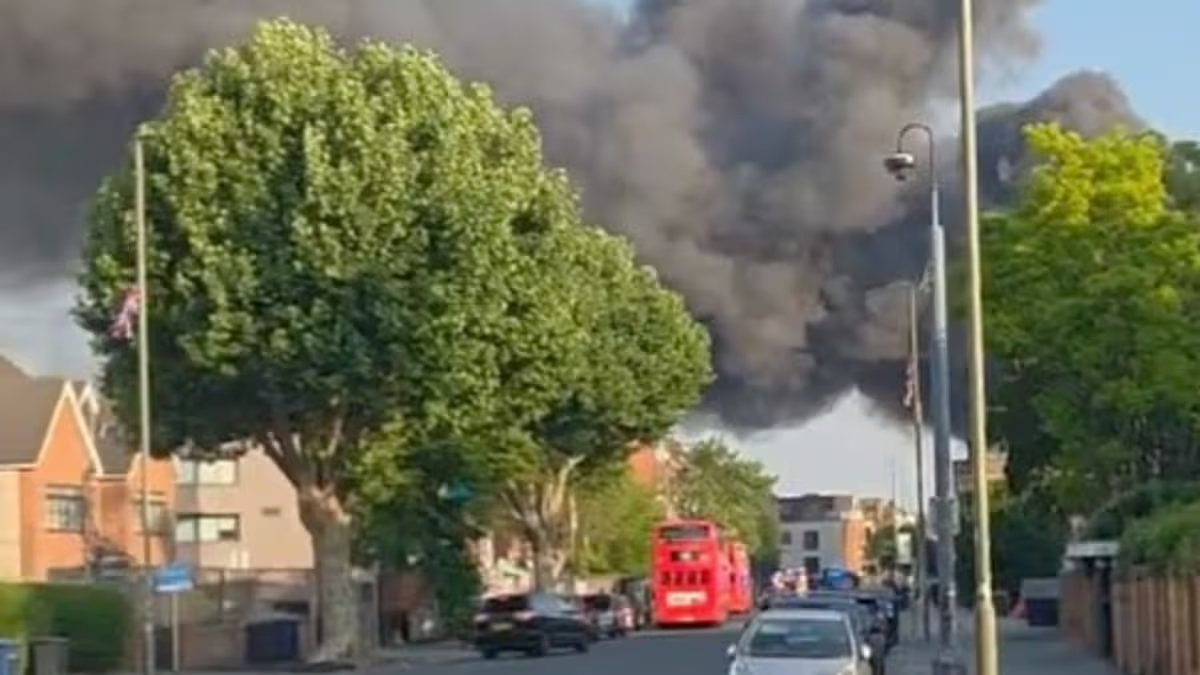
In the early hours of a weekday morning, the London Fire Brigade (LFB) was swiftly mobilized to address a significant emergency in the northwest London suburb of Golders Green. At precisely 6:47 a.m., the first of what would become 33 urgent calls alerted control officers to a serious fire erupting on Golders Green Road. This immediate and multiple reporting from concerned residents and passersby underscored the visible severity of the incident from its outset. The Brigade’s response was substantial and strategic, deploying a major contingent of ten fire engines and approximately 70 firefighters. Crews were summoned from key stations including Finchley, Willesden, West Hampstead, and other surrounding areas to converge on the scene. Notably, a 32-metre turntable ladder, a crucial piece of equipment for tackling fires in multi-storey buildings, was also dispatched, indicating the anticipated complexity of the operation.
The fire involved a three-storey building, a common structural type in London’s bustling suburban centres, which housed a commercial shop on its ground floor with residential or business premises above. This mixed-use nature immediately raised concerns for both public safety and property integrity. The blaze rapidly generated a significant and dense volume of smoke, a primary hazard in any fire situation. In response to this threat, the LFB promptly issued clear and critical public safety advice, urging all residents and workers in the vicinity to keep their windows and doors firmly closed. This directive was not merely procedural; it was a vital measure to protect community health, aimed at preventing the inhalation of toxic fumes and limiting the spread of smoke into neighbouring properties, thereby safeguarding people indoors from immediate harm.
To facilitate the safe and effective work of the firefighters, and to manage the inherent risks of the situation, the police enacted necessary road closures. These included a key section of Golders Green Road itself, specifically near its junction with Beverley Gardens. The LFB’s communication explicitly advised the public to avoid the area entirely while operations continued. This request served dual purposes: firstly, to ensure emergency vehicles had unimpeded access and that crews could work without hindrance, and secondly, to keep civilians safe from potential hazards like falling debris, unpredictable smoke plumes, or the intense heat radiating from the fireground. Such logistical management is a cornerstone of effective emergency response in dense urban environments.
The firefighters arriving at the scene were confronted with a dynamic and challenging scenario. Their primary mission was to gain control of the fire, prevent its spread to adjacent structures, and conduct thorough searches to ensure no individuals were trapped within the affected building or nearby properties. The use of the turntable ladder would be essential for accessing higher floors, applying water from an elevated vantage point, and providing a platform for rescue or ventilation operations. The significant smoke emission suggested a deep-seated or well-fueled fire, likely requiring a combination of aggressive interior attack by crews wearing breathing apparatus and strategic exterior suppression. Every action was coordinated with the paramount goals of life safety, incident stabilization, and property conservation.
As the crews worked diligently to extinguish the flames, the cause of the fire remained, at that time, entirely unknown. This is a standard and important point of clarity in initial emergency updates. The determination of a fire’s origin is a meticulous process that typically occurs only after the blaze is fully under control and the scene is safe for investigators. It may involve examining electrical systems, interviewing witnesses, and analysing the fire’s pattern of growth. Speculation at the early stages is unhelpful and could be misleading. The LFB’s statement on this point reflects a disciplined focus on the immediate response while preserving the integrity of any future investigation that might be required to understand the incident’s roots.
This event on Golders Green Road exemplifies the routine yet vital work of the London Fire Brigade. It began with a stream of public calls that triggered a rapid, scaled, and professional response. The operation involved direct action to combat a dangerous fire in a community building, coupled with clear public guidance to mitigate health risks and logistical measures to secure the area. While the cause was not immediately apparent, the focus remained squarely on resolving the emergency at hand. Such incidents, though disruptive and alarming, highlight the structured preparedness and community-focused ethos of the fire service, which stands ready to protect London’s diverse neighborhoods day and night.