

Here is a summarized and humanized version of the content, structured into six paragraphs as requested.
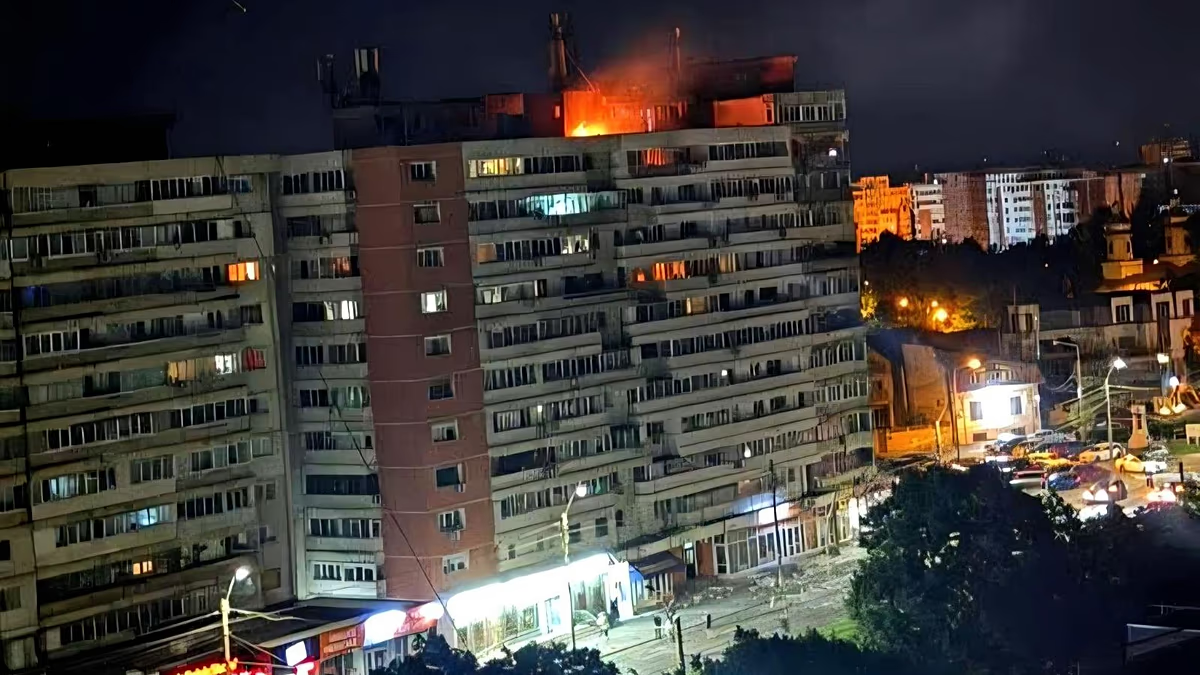
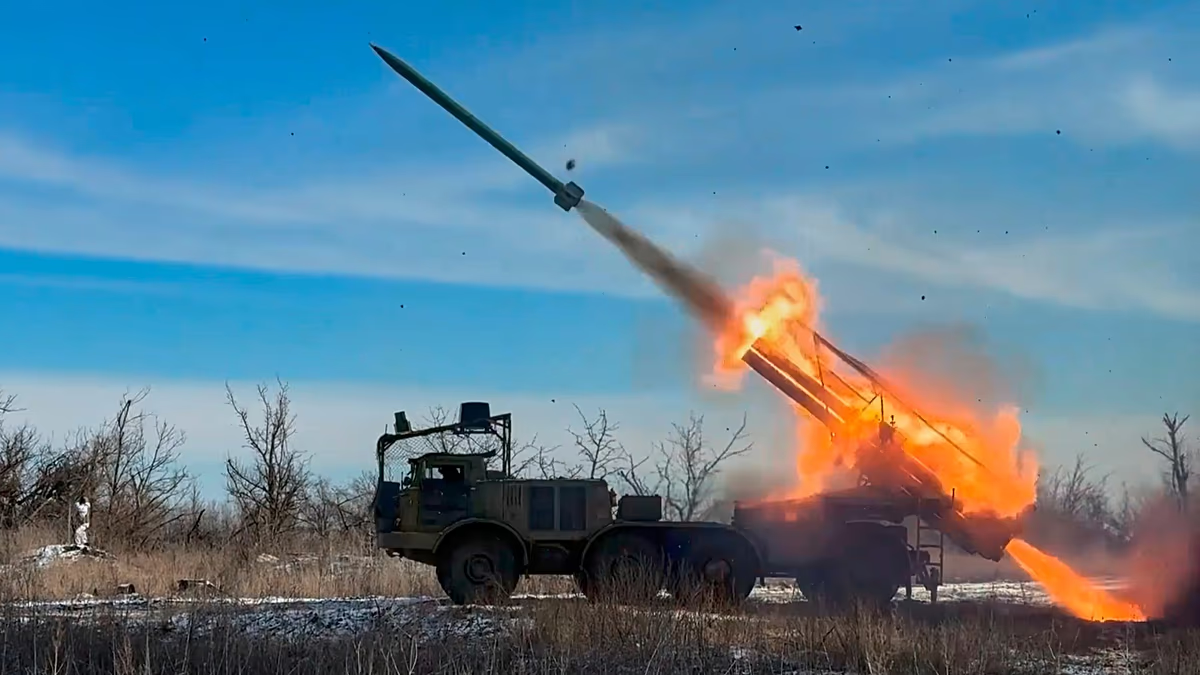
Good morning. Angela Skujins here, wrapping up the week with a look at the pressing issues shaping Europe. As we head into the weekend, the atmosphere in Brussels is anything but relaxed, underscored by a stark reminder of the continent’s precarious security situation. Early today, news broke that a Russian drone crashed into an apartment building in eastern Romania, injuring two people. This incident amplifies growing anxieties across NATO’s eastern flank. As Polish official Michał Baranowski told Euronews, such events are seen not as mistakes but as deliberate provocations, a sentiment echoing from similar drone incursions in Poland and the Baltics. His sobering assessment, “We are no longer in peace,” sets a tense backdrop for the high-stakes diplomatic and economic discussions dominating the EU agenda.
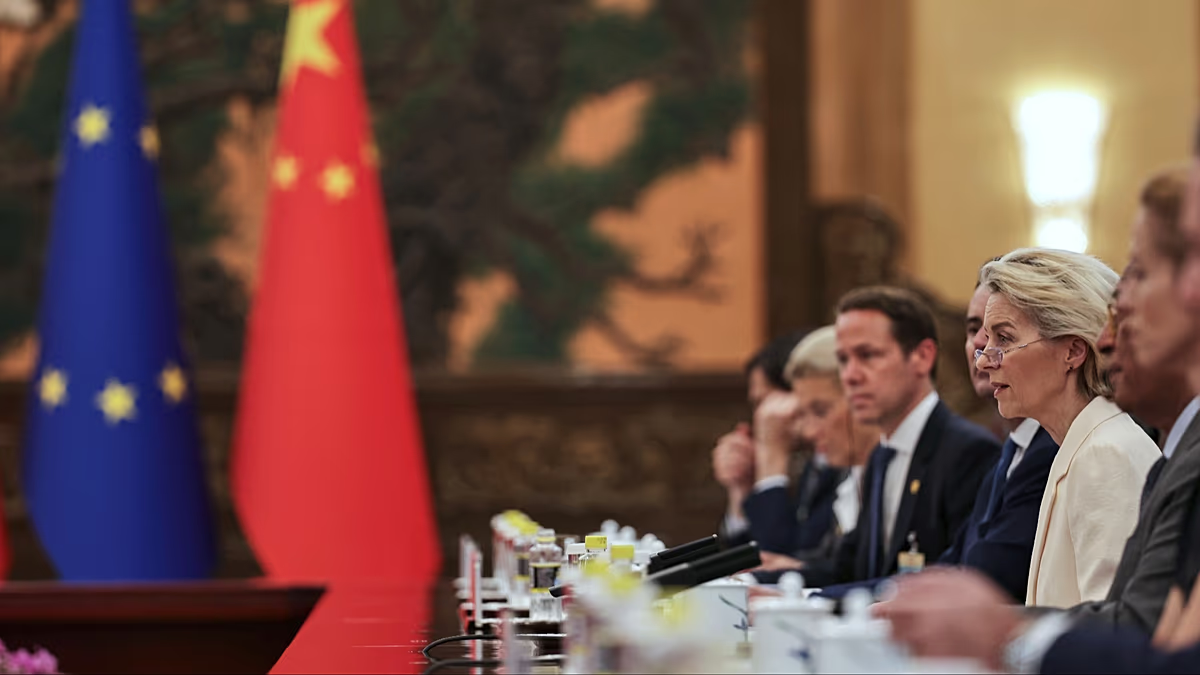
Central to today’s discussions is the EU’s complex and increasingly fraught economic relationship with China. The bloc’s 27 Commissioners are gathering for a critical debate on how to address what Europe sees as unfair Chinese trade practices, particularly massive state subsidies that have led to industrial overcapacity. Nations like France, Spain, and Italy are pushing for a tougher line, urging a crackdown to protect European industries from being undercut. However, a significant split is evident, with economic heavyweight Germany advocating for caution and continued engagement, wary of sparking a full-blown trade war. The EU walks a tightrope, officially committed to “de-risking” its supply chains rather than a full “decouple” from China. As Executive Vice-President Stéphane Séjourné pointedly noted, China’s dominance in sectors like steel, batteries, and solar panels is no accident, but the result of decades of strategic policy, leaving Europe feeling its competitors are “no longer bound by the rules of the game.”
In parallel, a crucial political meeting is unfolding in Brussels, as Hungarian Prime Minister Péter Magyar sits down with European Commission President Ursula von der Leyen. The topic is the release of €10 billion in frozen EU recovery funds, a key promise of Magyar’s campaign after his party’s recent election victory. This money was withheld over persistent rule-of-law concerns during the prior Orbán administration. While Budapest has made some reforms, Magyar is pressing for flexibility on issues touching Hungarian sovereignty. The outcome is critical for Hungary’s economy and will be a major test of the new government’s relationship with Brussels. In a lighter, related note, Magyar’s visit has included colourful social media posts, including a meeting with Belgian Prime Minister Bart de Wever that charmingly spotlighted the Belgian leader’s grey cat, Maximus.
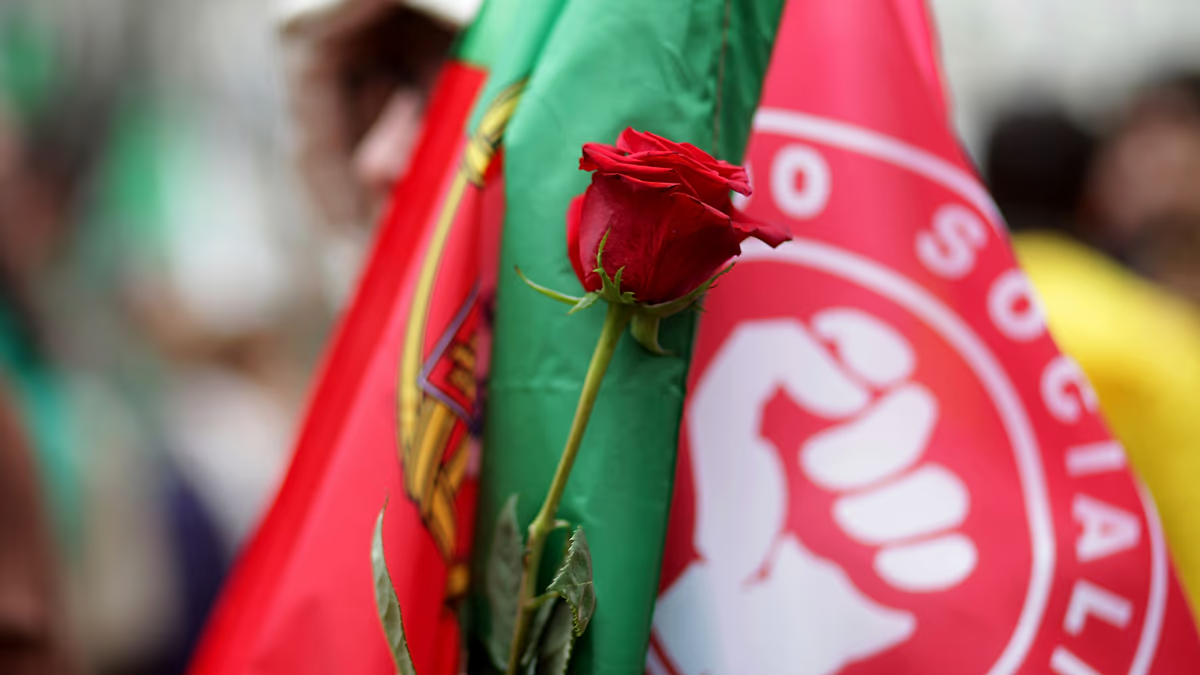
Beyond these headline events, a significant corruption scandal is unfolding in Portugal. Police have arrested five people and named 37 suspects in a sweeping investigation into an alleged network within the local branches of the ruling Socialist Party. The probe focuses on suspicions that public contracts in various municipalities were awarded through direct deals or rigged consultations, bypassing legal norms and causing “evident harm to the public treasury.” This operation highlights the ongoing challenge of ensuring integrity in the use of public funds across Europe, even as the EU itself looks to deploy financial tools to address broader crises.
On the policy front, European Cohesion Commissioner Raffaele Fitto has proposed using the EU’s regional development funds—normally earmarked for reducing economic disparities—to help member states cope with the ongoing energy crisis. Soaring prices, exacerbated by global instability, are straining families and businesses. In a letter to ministers, Fitto argued that these readily available funds could be redirected to support energy efficiency measures and cushion the economic blow, an idea championed by his Italian Prime Minister, Giorgia Meloni. This push for flexibility mirrors recent EU moves to allow cohesion funds for defence spending, signalling a shift toward using these vast financial resources for urgent, strategic priorities beyond their original scope.
Looking beyond the immediate political machinations, our newsrooms are tracking wider stories of concern. In the United States, artists are withdrawing from a Trump-backed concert celebrating the nation’s 250th birthday, calling the lineup a “parody,” while on the environmental front, a grim UN forecast warns that the warming El Niño climate pattern may stretch for years, likely pushing global temperatures past safe international thresholds within half a decade. Furthermore, the iconic site of Machu Picchu serves as a cautionary tale of overtourism, where a bucket-list dream is becoming a logistical nightmare for visitors facing overcrowding and infrastructure strains. As European commissioners and ministers continue their debates on competitiveness and China, these stories remind us that the challenges of security, economic fairness, and planetary sustainability are deeply and inextricably connected.