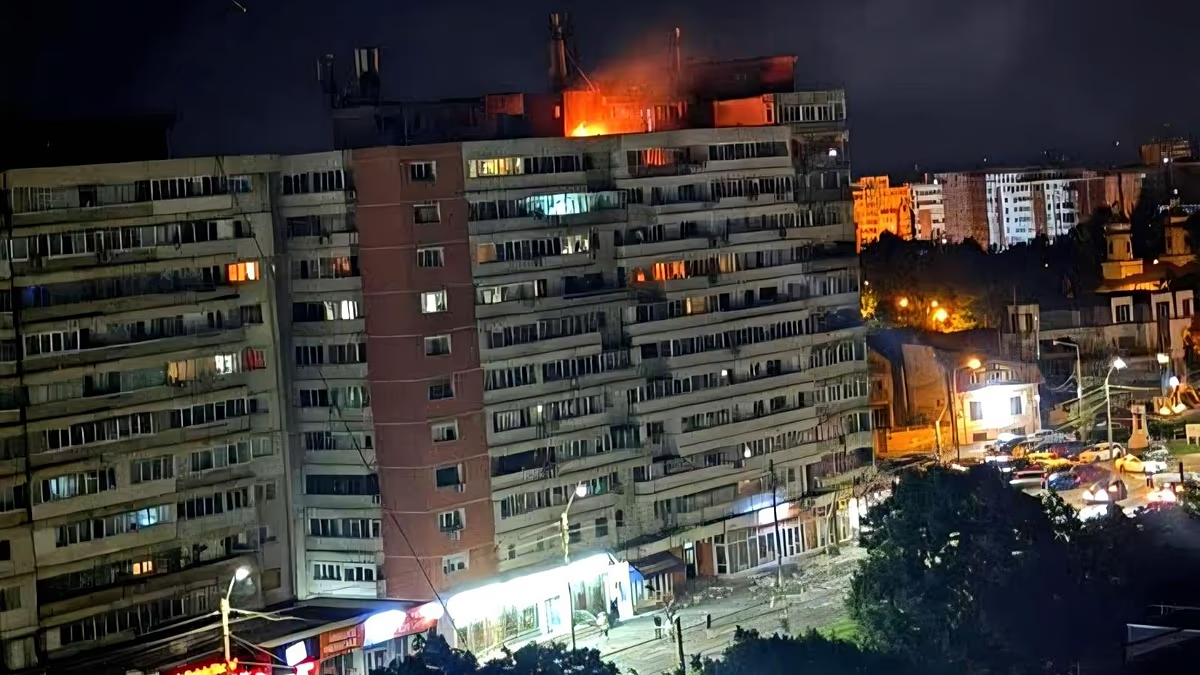
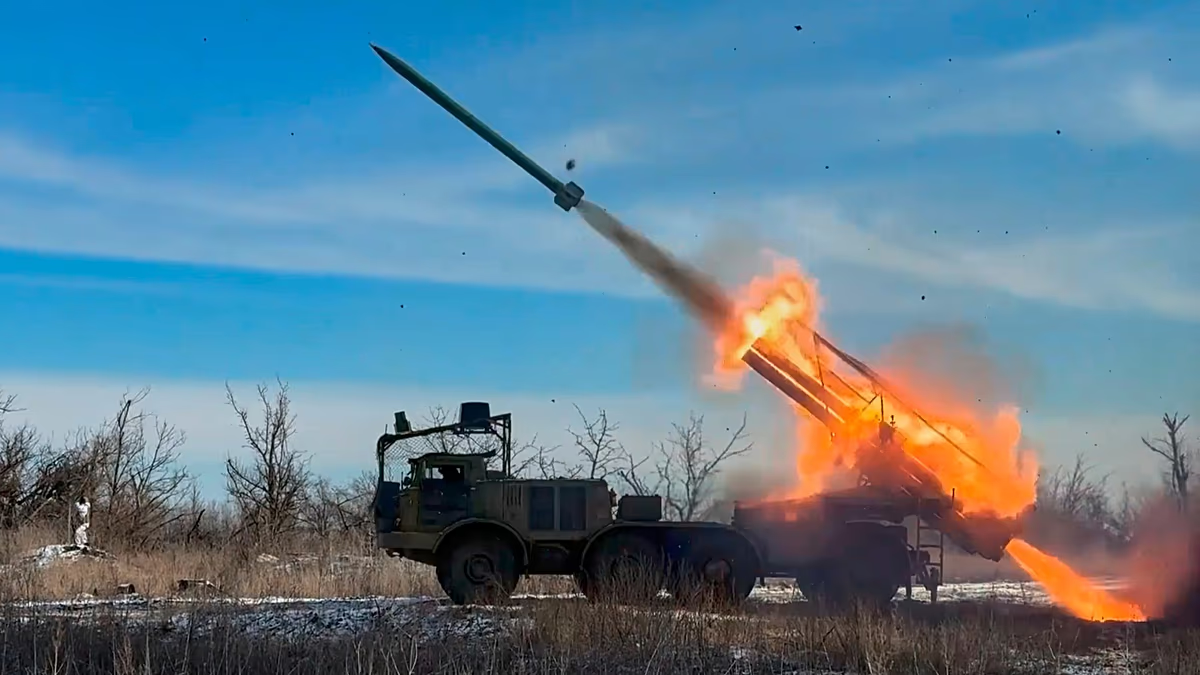



On the morning of May 29, 2026, the shadow of Russia’s war against Ukraine lengthened across another European border. Overnight, a Russian drone, identified by Ukrainian President Volodymyr Zelenskyy as essentially a ‘shahed’ model, struck a residential building in the Romanian city of Galați. This was not a stray munition or an accident of war, but a direct consequence of a deliberate, large-scale attack. President Zelenskyy explained that Russia had launched a massive wave of 232 drones aimed at Ukraine’s southern Odesa region, particularly targeting port infrastructure and civilian shipping. The drone that found its mark in Galați, a city of 200,000 people just 20 kilometers from the Ukrainian border town of Reni, made a chilling fact undeniable: the war’s violence does not respect sovereign lines on a map. In response, President Zelenskyy immediately extended a hand of solidarity, stating Ukraine is “ready to support Romania in whatever way is necessary.”
This incident transformed a geopolitical reality into a tangible, physical threat for a NATO and European Union member state. The strike on Romanian soil represents a severe escalation, demonstrating that Russia’s campaign of terror against Ukrainian civilian infrastructure now carries a direct risk to the territory and citizens of its neighboring allies. Ukraine’s Foreign Minister, Andrii Sybiha, framed the event with sobering clarity, stating that Russia poses a “real threat” not just to Ukraine, but to the entire Black Sea region and Europe as a whole. The message from Kyiv was twofold: first, an expression of unwavering solidarity with Romania, and second, a urgent warning to the European community that the conflict’s perimeter is expanding. The war is no longer a distant tragedy; its shrapnel has literally landed on EU territory.
In the wake of the attack, President Zelenskyy issued a powerful call to action, directed squarely at the European Union. He urged the bloc to step up pressure on Russia to ensure Moscow’s war “is not dragged out or expanded.” His appeal was specific and strategic: future EU sanctions packages must be “truly strong” to make Russia feel that its indiscriminate strikes “mean significant losses for Russia itself.” He framed this not merely as a punitive measure, but as a matter of justice: “That would be fair.” This argument moves beyond humanitarian appeals, positioning robust sanctions as essential tools of collective security. Every Russian drone or missile that threatens Ukrainian ports and cities, the incident proves, is also a potential threat to the stability and safety of neighboring EU nations.
The military context of the night underscores the relentless pressure Ukraine is under and the critical gap this creates for regional security. Ukrainian air defense forces performed heroically, intercepting 217 of the 232 launched drones. However, the drones that get through—whether they hit their intended target in Odesa or, as happened, cross into Romania—reveal the limits of even the most determined defense. Minister Sybiha directly connected this vulnerability to a strategic imperative for Europe: “Bolstering Ukraine’s air defence is also a strategic task – to protect not only our country, but also reduce risks for our neighbours.” In essence, providing Ukraine with the means to fully shield its skies is not just aid to Ukraine; it is a direct investment in the physical security of the European continent, creating a protective umbrella that benefits all.
The response from Kyiv following the Galați strike is a masterclass in diplomatic resolve and strategic communication. Instead of retreating or becoming defensive, Ukrainian leadership proactively assumed the role of a committed partner, ready to collaborate with Romania on investigations and on strengthening shared border protection systems. This posture reinforces Ukraine’s identity as a responsible European state that shares risks and solutions with its allies. It turns a moment of shared victimhood into a foundation for deeper cooperation. Ukraine’s stance says, “We are in this together, and we will stand by you,” thereby strengthening its moral and political position as a nation defending not only itself, but the principles of European security.
Ultimately, the drone strike in Romania is a stark wake-up call. It is a concrete example of how aggression, left unchecked, metastasizes. The incident validates Ukraine’s long-standing warnings that a Russian victory, or a protracted conflict, would inevitably create greater danger for Europe. The path forward, as outlined by Ukrainian leaders, requires a unified and decisive European response. This means accelerating and deepening sanctions to impose a real cost on Russia’s war machine, and it means recognizing that equipping Ukraine with comprehensive air defense is a non-negotiable element of continental defense. The war has shown, once again, that security in Europe is indivisible. Protecting Ukraine’s skies is now, undeniably, a direct part of protecting peace on Romanian, and by extension, all European soil.