


Paragraph 1
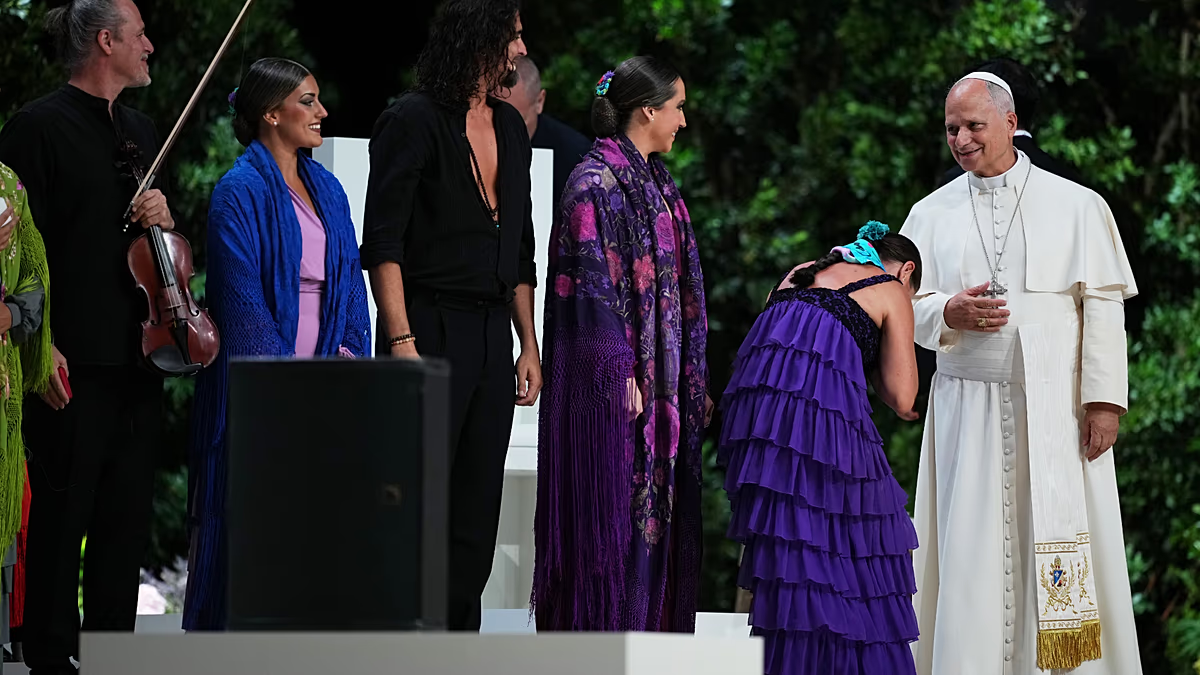
On a vibrant Sunday in Madrid, Pope Leo XIV embarked on a remarkable departure from traditional papal engagements, stepping into the dynamic world of popular culture. He joined a gathering of artists, performers, athletes, and cultural luminaries at the Movistar Arena, an event that formed a key part of his visit to Spain. This convergence of spiritual leadership and contemporary creative expression was not merely a ceremonial appearance but a profound, symbolic gesture. The pontiff, greeted with warm applause from a diverse crowd of thousands, took his place not as a distant observer but as an engaged participant in a celebration dedicated to the unifying power of culture, the arts, and sport. The very setting—a modern arena typically host to concerts and sporting events—signaled a deliberate bridging of worlds, an invitation to dialogue between the sacred and the secular spheres of human endeavor.
Paragraph 2
The event was a tapestry of Spanish cultural excellence, vividly illustrating the themes it sought to honor. Acclaimed actor Antonio Banderas addressed the audience, lending his voice to the celebration, while the world-renowned flamenco dancer Sara Baras and her troupe delivered a powerful performance. The rhythmic intensity and emotional depth of flamenco, a art form deeply rooted in Spanish identity, unfolded before the Pope and the spectators, serving as a live testament to how artistic expression communicates the nuances of human experience—joy, sorrow, passion, and resilience. This curated program showcased creativity as a universal language, one that transcends boundaries and speaks directly to the human heart, setting the stage for the Pope’s subsequent message on the power and responsibility inherent in all forms of communication.
Paragraph 3
In his address to this unique assembly, Pope Leo XIV delivered a thoughtful reflection on the nature of communication itself. He moved beyond the event’s immediate spectacle to address a fundamental truth: communication is never a neutral act. Every word, every image, every performance, he noted, carries weight and consequence. It can either sow division, deepening fractures within societies and between individuals, or it can become a vital tool for building hope and fostering mutual understanding. This message, delivered to a crowd comprising those who shape culture directly, re-framed their work not as mere entertainment or competition, but as a potent force with moral and social dimensions. He implicitly charged artists, athletes, and all communicators with a sense of purpose, suggesting that their talents could be harnessed to heal and unite rather than to alienate.
Paragraph 4
The gathering itself was a practical embodiment of this ideal. By bringing together representatives from such a wide range of fields—from the dramatic arts to athletic discipline, from cinematic storytelling to traditional dance—the event highlighted the interconnected role of culture and creativity in society. It demonstrated that these diverse paths all contribute to the shared project of defining our humanity and shaping our collective narrative. In this light, the athlete’s pursuit of excellence, the dancer’s mastery of movement, and the actor’s craft of empathy are all different facets of the same human drive to express, to excel, and to connect. The Pope’s presence affirmed that these endeavors are not peripheral to spiritual or social life but are central to it, capable of elevating public discourse and enriching the common good.
Paragraph 5
This moment in Madrid can be seen as a significant step in the ongoing evolution of public diplomacy and outreach by spiritual leaders. Pope Leo XIV’s participation was a form of “humanization” of the papacy, a deliberate move to engage with the lived, contemporary culture where people find meaning, inspiration, and community. It was an act of listening and appreciation, showing that faith recognizes and values the gifts of the world. Such an approach builds bridges of relevance and respect, acknowledging that the quest for truth and beauty is not confined to religious institutions but flourishes in studios, theaters, stadiums, and arenas. By meeting the public in this space, the message of hope and responsibility was delivered in a context that felt authentic and accessible, amplifying its potential impact.
Paragraph 6
Ultimately, the event stood as a powerful reminder of our shared humanity. In a world often fragmented by ideological and political divides, the conscious choice to celebrate culture’s unifying potential is a hopeful act. Pope Leo XIV’s journey into the Movistar Arena served to bless not just the individuals present, but the very ideals they represent: creativity as a force for connection, excellence as a path to inspiration, and communication as a sacred responsibility. It was a day where the spiritual and the creative dialogues converged, suggesting that the path to a more understanding and peaceful society may well be paved by the joint efforts of those who shepherd souls and those who stir them through the profound, universal language of art and human achievement.