

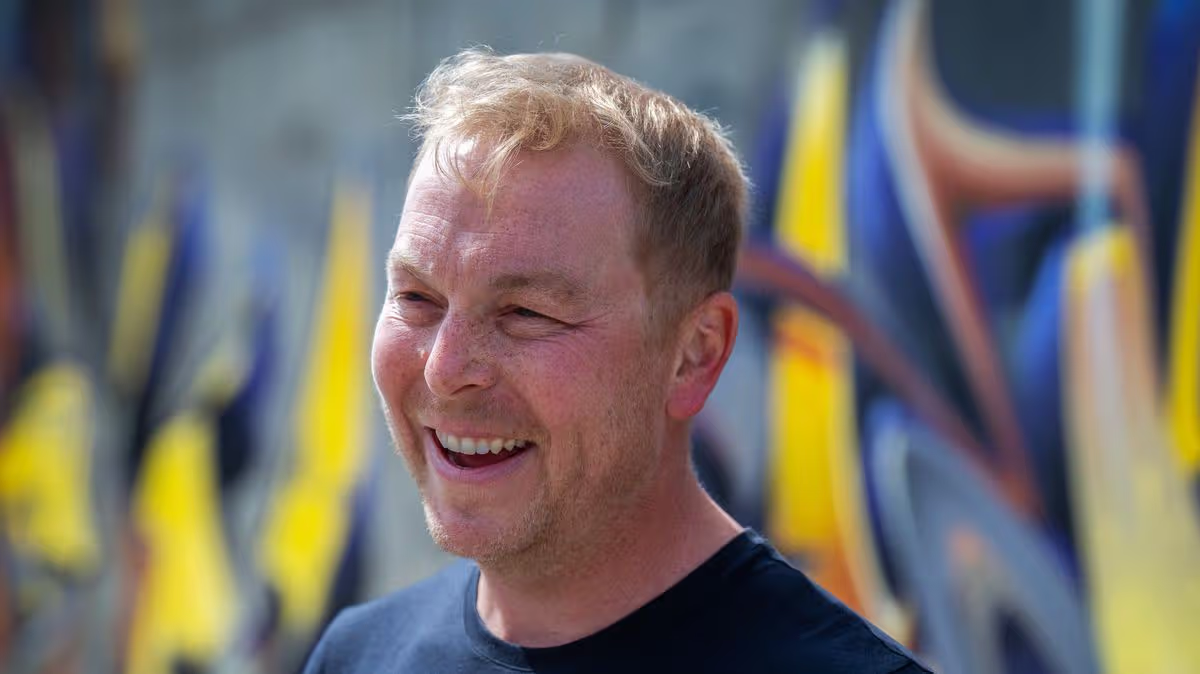
Sir Chris Hoy, the revered six-time Olympic cycling champion, has shared a candid update on his life following a sobering medical prognosis. In 2024, Sir Chris publicly disclosed that his prostate cancer had progressed to stage four, spreading to his bones, with doctors estimating his remaining life expectancy to be between two and four years. Rather than retreating from public view, the 50-year-old Scot has chosen a path of profound activism, aiming to redefine what it means to live with a terminal diagnosis. He reports that he is “doing fine” and is channeling his legendary focus into a powerful new venture: a charity bike ride named the Tour de 4. For Hoy, this initiative is about far more than fundraising; it is a living demonstration that a diagnosis does not have to dictate the terms of one’s identity or capacity for achievement.
The Tour de 4, set to take place in Glasgow, is the central mission in Hoy’s life at present. The event supports five major UK cancer charities and, in its inaugural year in 2025, raised an astonishing £3.1 million. Yet, its symbolic impact is equally significant. Hoy explicitly describes the tour as an effort to challenge societal attitudes, stating, “It’s trying to demonstrate, rather than just talking about it, that all these people who are in a similar situation to me… that there’s plenty of life left in us.” He is determined to show that those living with stage four cancer can still set ambitious goals, contribute meaningfully, and experience joy. The event has become a powerful driving force for him, transforming a personal challenge into a collective statement of resilience and hope.
Navigating each day with a terminal illness requires a deliberate mental framework, and Hoy has developed his own. He admits that initially, thoughts of his condition would dominate his mornings, but he and his family have consciously adopted a forward-looking philosophy. “The thing that we’ve tried to do is to not look too far ahead and to still have plans for the future and still have goals and aims and things to look forward to,” he explains. This mindset is not about denying reality but about actively choosing to build a life within it. He extends this insight beyond cancer, noting, “You don’t have to be facing a stage four cancer diagnosis to have tough moments,” suggesting that the practice of setting future goals is a universally valuable tool for navigating adversity.
Integral to this philosophy is a renewed appreciation for the present moment. Despite the “big targets and big events” like the Tour de 4, Hoy emphasizes the importance of savoring small, everyday pleasures. He cautions against the human tendency to rush forward, saying, “Don’t forget to enjoy the moment and don’t forget to appreciate the present, because it passes you by very easily.” For him, this mindfulness is what keeps him grounded. It is a conscious balance between striving for major future achievements and fully inhabiting the now, finding value not just in grand accomplishments but in the quiet, simple details of daily life that are so easily overlooked.
The upcoming Tour de 4 is already witnessing remarkable public support, with the two main ride categories sold out. Hoy encourages continued participation through the remaining spaces on static bikes in the track centre and on a family-friendly one-kilometre loop, or through donations. He is acutely aware of the challenge ahead, acknowledging, “It really is going to be a big challenge to try and beat the £3.1 million target,” but he underscores the direct impact of every contribution: “Every single pound will go towards improving people’s lives, living with cancer, and for the future as well.” His work ensures that the legacy of his effort will extend far beyond his own story, funding research and support for others.
Sir Chris Hoy’s journey today is a powerful testament to the human spirit. While he maintains optimism about the future role of artificial intelligence in developing new treatments, his immediate focus is on tangible action and changing perceptions. He is leveraging his platform not for pity, but for purpose—proving that life, however uncertain its length, is defined by depth of character, commitment to others, and the courage to find joy amid hardship. In facing his own mortality with such openness and determination, Sir Chris continues to inspire, not as a distant sports icon, but as a profoundly human figure showing the world how to live with grace, strength, and unwavering hope.