
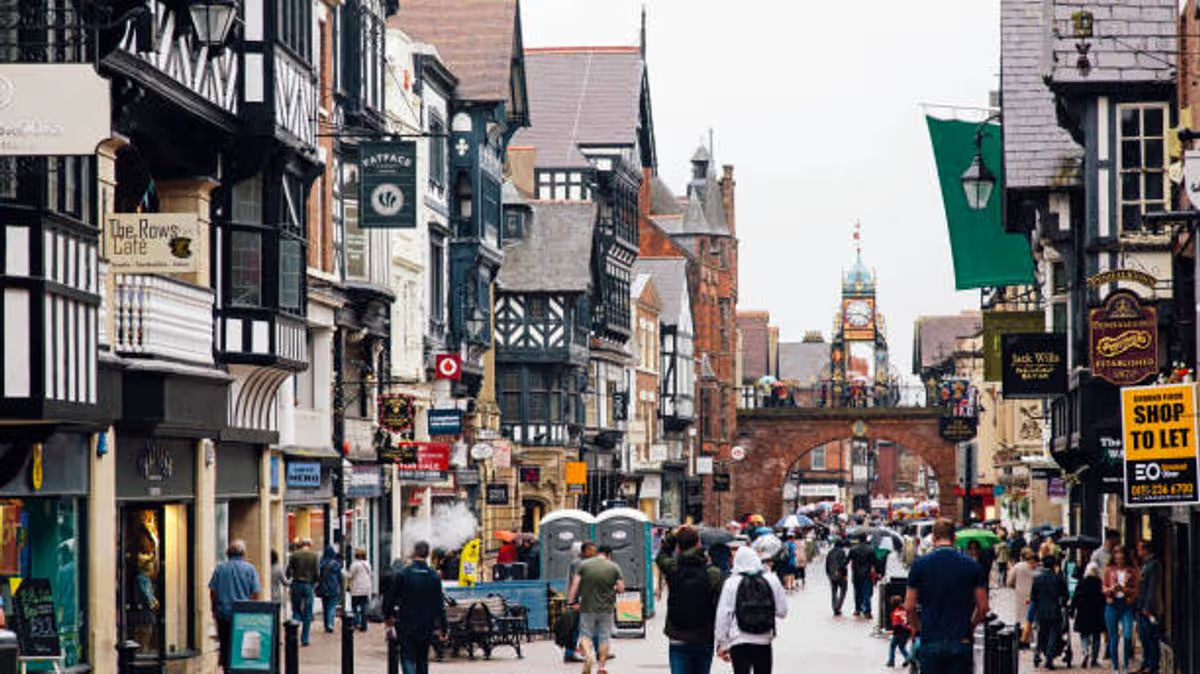


For over a century, the name Hancock & Wood has been woven into the very fabric of Warrington, a steadfast presence on Bridge Street since 1914. This family-owned department store, lovingly managed by four successive generations of the Hancock family, represents far more than a retail outlet; it is a living archive of the community’s collective memory, having witnessed the tumultuous events of the 20th and 21st centuries. From its founding by Frederick Samuel Hancock, who shortly after opening enlisted to fight in the First World War, to surviving the profound shock of the 1993 IRA bombings in the town centre, the store has been a symbol of resilience. Now, after 112 years of serving generations of shoppers, the difficult and heartrending decision has been made to close its doors for good next month, marking the end of a defining era for the local high street.
The challenges leading to this closure are multifaceted and reflect the profound shifts in how we live and shop in the modern era. In a heartfelt statement, the owners cited the relentless rise of online shopping, crippling increases in business rates, and the intense competitive pressure from out-of-town retail parks as the primary forces behind their decision. Director Christopher Hancock, whose grandfather founded the store, spoke with palpable emotion about the “sleepless nights” spent grappling with this inevitability. He expressed that despite every effort, the business had reached “the end of the road,” a sentiment underscored by the stark economic reality that operating costs have soared far beyond inflation without a corresponding increase in turnover, a struggle that intensified dramatically in the wake of the pandemic.
Christopher Hancock’s reflections paint a poignant picture of a high street and a town centre transformed, and not, in his view, for the better. “Warrington is not what it used to be,” he noted, mourning the change in character and vitality. The store itself, a Warrington institution spanning two floors and over eleven departments—from haberdashery to homeware—was a destination that cultivated deep loyalty. One lifelong customer shared with the BBC, “It’s one of my favourite shops. I came here as a baby, my mum always brought me here and I love this shop.” This personal connection, replicated across countless families, highlights what will be lost: not just a place to purchase goods, but a cornerstone of community ritual and personal history.
The legacy of Hancock & Wood is punctuated by moments of shared community trauma and endurance, most notably during the 1993 Warrington bombings. The store, physically located at the heart of the devastation, withstood the blast—a testament to its rooted presence. Mr. Hancock recalled the personal scare of that day, noting his brother was caught in the second explosion and, while unharmed, was “fairly shaken.” That the business endured such a dark chapter, only to succumb decades later to quieter, more insidious economic pressures, adds a layer of bitter irony to its closure. It survived a sudden act of violence, but could not withstand the slow-burning challenges of a changing retail landscape.
For the staff and the Hancock family, the impending closure is laden with profound sadness and gratitude. Mr. Hancock emphasised that it had been “a joy to serve” their customers over the decades, a simple phrase that speaks volumes about the store’s ethos of personal service and community commitment. The process of breaking the news to long-serving employees was described as one of the most difficult aspects, underscoring that this is not merely a business transaction but the dissolution of a work family. The store’s closure signifies the loss of local jobs and the quiet expertise of staff who knew their products and their customers by name, a sharp contrast to the anonymity of digital checkout processes.
As Hancock & Wood prepares to turn off its lights for the final time next month, its departure leaves a void on Bridge Street that extends far beyond empty retail space. It represents the fading of a particular model of commerce—one built on familial stewardship, direct personal relationships, and physical presence within the town’s civic heart. Its story is a powerful microcosm of the struggles facing independent retailers across the nation, caught between the tides of technological change, economic policy, and shifting consumer habits. The store’s century-long journey, from its hopeful Edwardian opening to its poignant modern-day closing, serves as a heartfelt reminder of what is sacrificed in the name of progress, and a tribute to the enduring human desire for community spaces that hold our shared stories.