




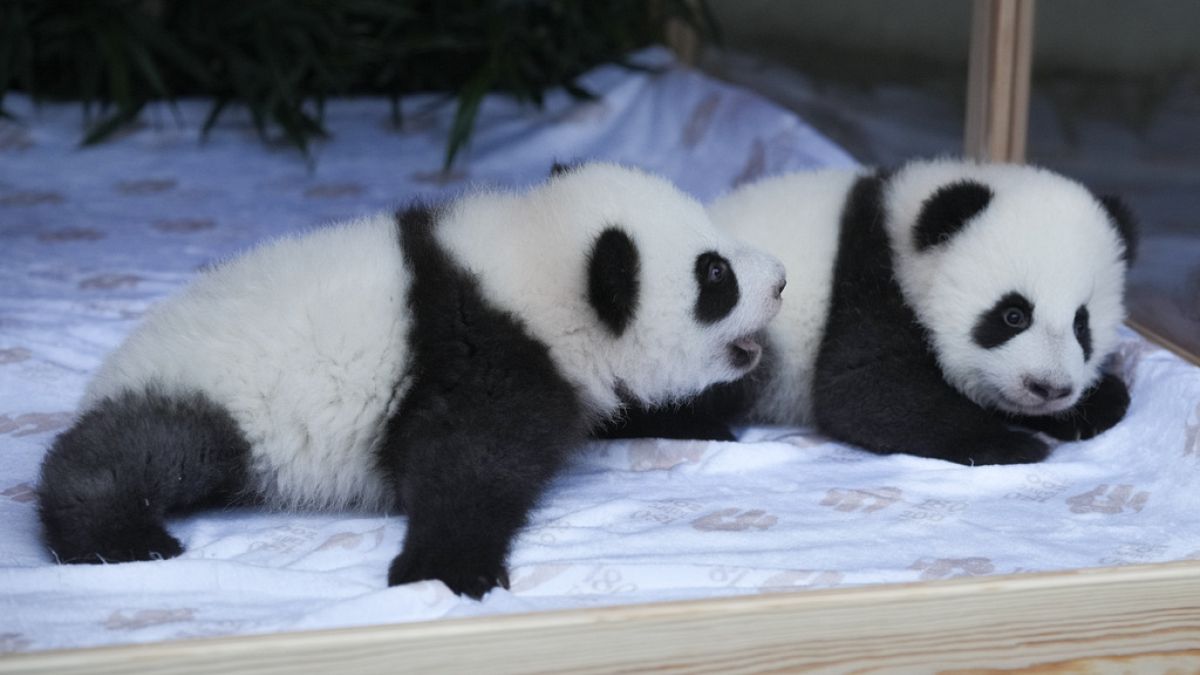
The Berlin Zoo, a vibrant hub of biodiversity and conservation, has recently unveiled its newest treasures to the public: giant panda twins, Leni and Lotti. Since Friday, visitors have flocked to the zoo to witness the adorable duo alongside their mother, Meng Meng, marking a significant moment for both the zoo and Germany’s conservation efforts. Born on August 22nd of the previous year, the playful sisters have blossomed into curious and energetic cubs, captivating onlookers with their endearing antics. Director Andreas Knieriem, recognizing the pandas’ peak activity period, advises visitors seeking optimal viewing opportunities to arrive in the morning, when the panda family is most likely to be actively exploring their enclosure. This captivating display offers a rare glimpse into the lives of these remarkable creatures, highlighting their growing personalities and the strong bond they share with their mother.
The arrival of Leni and Lotti, also known by their Chinese names, Meng Hao (“beautiful dreams”) and Meng Tian (“sweet dreams”), represents more than just an addition to the zoo’s inhabitants; it symbolizes a significant achievement in giant panda conservation. Their names, carefully chosen as a tribute to Berlin’s rich cultural heritage, honor two iconic figures: Marlene Dietrich, the legendary actress and singer who embodied glamour and resilience, and the historic Charlottenburg district, the very location of the Berlin Zoo. This thoughtful naming convention underscores the importance of these cubs not only to the zoo but also to the city of Berlin, weaving them into the fabric of the city’s identity and its commitment to preserving endangered species.
Since 2017, the Berlin Zoo has held the distinguished position of being the sole home to giant pandas in Germany, solidifying its role as a leader in wildlife conservation and education. The birth of Leni and Lotti marks the second successful panda birth in the country’s history, an exceptionally rare and celebrated achievement. This accomplishment underscores the zoo’s expertise in providing optimal care for these sensitive animals, creating an environment conducive to their breeding and development. The successful births further contribute to the broader global effort to protect and preserve this vulnerable species, signifying hope for the future of giant pandas.
The significance of Leni and Lotti’s births extends beyond their undeniable charm and contribution to the zoo’s appeal. Giant pandas are notoriously difficult to breed in captivity, presenting a considerable challenge for conservationists worldwide. Their complex reproductive biology, coupled with specific environmental and dietary requirements, makes successful breeding a remarkable feat, highlighting the dedication and expertise of the Berlin Zoo’s staff. Each birth is considered a triumph, a testament to the meticulous care and specialized knowledge required to ensure the continuation of this iconic species.
The precarious status of giant pandas in the wild adds another layer of importance to the birth of these cubs. With only an estimated 1,800 individuals remaining in their native habitat in China, giant pandas are classified as vulnerable, their survival constantly threatened by habitat loss, fragmentation, and climate change. The dwindling wild population underscores the critical role of captive breeding programs, like the one at the Berlin Zoo, in maintaining a genetically diverse and healthy population as a safeguard against extinction. These programs serve as a vital component of global conservation efforts, contributing to the long-term survival of this emblematic species.
The birth of Leni and Lotti at the Berlin Zoo is a beacon of hope for giant panda conservation. It signifies the success of dedicated conservation efforts, the power of international collaboration, and the unwavering commitment to preserving biodiversity. The adorable twins, now on public display, offer visitors not only the opportunity to witness these magnificent creatures up close but also to learn about the challenges they face in the wild and the importance of protecting their fragile habitat. Leni and Lotti, embodying the hopes and dreams of conservationists, symbolize the potential for positive change and the ongoing fight to ensure the survival of this beloved species for generations to come.