


Paragraph 1:
Amid a backdrop of deepening energy anxiety across Europe, a confidential plan from the European Commission has surfaced, outlining a sweeping effort to reduce the crushing weight of electricity bills for households and businesses. This initiative, which seeks to fundamentally restructure how grid charges and taxes are applied, comes as millions of citizens are grappling with soaring costs. The urgency is heightened by the war in the Middle East, which has blocked vital global oil and gas shipments through the Strait of Hormuz, sending shockwaves through energy markets. Even before this conflict, Europe was mired in an energy crisis, with industries pleading for immediate relief. Now, with prices spiraling further, the push for action has reached a critical point, centering on the realization that the current system—where fees and taxes often cost more than the power itself—is unsustainable.
Paragraph 2:
For ordinary families and companies, the breakdown of an electricity bill tells a telling story. On average, network charges account for over a quarter of a household’s bill and a fifth for businesses, while government taxes and levies pile on another significant portion. Combined, these fixed costs regularly surpass the actual price of the electricity consumed. This structure has placed a disproportionate burden on consumers, especially when volatile global events inflate energy prices. The EU’s answer is a bold reversal: under the new proposal, electricity—particularly when generated from clean sources like wind and solar—would be taxed less than fossil fuels. For energy-intensive industries, member states could even slash electricity taxes to zero, a measure aimed at protecting Europe’s industrial competitiveness on the global stage.
Paragraph 3:
Perhaps the most compassionate element of the plan focuses on society’s most vulnerable. The Commission intends to eliminate electricity taxes entirely for struggling households, ensuring that those least able to pay are shielded from systemic costs embedded in their bills. This move acknowledges that the energy transition must be fair and inclusive, preventing the shift to a greener economy from worsening poverty. However, this humanitarian focus walks a tightrope of political reality. Taxation remains a fiercely guarded national prerogative in the EU, and any effort to harmonize rules across 27 member states is likely to face resistance. Governments must also balance the social and economic benefits of lower bills against the sudden loss of substantial public revenue—a difficult equation in already strained national budgets.
Paragraph 4:
Critics and advocates alike highlight the fiscal challenges ahead. Isabelle Brachet of Climate Action Network Europe points out that many EU countries lack the financial breathing room to fund such consumer protections without new sources of revenue. She argues for a permanent tax on the massive profits still being reaped by fossil fuel companies, which would both fund the transition and encourage investment away from polluting energy. This sentiment reflects a broader view: that the current crisis, while painful, presents an opportunity to accelerate the shift toward renewables and break Europe’s long-standing dependence on imported fuels—a dependency that leaves the bloc perilously exposed whenever international instability strikes.
Paragraph 5:
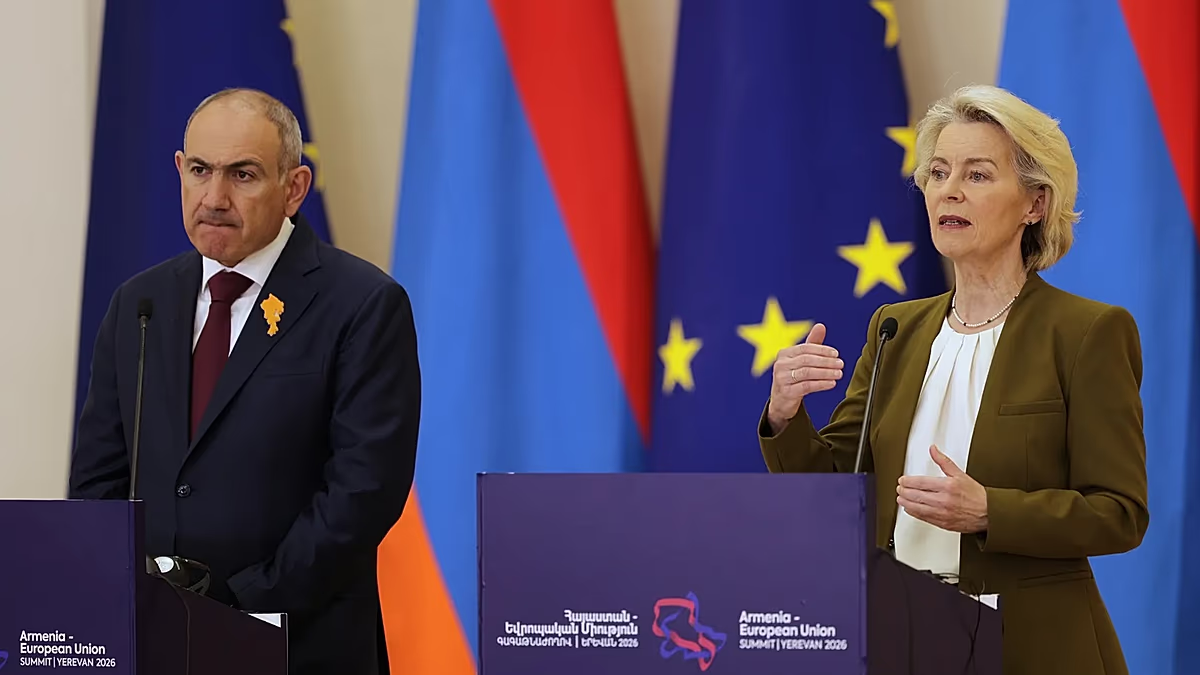
At the heart of the Commission’s vision is a strategic drive to “electrify” the European economy—replacing fossil fuels in heating, transport, and industry with clean electricity. This is not just an environmental imperative but an economic one. As Commission President Ursula von der Leyen highlighted, the Middle East conflict has already added over €22 billion to the EU’s fossil fuel import bill without bringing a single additional unit of energy. To support this electrification push, the proposal calls for urgent upgrades to Europe’s aging grid infrastructure, including better cross-border data sharing and the adoption of smart technologies. This would allow the system to operate more seamlessly as a unified network, capable of managing larger flows of renewable energy and empowering consumers with real-time data to reduce usage during peak hours.
Paragraph 6:
Looking forward, the Commission plans to introduce a comprehensive electrification strategy this spring, setting targets and tackling barriers in key sectors like industry, transport, and buildings. President von der Leyen has urged EU lawmakers to approve the grid overhaul by summer, stressing a “high sense of urgency.” The draft proposal is set to be formally unveiled in late April, after which it will enter negotiations between the European Parliament and member states. While the path is fraught with political and financial hurdles, the underlying message is clear: Europe’s future hinges on scaling up homegrown, affordable, and reliable clean energy. This initiative represents not only a short-term lifeline for those burdened by high bills but a foundational step toward a more resilient and sovereign energy system for generations to come.