


The Perils of a Penny: How a Common Credit Card Misunderstanding Silently Drains Your Wallet
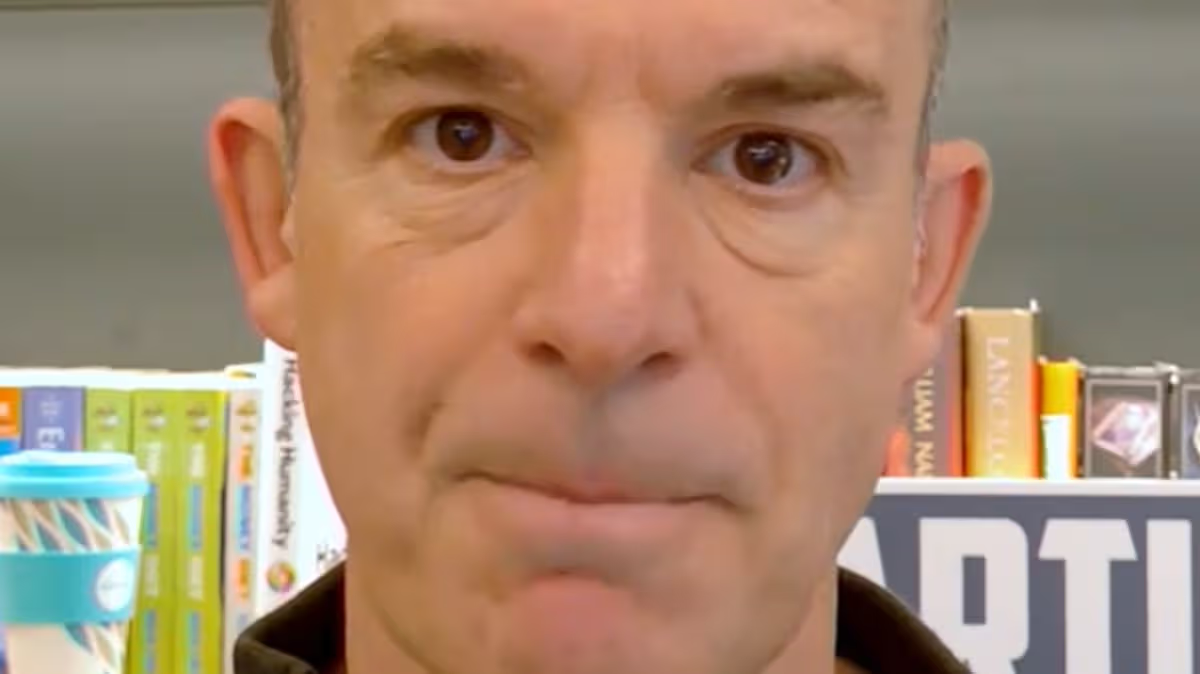
In an era of rising living costs and mounting personal debt, financial guru Martin Lewis has issued a stark and vital warning that cuts through the complexity of everyday money management. The founder of Money Saving Expert has highlighted a fundamental, yet widely misunderstood, rule about credit card interest that is quietly costing countless consumers thousands of pounds. His message is simple, but its implications are profound: the mechanics of credit card interest are not intuitive, and even the most diligent cardholders can fall into a trap with devastating cumulative effects.
The central, shocking rule Lewis explains is what he calls the “weird” calculus of credit card interest. Most people logically assume that interest is charged only on the outstanding balance they have not repaid. However, the reality is far more punitive. Lewis illustrates this with a clear example: if you spend £1,000 on your card and pay off the full £1,000, you rightly incur no interest. But if you pay back £999.99—leaving just a single penny unpaid—you are not charged interest on that lone penny. Instead, the card issuer applies interest to the entire original £1,000 balance. This means missing your full payment by even the smallest amount triggers interest on the whole sum, a rule that Lewis stresses with his long-standing catchphrase: you must pay off your credit card in full. The “in full,” he emphasizes, is the critical, non-negotiable part of the advice.
This pitfall becomes especially dangerous and ironic when it involves reward or cashback credit cards, which are often marketed as savvy financial tools. Lewis points out that if you fail to pay the statement balance in full, you “neuter” the card’s primary benefit. The moment interest is applied, its typically high rate almost certainly erases any cashback or reward points earned, turning the card from a potential asset into a costly liability. The allure of rewards can blind users to the strict discipline required, making the financial setback doubly frustrating.
What makes this scenario so commonplace and insidious is a pervasive confusion between two key figures: the statement balance and the current balance. Many cardholders do not realise these are distinct. Your statement balance is the fixed, snapshot amount you owed at the end of your last billing cycle; this is the exact number you must clear completely to avoid interest. Your current balance, however, is a live figure that includes all new transactions since that statement was issued. Accidentally paying the current balance—or simply confusing the two—can result in unknowingly leaving a portion of the statement balance unpaid. This tiny oversight is all that’s needed to activate the interest on the entire amount.
Once triggered, the damage compounds swiftly. The interest charged is added to your balance, and that new, larger balance then generates more interest the following month. This creates a silent, snowballing cycle of debt. As noted by the Single Parents Portal, a small, accidental shortfall can grow into a significant financial burden “surprisingly quickly.” Their endorsed solution is both simple and foolproof: set up a direct debit to automatically pay the full statement balance each month. This automated discipline removes human error, ensuring you never inadvertently “fall short by a penny” and never give the card company the opening to charge that punitive interest.
With credit card borrowing currently at a peak, Lewis’s caution is exceptionally timely. His advice transcends mere money-saving; it is a guardrail against a systemic trap embedded in everyday financial products. The ultimate takeaway is a call for precision and automation: pay in full, every single time, and know with absolute certainty which balance you are paying. In a financial landscape filled with complexity, this clear rule empowers consumers to protect themselves from a costly misunderstanding that, penny by penny, can drain their hard-earned money.