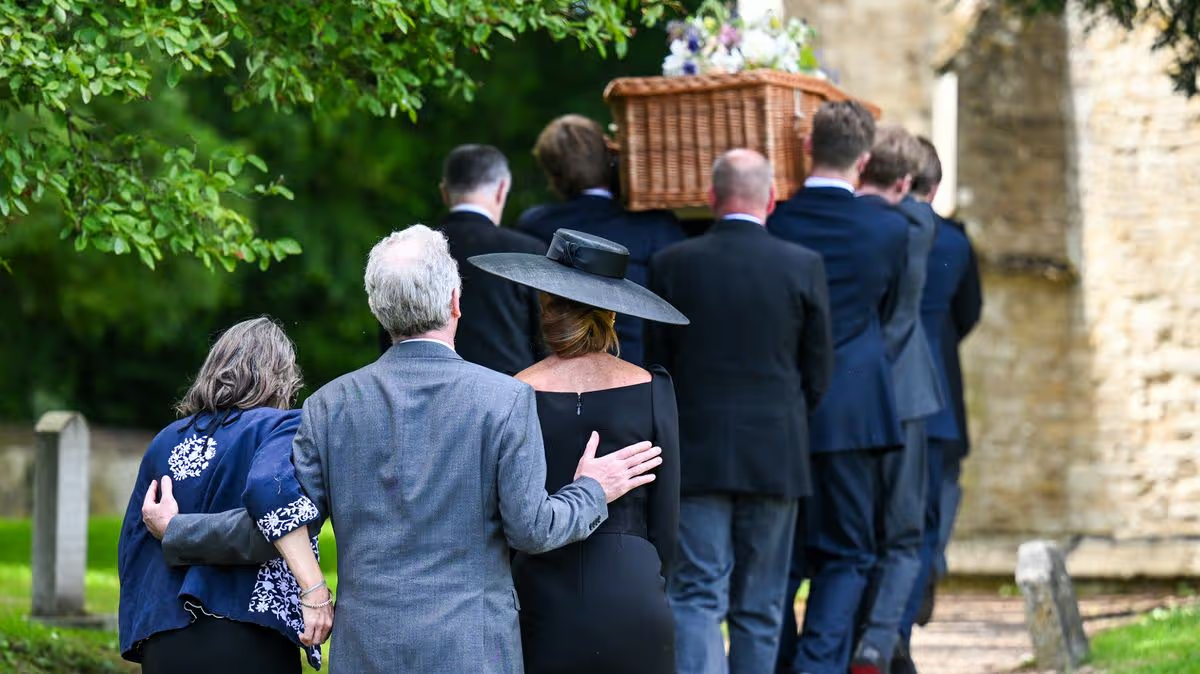


On a quiet, sun-dappled afternoon in Oxfordshire, a chapter of personal royal history gently closed as family and friends gathered to bid farewell to Lady Pamela Hicks. The funeral service at St Bartholomew Church in Wallingford marked the final journey of a woman whose life was intricately woven into the fabric of the British monarchy for nearly a century. Her passing last week, at the venerable age of 97, coincided poignantly with the very day of the King’s official birthday parade, a juxtaposition that felt symbolic of a life spent in the orbit of grand public spectacle, yet anchored by deep, enduring private bonds. As her wicker coffin was carried into the church, it was her immediate family—most notably her daughter, India, who had announced her mother’s death—who led the intimate congregation, offering comfort and sharing in the quiet grief of losing a matriarch.
Lady Pamela was far more than a footnote in royal annals; she was a cherished confidante and a lifelong friend to the late Queen Elizabeth II. Their connection was forged in youth when Pamela, as the daughter of Lord Mountbatten, Prince Philip’s uncle, served as a bridesmaid at the 1947 Westminster Abbey wedding. This role cemented a relationship that would see her become a trusted lady-in-waiting, present at one of the most pivotal moments of Elizabeth’s life: the sudden accession to the throne in Kenya upon King George VI’s death. Through decades of public service and private loyalty, Lady Pamela offered the Queen a rare blend of familial understanding, historical perspective, and witty companionship, a friendship that endured until the monarch’s own passing.
Her life was a tapestry of extraordinary moments and profound personal trials, reflecting the tumultuous twentieth century. She experienced the glitter of society weddings—her own in 1960 featured a young Princess Anne as bridesmaid—and the deep sorrow of tragic loss, most devastatingly the 1979 assassination of her father, Lord Mountbatten, by an IRA bomb. She stood beside the Queen at the unveiling of his memorial statue, a public tribute to a private grief. Later, she faced the death of her husband, the celebrated interior designer David Hicks, in 1998. Through it all, her resilience and sharp intellect, qualities noted by King Charles in his heartfelt tribute, saw her navigate these chapters with grace, becoming a living repository of personal and national history.
The funeral’s timing, mere hours after the splendour of Trooping the Colour, meant the royal family was not in physical attendance, yet their presence was deeply felt. King Charles, who was “greatly saddened” by her death, issued a moving statement praising her “long life and loyal service” and recalling her “warmth, wit and perspicacity.” This official acknowledgement underscored the genuine affection and respect the Royal Family held for a woman who was both a dedicated servant and a beloved cousin. Her absence leaves a void in the circle of those who shared the unique burdens and joys of royal life from within, a perspective she later chronicled in her own memoirs.
Indeed, Lady Pamela’s legacy extends beyond personal relationships into the cultural memory of the monarchy. She became the oldest living descendant of Queen Victoria after Elizabeth II’s death, a living link to a bygone era. Her life provided a source for popular retellings, most notably in Netflix’s The Crown, where she appeared as a character in the dramatisation of the royal wedding. With characteristic sharpness, she reportedly judged the series “rather good,” displaying the clear-eyed perception that characterised her view of the institution she served. Her story, told through her own writings and her daughter India’s public reflections, offered the world a nuanced, insider’s glimpse of history, devoid of melodrama yet rich with humanity.
As the service in Oxfordshire concluded, it celebrated not just a lady-in-waiting, but a woman who waited with remarkable patience, insight, and loyalty through a century of change. She witnessed the evolution of the monarchy from the age of empires to the modern media era, all while maintaining the unshakeable core of friendship. Lady Pamela Hicks’ journey was one of privilege, yes, but also of profound duty, love, and loss. Her funeral marked the passing of an irreplaceable witness to history and, more importantly, a dearly missed mother, grandmother, and friend whose warmth and wisdom left an indelible impression on all who knew her.