




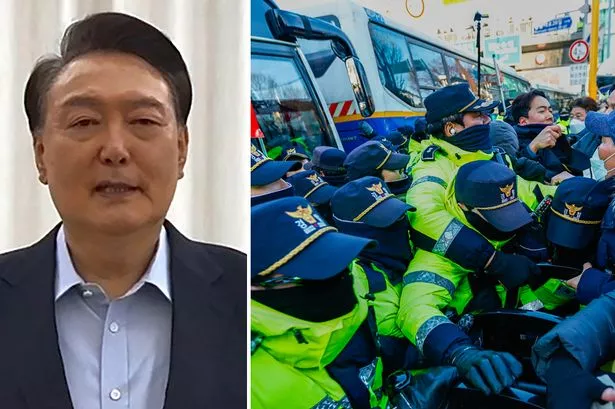
The hypothetical scenario presented – South Korean President Yoon Suk Yeol declaring martial law, subsequently being suspended from office, and ultimately detained – necessitates a deep exploration of the constitutional, political, and social ramifications of such an event. While purely speculative, analyzing this hypothetical situation allows for an examination of South Korea’s democratic framework, its resilience against potential threats, and the intricate interplay of power within its government. Understanding these processes also provides valuable insight into the potential consequences of such drastic actions, both for the nation and the individual involved.
The declaration of martial law itself represents a significant departure from democratic norms. In South Korea, as in many democratic nations, martial law is reserved for extreme circumstances, typically involving widespread civil unrest, foreign invasion, or natural disasters that severely compromise public order and safety. The President, as Commander-in-Chief, holds the authority to declare martial law, but this power is not absolute. The National Assembly, South Korea’s legislative body, plays a crucial role in overseeing and potentially revoking such a declaration. If President Yoon were to declare martial law, it would likely be met with immediate and intense scrutiny from the legislature, the judiciary, and the public. The legitimacy of such a declaration would be fiercely debated, particularly if the perceived justification for it lacked broad public support. The nature and extent of the perceived threat would be critical factors in determining the public and political response.
The hypothetical suspension of President Yoon following the declaration of martial law suggests a swift and decisive response from other branches of government. This action implies a determination to uphold constitutional processes and prevent the potential abuse of executive power. The specifics of such a suspension would depend heavily on the intricacies of South Korean constitutional law. It is likely that the National Assembly would play a central role, potentially invoking impeachment procedures or other mechanisms designed to remove a president deemed unfit for office. The Constitutional Court, South Korea’s highest judicial authority on constitutional matters, would likely be involved in adjudicating the legality and legitimacy of the suspension. The involvement of these institutions underscores the checks and balances inherent in a democratic system, designed to prevent the concentration of unchecked power in any single individual or branch of government.
The final act of detaining the suspended president further complicates the situation. This step signals a potential criminal investigation into the president’s actions, raising questions about the nature of the alleged offenses. Were the charges related to the declaration of martial law itself, perhaps alleging an abuse of power or an attempt to subvert democratic processes? Or did the detention stem from other, unrelated allegations? The details of the charges would be crucial in understanding the motivations behind the detention and the potential legal ramifications. Regardless of the specifics, the detention of a former head of state signifies a commitment to the rule of law, even at the highest levels of government.
The hypothetical scenario raises important questions about the potential political and social consequences of such a dramatic series of events. The declaration of martial law, the suspension of the president, and the subsequent detention would undoubtedly create a period of intense political instability and uncertainty. Public trust in the government could be severely eroded, potentially leading to widespread protests and civil unrest. The stability of South Korea’s democratic institutions would be tested, as various political factions and interest groups vied for influence and control. The international community would also be closely watching, with concerns about the implications for regional security and stability. South Korea’s allies would likely be urging a swift return to constitutional order and a peaceful resolution to the crisis.
Ultimately, this hypothetical situation serves as a stark reminder of the fragility of democratic institutions and the importance of upholding the rule of law. The actions of a single individual, even the head of state, can have profound and far-reaching consequences. The ability of a nation to effectively respond to such challenges, to ensure accountability and transparency, and to ultimately preserve democratic principles, is a testament to the strength and resilience of its institutions and its people. While this scenario remains purely hypothetical, exploring its potential ramifications provides valuable insights into the complexities of governance, the importance of checks and balances, and the enduring need for vigilance in safeguarding democratic values.