



The human cost of a growing crisis is now measured in seconds in the United Kingdom. Every 80 seconds, another person receives the devastating news that they have cancer, according to new analysis by Cancer Research UK. This relentless pace translates to over 403,000 new diagnoses each year, a record high that underscores a profound and mounting challenge for the nation’s health. While medical science has made incredible strides, this surge in cases, driven largely by an ageing and growing population, is placing an almost unsustainable strain on the systems designed to provide care and hope. Behind these stark statistics are hundreds of thousands of individuals, families, and communities facing a journey defined not just by illness, but by an increasingly anxious wait for the treatment that could save their lives.
This alarming increase in diagnoses is not being met with a corresponding improvement in early detection, a critical factor in survival. The charity’s latest report reveals a deeply troubling stagnation: over the past decade, the rate of early-stage detection has inched forward only marginally, from 54% to 55%. This means that nearly half of all cancer patients are still learning of their disease at a later, more difficult-to-treat stage. While it is true that mortality rates have declined and long-term survival has improved—a testament to research and frontline care—this progress is now in serious jeopardy. The system is buckling under the weight of demand, with cancer waiting times across the UK among the worst ever recorded. The hard-won gains of past decades risk grinding to a halt, not for a lack of scientific knowledge, but due to a capacity crisis within the health service itself.
The human consequence of this systemic strain is quantified in a waiting list of profound anxiety: approximately 107,000 cancer patients across the UK in 2025 waited more than 62 days to begin their treatment after an urgent referral. These are not just numbers on a spreadsheet; they are people living in a state of suspended animation, their futures uncertain, their fear growing with each passing day. In response, the UK Government has unveiled a National Cancer Plan for England, which Cancer Research UK acknowledges as a “crucial step.” The plan’s ambitions—to diagnose cancers earlier, meet waiting time targets, and improve treatment—are precisely what is needed. However, as the charity’s chief executive, Michelle Mitchell, urgently notes, publishing the plan cannot be mistaken for “job done.” These ambitions require immediate, sustained funding and resources to translate political commitment into tangible improvements for patients sitting in waiting rooms.
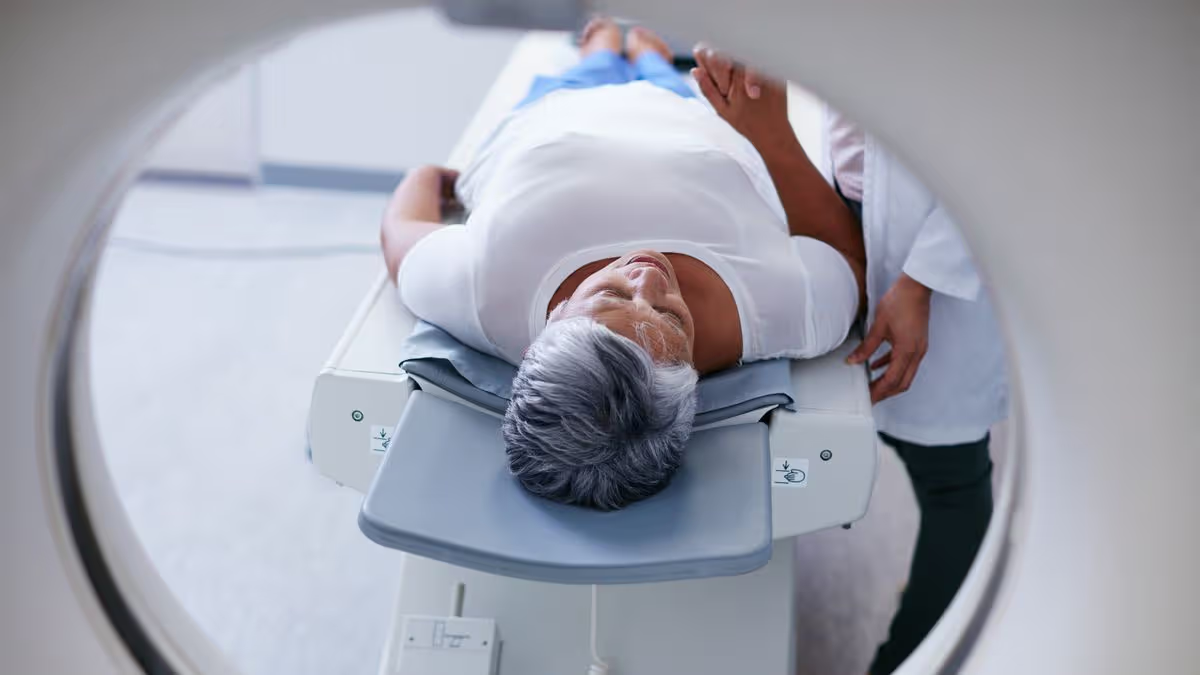
To turn the tide, a dual strategy of innovation and investment is paramount. Cancer Research UK is advocating for the rapid, broad rollout of proven screening programmes, such as those for lung cancer, and the fast-tracking of cutting-edge diagnostic tests into the NHS. Simultaneously, there must be significant investment in the specialist workforce and equipment that form the backbone of cancer care. This need is acutely felt in nations like Northern Ireland, where services are under particular pressure. The Government points to its record funding and a rise in diagnostic tests, asserting that its plan will ensure patients “receive a diagnosis faster, treatment sooner and better support.” A cornerstone of this preventative approach is the landmark Tobacco and Vapes Bill, aimed at protecting future generations from the leading cause of cancer. Yet, for those in the system today, the gap between promise and reality remains a source of immense stress.
The landscape of this crisis is also being shaped by specific diseases. As Natalia Norori of Prostate Cancer UK highlights, prostate cancer—the UK’s most common cancer, with 64,000 new cases annually—is a significant driver of the rising diagnosis rates. Her comments bring a sharp focus to the path forward: early detection is everything. Prostate cancer is highly treatable when caught early, yet with over a million men projected to be living with the disease by 2040, the systems for finding it sooner must be prioritised. This story is echoed across other cancer types, reinforcing that a one-size-fits-all approach is insufficient. The national response must be both universal in its strengthening of infrastructure and nuanced in its targeting of the unique challenges posed by different cancers.
Ultimately, the record high in cancer diagnoses represents a complex intersection of demographic reality, scientific progress, and systemic vulnerability. The UK stands at a pivotal moment. It possesses the medical knowledge and a stated governmental plan to create a world-class cancer service. The missing ingredients are the urgent pace, the necessary funding, and the unwavering focus required to bridge the chasm between the current experience of patients—marked by fearful waits—and the promise of a system where a timely diagnosis and rapid treatment are guaranteed. The goal of ensuring that 75% of patients diagnosed from 2035 are cancer-free or living well after five years is admirable, but it will remain a distant aspiration unless the warnings in today’s figures are heeded with immediate and decisive action. The clock is ticking, every 80 seconds.