


Paragraph 1
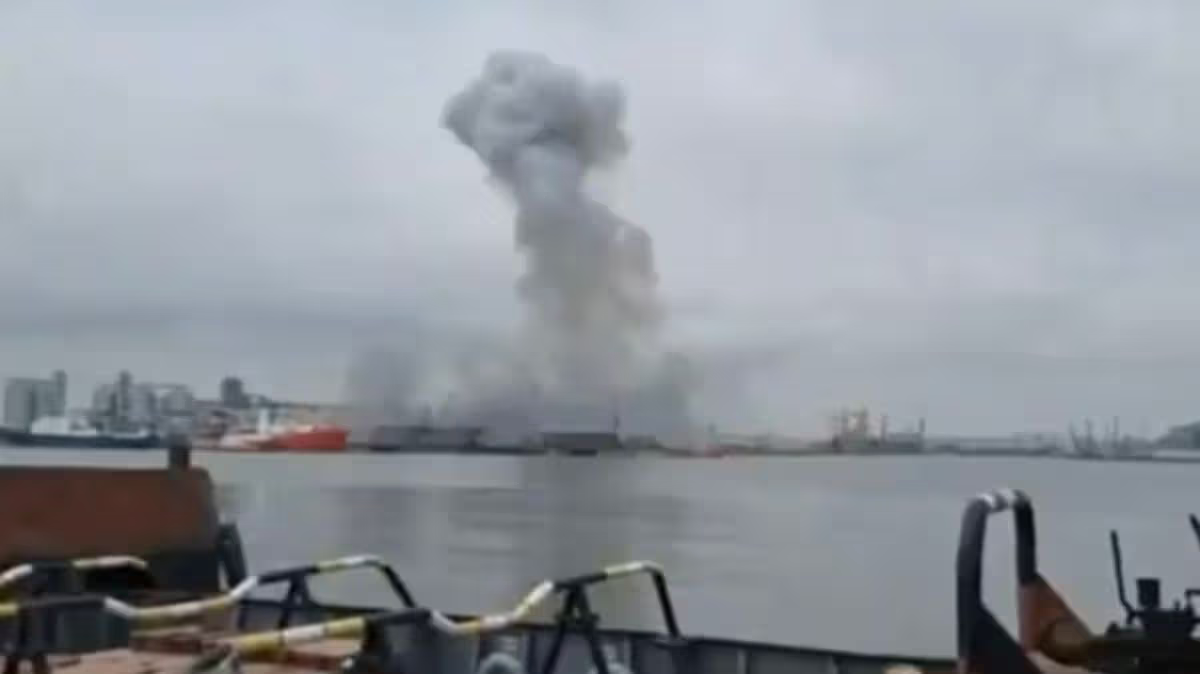
In recent weeks, a wave of anxiety has rippled through the travel plans of countless holidaymakers across Europe, sparked by stark warnings about a potential jet fuel shortage. The concern stems from statements by Fatih Birol, the executive director of the International Energy Agency (IEA), who indicated that due to ongoing Middle East conflicts and disruptions in the critical Strait of Hormuz shipping route, Europe’s reserves of jet fuel could be reduced to as little as six weeks’ supply. Birol framed this not as a minor supply hiccup but as potentially “the largest energy crisis we have ever faced,” with a direct consequence being possible flight cancellations if the situation does not improve. This alarming prognosis has naturally left passengers, many with long-awaited and dearly paid-for holidays on the horizon, searching for answers and reassurance from the airlines they are booked to fly with, turning to social media as a direct line of inquiry.
Paragraph 2
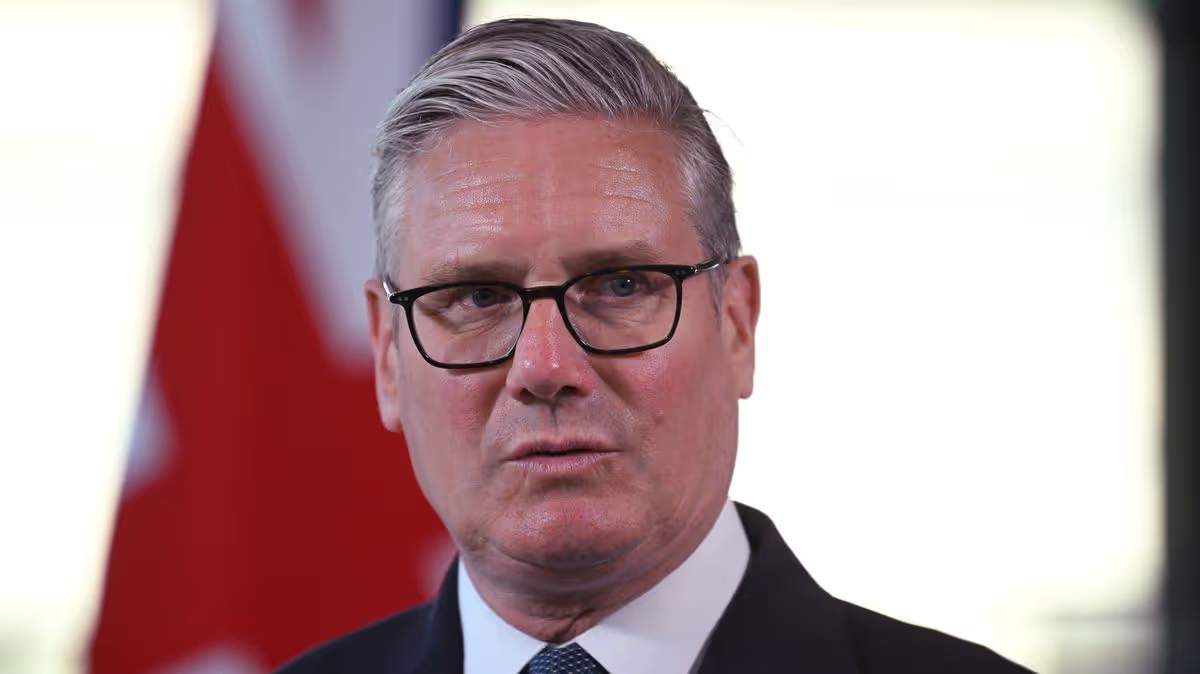
The political sphere has quickly engaged with these public fears. Liberal Democrat MP Liz Jarvis formally raised the issue in Parliament, questioning the Secretary of State for Transport on what assessment had been made of jet fuel availability and pricing trends, and what the potential impact might be on airfares for consumers. In response, Transport Secretary Keir Mather sought to project calm, stating that while the government is actively monitoring the impact of the Middle East conflict on fuel supplies in coordination with the Department for Energy Security and Net Zero, there is “no immediate cause for concern relating to fuel stocks.” He cautioned that speculation was unhelpful and highlighted that many airlines use financial strategies, like locking in fuel prices in advance, to insulate themselves and their customers from sudden price spikes. The government’s message was clear: they are watching the situation closely, but the public should not panic.
Paragraph 3
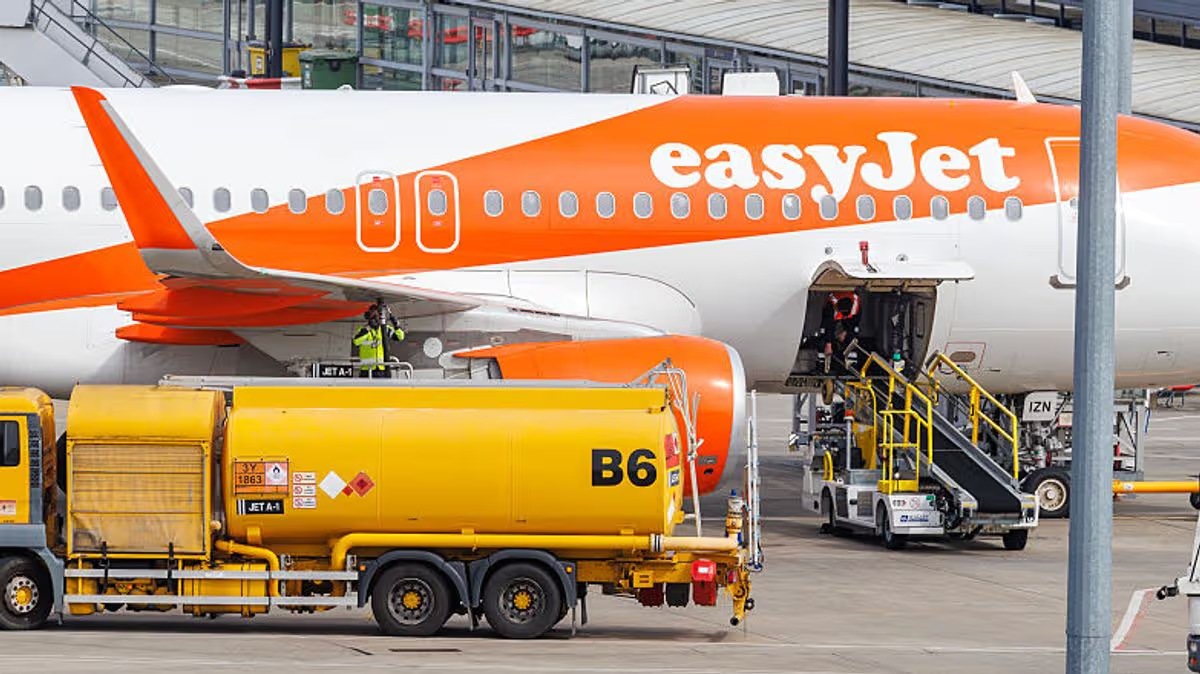
Amid this backdrop of high-level warnings and governmental assurances, customers have been seeking clarity directly from their airlines. EasyJet, a major carrier for European leisure travel, has found itself fielding numerous concerned queries on platforms like X. Passengers like Emily, booked for a two-week holiday to Tunisia in May, voiced the fear of being stranded abroad. Another traveller, Steve, expressed his worry about having to disappoint his two young children if a planned city break to Berlin was cancelled at the last minute. These interactions highlight the very human dimension of the crisis—the anticipation of a family holiday, the investment of time and money, and the dread of plans crumbling due to forces far beyond an individual’s control. For these passengers, abstract warnings about supply chains translate into very personal potential disappointments.
Paragraph 4
In response to these public worries, EasyJet has adopted a calm and reassuring tone in its customer communications. Replying directly to Emily, a customer service representative named Dan affirmed that holidays were proceeding as planned and promised that a dedicated team would make contact if any changes affected her booking. Similarly, to Steve, representative Ria offered assurance that the airline would be in touch should any alterations be necessary. This direct, personalised engagement is crucial for managing customer relations, aiming to provide peace of mind while avoiding any definitive guarantees that could later be problematic. The underlying message from the airline’s frontline staff is one of business as usual, urging passengers to proceed with their plans unless notified otherwise.
Paragraph 5
This public-facing calm is echoed by EasyJet’s leadership. Kenton Jarvis, the airline’s Chief Executive, recently provided a more detailed operational perspective, assuring stakeholders that all airports served by EasyJet are “operating as normal.” He contextualised the industry’s standard practice, noting that airlines typically only have three to four weeks of visibility into jet fuel supplies, a situation unchanged by the current geopolitical climate. With visibility extending to mid-May and no current concerns, Jarvis pointed to effective collaboration between airports and fuel suppliers to maintain deliveries. However, he is not the only airline executive weighing in. Ryanair’s outspoken CEO, Michael O’Leary, has presented a slightly more cautious outlook, suggesting that if the conflict persists, supply disruptions could begin to materialise in Europe as early as May or June, underscoring that the industry’s stability is contingent on a resolution to the ongoing tensions.
Paragraph 6
The situation presents a complex picture for the travelling public. On one hand, there are grave warnings from international energy experts about a systemic crisis, echoed by cautious statements from within the aviation industry itself. On the other, there are concerted efforts from both the government and major airlines to project stability, manage expectations, and continue operations without disruption. For now, the official advice to passengers is to continue with their travel plans while staying informed. The coming weeks will be critical, as the predictions of limited fuel reserves meet the reality of global logistics and diplomacy. The hope for millions of passengers, and for the aviation industry as a whole, is that the collaborative efforts to secure supplies prove successful, allowing the summer travel season to proceed without the widespread cancellations that so many fear. The ultimate resolution, however, likely depends on factors far beyond the airport tarmac, in the realm of international conflict and global energy markets.