
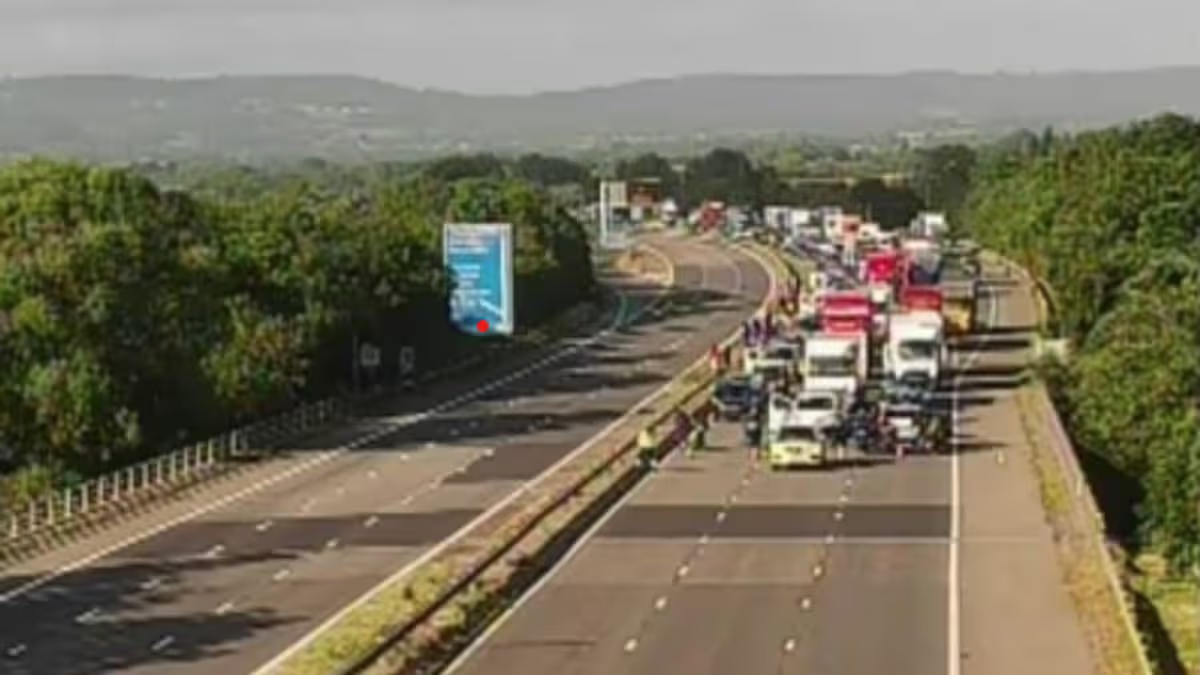


The familiar hum of the M5, the vital artery connecting the South West to the rest of England, has fallen into an unnatural silence. In both directions, between the junctions for Taunton and Bridgwater South, a scene of halted potential stretches for miles. Cars, vans, and lorries stand motionless, their engines cooling, their passengers left to wonder and wait. This is not the usual congestion of a rush hour or the predictable slowdown of roadworks; this is a full and deliberate closure, enacted under the broad and concerning banner of a ‘police incident’. The specifics are withheld, as is standard in the early stages, but the severity is communicated plainly by the complete severing of one of the country’s busiest motorways.
The human impact of such a closure ripples far beyond the tarmac. For those caught directly within the cordon, the initial frustration of missed appointments or delayed homecomings quickly gives way to a deeper, more communal anxiety. Strangers roll down windows to share snippets of information, families ration their car’s snacks and battery life, and delivery drivers watch the clock on their tightly scheduled lives. The logistics network of the entire region feels the pinch, with perishable goods sitting in stationary trailers and critical supplies held at bay. Beyond the immediate road, surrounding towns and rural lanes brace for the inevitable influx of redirected traffic, their quiet roads suddenly overwhelmed by sat-nav-guided detours.
In these moments of suspended normality, our reliance on the unseen work of emergency services becomes profoundly clear. The term ‘police incident’ is a protective blanket, covering a vast and often difficult range of human crises. It could signify a search, a response to a threat, or an effort to secure a scene with the utmost care and dignity. While the public waits for answers, officers, alongside potentially fire and ambulance crews, are working with focused urgency. Their priority is not speed of reopening, but resolution with safety and thoroughness. Every minute of closure, they know, adds to the public disruption, but their duty to protect life and preserve evidence is paramount, a balance weighed with heavy responsibility.
As the delay stretches from minutes into hours, the digital and social world becomes a lifeline and a sounding board. National Highways updates are scrutinized for any new keyword, while local radio stations switch to rolling traffic bulletins, their familiar voices a thread of connection to the wider world. Online community groups light up with shared photographs of the queue, offers of help from those living nearby, and the inevitable spread of speculation. This virtual gathering space underscores how such an event, while isolating people in their vehicles, also sparks a collective experience—a shared story of an unexpected Tuesday or Wednesday thrown into disarray by an unseen event on a familiar stretch of road.
Eventually, after what feels like an age to those waiting, the wheels of resolution will turn. Traffic officers will begin the careful process of moving the held vehicles, perhaps via rolling roadblocks or escorted turns at junctions. The northbound and southbound carriages will slowly, methodically, come back to life. The official statements will later offer a carefully worded explanation, perhaps referencing a concern for welfare that was successfully resolved, or an ongoing investigation that required the scene to be secured. For the authorities, the incident will be logged and reviewed. For the thousands caught in it, however, the closure becomes a personal anecdote: “the day the M5 stood still.”
The true weight of such an event is carried not in the official summaries, but in the private stories of the stranded. It is in the child who colored their way through the wait, the couple who shared a flask of tea with the truck driver next to them, the nurse who finally got home long after dark, and the family whose careful travel plans were undone. The M5 closure is more than a traffic report; it is a sudden, stark reminder of our shared vulnerability and our interconnectedness. It highlights the delicate balance between public safety and public convenience, and the quiet bravery of those who run toward the unspecified ‘incident’ so that, in time, the rest of us can safely continue our journeys.