

Summary and Humanized Account of Daniel Dixon’s Story
The story of Daniel Dixon is one of profound tragedy, unwavering family love, and the incredible resilience found in communities. It illustrates the sudden, irreversible impact a single moment can have on a life and the long, arduous journey of care and adaptation that follows.
In 2020, Daniel Dixon was a typical 17-year-old from Blantyre, Scotland. His mother, Debbie, describes him as the “class clown,” full of youthful energy. One evening, while cycling home from his girlfriend’s house, his life changed forever. He was hit head-on by a car traveling at high speed. The police arrived at his parents’ door at 3 a.m., leading Debbie to initially fear her son was in trouble for some minor mischief. The reality was far more serious: Daniel had been admitted to the Queen Elizabeth University Hospital’s head injury unit with a catastrophic brain injury.
The initial period was a nightmare of uncertainty and fear. Debbie recalls that the severity of his injuries didn’t fully register until she arrived at the hospital. Doctors had covered Daniel’s face, and she was asked to identify him by his tattoos—a surreal and horrifying request for a mother. Remarkably, aside from the devastating head trauma, he had no other broken bones. His survival that first night was touch-and-go. To save his life and relieve swelling on his brain, surgeons performed multiple operations, including removing approximately three-quarters of his skull. Debbie explains that a portion of his skull was even stored temporarily in his abdomen, a procedure that gave him the appearance of having a “baby bump.” He also battled meningitis during this critical time.
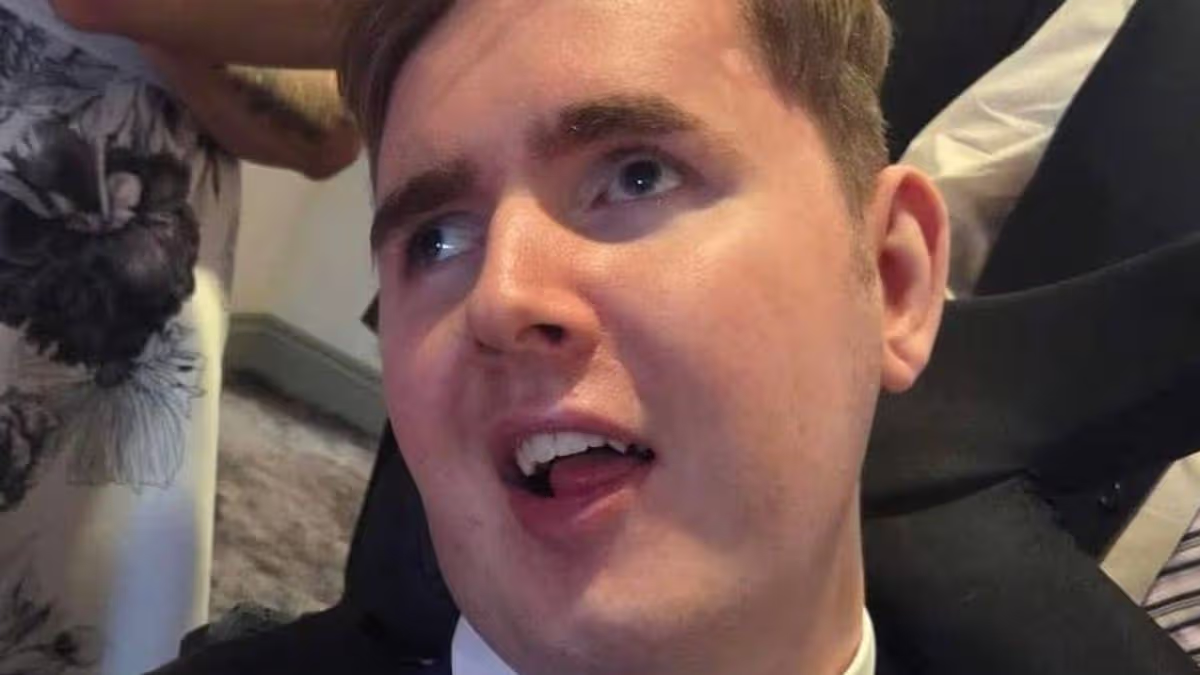
Daniel survived the immediate crisis, but the injury was life-altering. Medical professionals classified his condition as “unrehabilitatable.” After being “spoilt rotten” by staff during a long stay at Hairmyres Hospital, the challenge became finding a suitable long-term living situation. His family home could not be adapted to meet his complex needs, and the prospect of him moving into a care home for the elderly was, Debbie stated, something she would accept only “over her dead body.” Ultimately, after lengthy efforts, they secured a flat in Hamilton where Daniel now lives, receiving round-the-clock care. At 22 years old, he is entirely reliant on caregivers. His communication is limited to wonderful but small gestures—fist bumps on command, smiles, and laughter—which his family cherishes as miraculous signs of his enduring spirit.
Because his condition is considered beyond traditional rehabilitation, the NHS does not fund all elements of his ongoing care. His family contributes significantly from their own pockets, notably for specialist physiotherapy sessions, which cost £90 each. This financial pressure is the driving force behind their remarkable fundraising efforts. In March 2026, during Brain Injury Awareness Month, close friends Andy and Leanne Rankin organized a grand fundraising ball at the Glasgow Hilton. Nearly 400 supporters, friends, and family members gathered for a night of celebration. Daniel himself attended, wearing a kilt, and “partied his wee socks off” until 10:30 pm. The event raised a staggering £21,000. Debbie was moved to tears seeing the community come together for her son. The funds will support his physiotherapy, essential equipment like a new shower chair, and hopefully a trip to Amsterdam—though accessible holidays present significant logistical and financial challenges.
Debbie Dixon’s role has expanded from caring mother to passionate advocate. Beyond fundraising, she campaigns tirelessly for cycling safety awareness in Lanarkshire and beyond. Her message is direct and heartfelt: “Daniel was wearing black clothes on a dark bike, with no helmet. Kids, please put a helmet on.” She hopes his story will prevent similar tragedies. The journey for Daniel and his family is lifelong and demanding, but it is also marked by profound moments of love, community support, and the small, precious victories found in a fist bump or a smile. Their story is a testament to the strength required to rebuild a life around a new, unimaginable reality, and the power of people coming together to lighten that load. Their fight continues, fueled by hope and the unwavering commitment to give Daniel the best life possible.