


Paragraph 1
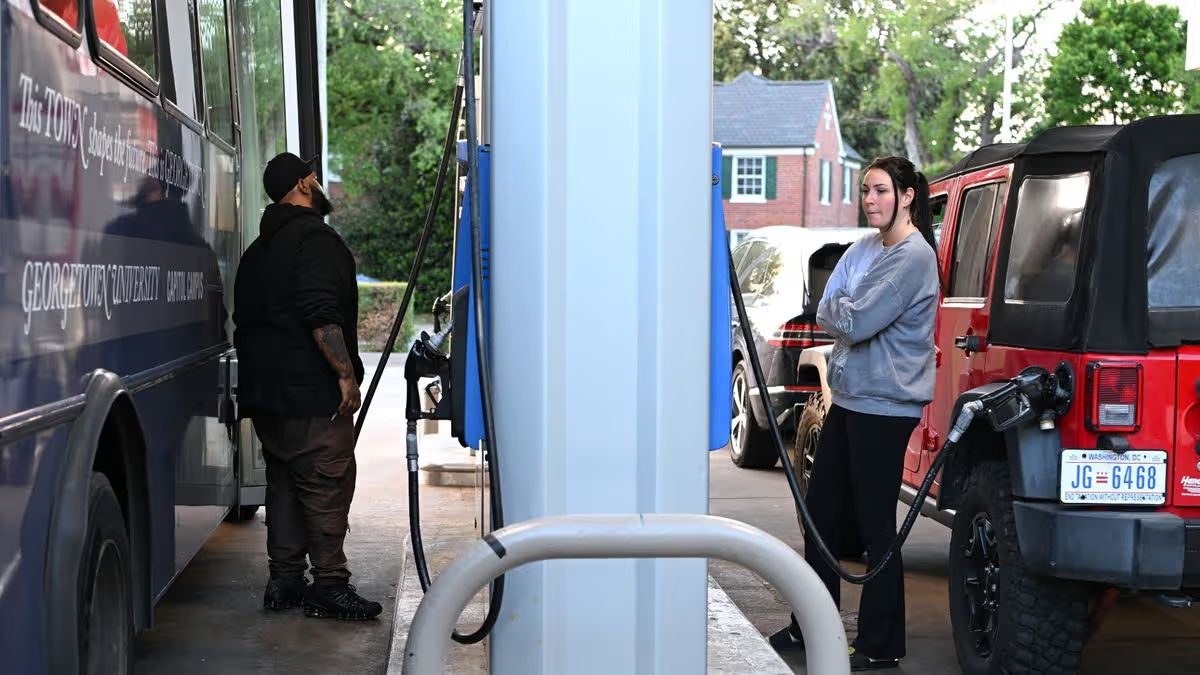
A stark and painful economic consequence of the ongoing conflict with Iran is being felt most acutely at American gas stations, where prices have surged dramatically compared to other major economies. According to an analysis of JPMorgan data, since the outbreak of hostilities in late February, the cost of petrol in the United States has skyrocketed by a staggering 42%. This increase far outpaces the experience of drivers in allied nations; British motorists, for instance, have seen a more manageable 19% rise. The disparity is even more severe for diesel, which has jumped by an eye-watering 48% on average across the U.S., a figure that stands alone at the top among developed countries. These numbers translate a distant geopolitical crisis into a direct and frequent financial strain for millions of American families and businesses, making the war a kitchen-table issue.
Paragraph 2
This fuel price crisis is unfolding against a precarious political backdrop for President Donald Trump, whose job approval rating recently hit a record low of 36% in a Reuters/Ipsos poll. A significant factor in this growing voter dissatisfaction is the tangible impact of the conflict on the cost of living, which contradicts the anti-inflation platform central to Trump’s 2024 re-election campaign. In an attempt to reassure the public, the President has made sweeping promises, stating that prices for “gasoline and oil” will “go down rapidly as soon as the war is over” and even “drop like a rock.” However, these assurances ring hollow for many consumers facing current realities at the pump, highlighting a gap between political rhetoric and immediate economic pain.
Paragraph 3
The path to ending the conflict and, by Trump’s logic, alleviating the fuel price pressure remains fraught with uncertainty. Although a fragile two-week ceasefire is currently in effect, a lasting diplomatic breakthrough is elusive. The critical issue is the reopening of the Strait of Hormuz, a vital maritime chokepoint for global oil shipments that has been disrupted by the conflict. Recent developments offer little optimism; President Trump has publicly expressed dissatisfaction with new proposals from Tehran, delivered via Pakistani intermediaries. In response, Iranian military officials have warned that a resumption of hostilities when the ceasefire expires is “likely” if the United States maintains its “maximalist” demands. This diplomatic stalemate prolongs the energy market instability that is directly inflating costs for consumers.
Paragraph 4
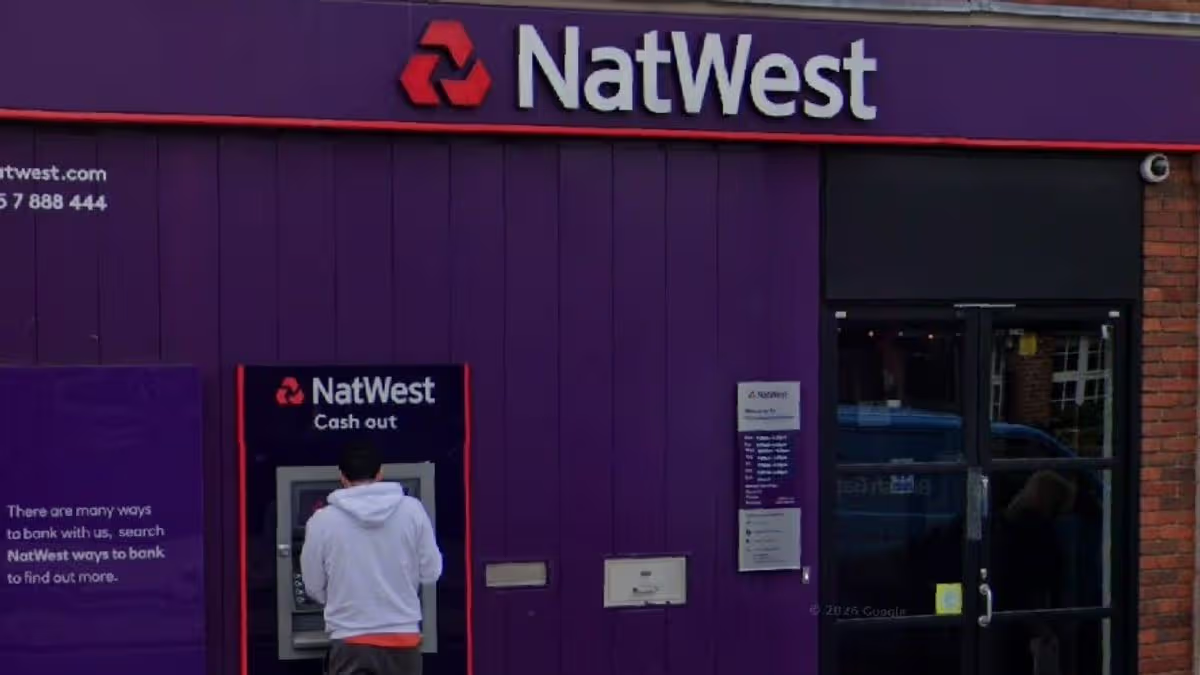
While Americans are bearing the brunt of the price hikes, the ripple effects of the Middle East energy shock are being felt differently abroad. In the United Kingdom, for example, consumers are responding not just with frustration, but with measurable changes in behavior to cope with higher costs. Data from the NatWest banking group reveals a telling shift in habits: fuel purchases are down 10-20% compared to a year ago, suggesting people are consciously taking fewer car journeys, a trend particularly noticeable among those over 65. Furthermore, spending on dining out has dipped by approximately 3.5%, as households prioritize essentials and seek greater value for money. This illustrates a societal adjustment to a new economic pressure, one that is reshaping daily routines and consumer confidence.
Paragraph 5
The situation presents a complex challenge for Western leaders, balancing geopolitical objectives with domestic economic stability. The dramatic divergence in fuel price inflation between the U.S. and its G7 partners—like Canada (24% increase) and France (18% increase)—suggests varying degrees of insulation or exposure within global energy markets. This disparity may stem from differences in national energy policies, strategic reserves, or tax structures, but the outcome places unique political pressure on the Trump administration. The conflict has effectively weaponized global energy markets, with American consumers appearing to be the primary financial casualties among allied nations, turning a foreign policy issue into a potent domestic vulnerability.
Paragraph 6
Ultimately, the Iran conflict has transcended the realm of foreign policy to become a direct and potent force in the everyday lives of citizens, particularly in the United States. The soaring numbers at the pump are more than statistics; they represent strained household budgets, increased costs for transported goods, and a cloud of uncertainty over the economy. President Trump’s promise of relief contingent on a peaceful resolution offers little solace in the present, especially as diplomatic efforts appear stalled. For now, from American highways to British high streets, the war’s most immediate legacy is one of financial adaptation and anxiety, proving that in an interconnected world, the tremors of a distant conflict are felt most deeply in the wallets of ordinary people.