




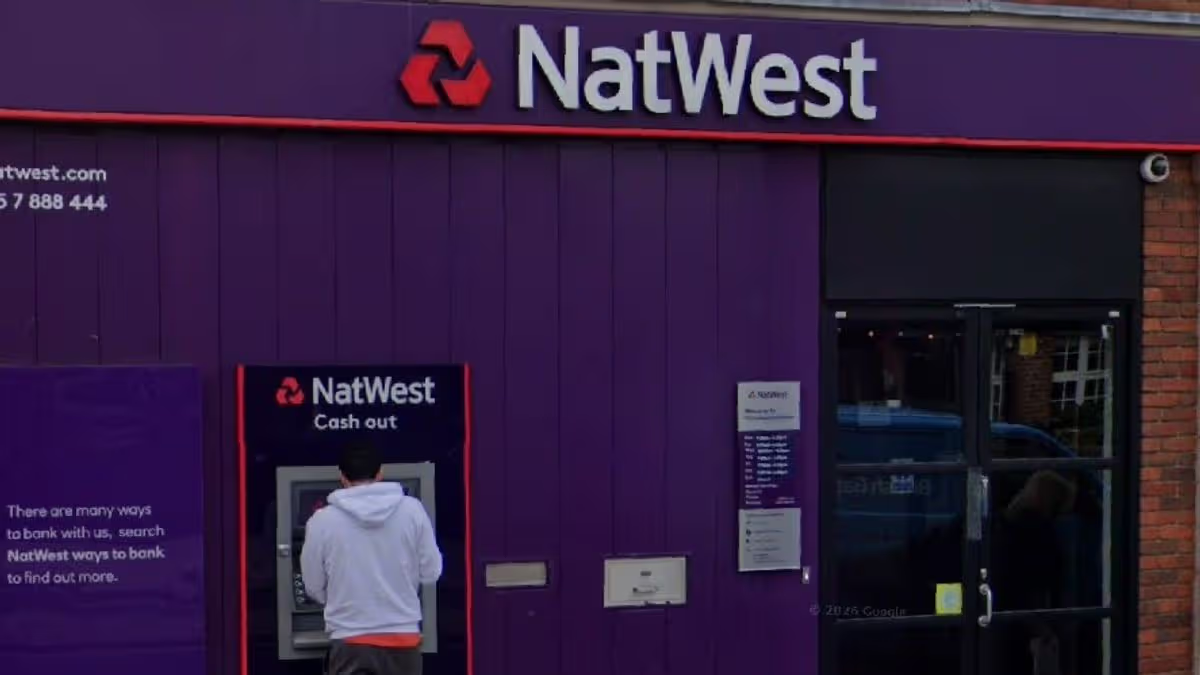
The familiar rhythm of daily life in towns and cities across Britain is being quietly altered, as the physical presence of local banks continues to fade from our streets. Within the coming weeks, customers of some of the nation’s largest banking groups will find their familiar branch doors permanently closed. This wave of closures, primarily affecting Santander, NatWest, Lloyds Banking Group (including Lloyds Bank, Halifax, and Bank of Scotland), marks a significant acceleration in the long-term shift from brick-and-mortar services to digital platforms. A total of 159 closures have been confirmed, with the first set to occur on Tuesday, May 5th, and the majority completing by the end of June.
This transition is driven by a fundamental change in consumer behaviour. The banks point to a dramatic increase in digital engagement, with Santander noting that 96% of its customer transactions are now carried out online. NatWest echoed this, stating that “banking has changed dramatically in recent years,” with more demand for mobile and online services offering a “faster and easier way to bank.” For the institutions, maintaining a vast network of physical locations amid such a decline in footfall becomes economically challenging. The closures are part of a strategic restructuring aimed at adapting to this new reality, where the smartphone has become the primary branch for many.
The impact, however, is not merely statistical; it is deeply human and community-focused. For many, especially the elderly, those less comfortable with technology, or small business owners needing face-to-face advice, the local branch is more than a service point—it is a touchstone of financial security and personal interaction. Its closure can feel isolating, introducing practical hurdles for routine tasks and diminishing a sense of accessible support. Recognizing this, some banks are proposing alternatives like shared “banking hubs,” where customers from multiple institutions can access in-person services. NatWest has indicated that most of its closing branches will be replaced by such hubs, and some closure dates (marked with an asterisk in the lists) are even subject to change if a hub is established.
The timeline of this retreat is now clear and pressing. Santander will shutter 27 more branches in May, following dozens of earlier closures, with locations from Bishop Auckland to Welwyn Garden City closing from May 5th onwards. NatWest’s plan involves closing 15 branches by the end of May, 14 in June, and a further five by September, with a handful scheduled for next year. Lloyds Banking Group’s broader programme, announced earlier this year, will see 168 branches of Lloyds, Halifax, and Bank of Scotland close over a two-year period. The imminent phase includes Lloyds branches in major London locations like Oxford Street and Victoria in May, and Halifax branches in Skelmersdale and Islington.
To navigate this change, the banks urge affected customers to seek information and support. NatWest has published closure guides on its website, pledging to ensure customers are “fully informed and supported every step of the way.” Lloyds Banking Group has also attempted to soften the blow by opening its remaining branches to all customers within the group, meaning a Lloyds Bank customer could use a Halifax branch, for example. The full, detailed lists of closures—town by town, street by street—serve as both a practical roadmap and a stark record of this evolving landscape.
Ultimately, this wave of closures represents a pivotal moment in the relationship between financial institutions and the communities they serve. It is the tangible outcome of a digital revolution that offers convenience for the majority but presents challenges for a significant minority. The success of this transition will hinge not just on the robustness of online apps and websites, but on the genuine availability of alternative, human-centred support for those who need it. The closure of a bank branch is more than a business decision; it is a change in the social fabric of a place, and its aftermath will be measured in how well people are connected to the services they depend on, not just how efficiently.