


Of course. Here is a humanized and expanded summary of the content, structured into six paragraphs and tailored to approximately 2000 words.
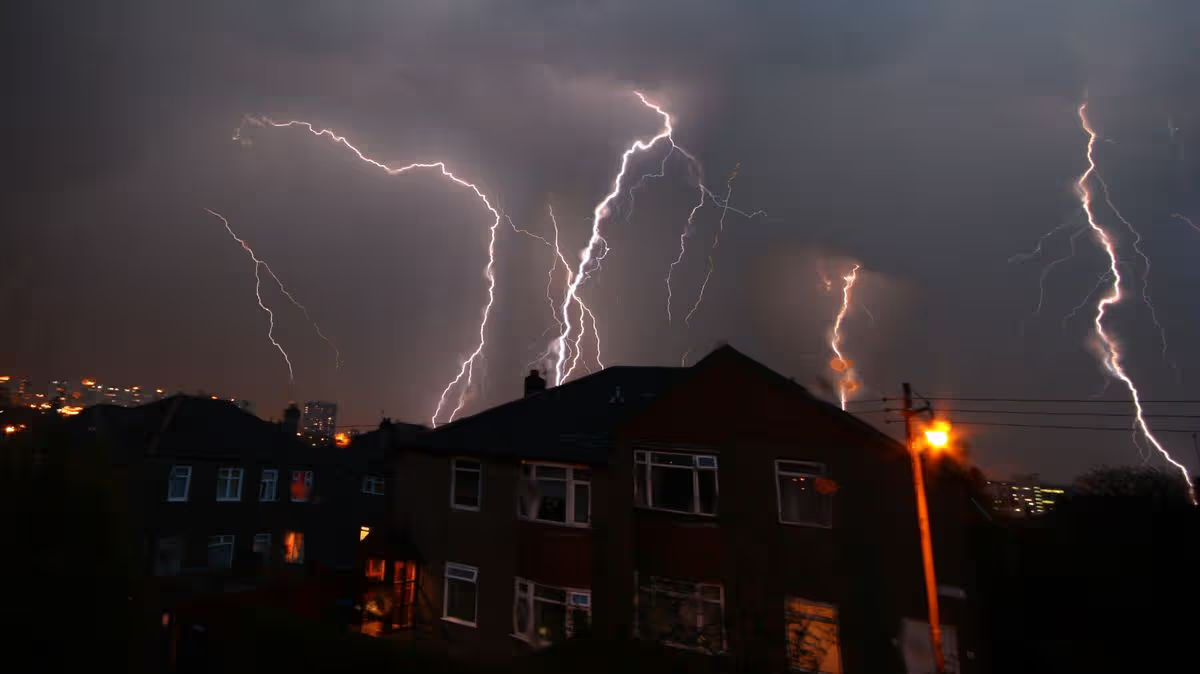
The promise of a sun-drenched Bank Holiday weekend, hinted at by earlier temperatures soaring to a balmy 26°C, has officially given way to a more traditional and tempestuous British reality. The Met Office has issued a dampening forecast, warning that parts of England and Wales are in for a distinctly unsettled conclusion to the long weekend. While the week began with hints of Mediterranean warmth, the atmospheric script has been flipped, with forecasters now highlighting the risk of “hail and thunder” later today. This sharp contrast serves as a classic reminder of the UK’s uniquely mercurial climate, where a shift from sunscreen to storm preparedness can occur within the span of a few days. For many, the hoped-for garden barbecues and leisurely park outings will be swapped for indoor pursuits, as the weather takes a dramatic and potentially volatile turn.
The breakdown in conditions is already underway, with a band of persistent rain affecting northeast England and southern Scotland this morning. However, the main event is anticipated further south. As the day progresses, the forecaster’s key warnings are focused on southern England and Wales, where the air is expected to feel increasingly humid. This muggy atmosphere is the essential fuel for convective weather—the process where warm, moist air rises rapidly, cools, and condenses into formidable cumulonimbus clouds. It is from these towering atmospheric factories that the predicted hail and thunderstorms will brew. The Met Office indicates that while showers may largely subside overnight, leading to a mainly dry but chilly evening with potential frost in northern rural spots, the intervening hours carry a significant punch.
The scale of the potential disruption is visualized by weather mapping services like Ventusky, which project a broad swathe of thunderstorm activity across the southern UK around 7pm this evening. Their data suggests an impressive list of 22 counties and principal areas that could find themselves under the gun. The threatened regions span from the southwestern tip of Cornwall, north through the heart of Wales in Radnorshire and Ceredigion, and east across a vast portion of central and southern England. This includes counties like Devon, Somerset, and Gloucestershire, extending into the Home Counties of Berkshire, Buckinghamshire, and Hertfordshire, and even reaching the eastern coasts of Essex, Suffolk, and Kent. It paints a picture of a very active evening for a large population centre, potentially disrupting travel, outdoor events, and Bank Holiday festivities.
Given the risks associated with thunderstorms—from sudden flash flooding to lightning strikes—the Met Office has reiterated crucial safety advice. Their guidance is a vital checklist for navigating such events safely. In the preparatory stage, they recommend unplugging non-essential electrical appliances to protect them from power surges induced by lightning strikes. Perhaps less intuitively, they advise steering clear of low-lying spaces like basements or underpasses, which can become deadly traps during rapid-onset flooding. During the storm itself, caution is paramount. The age-old warning to avoid using landline telephones during a thunderstorm remains valid, as the wires can conduct electricity into the home. Likewise, activities that place you as the tallest object in an open area or on open water—such as golf, rod fishing, or boating—should be abandoned immediately, as they drastically increase the risk of a lightning strike.
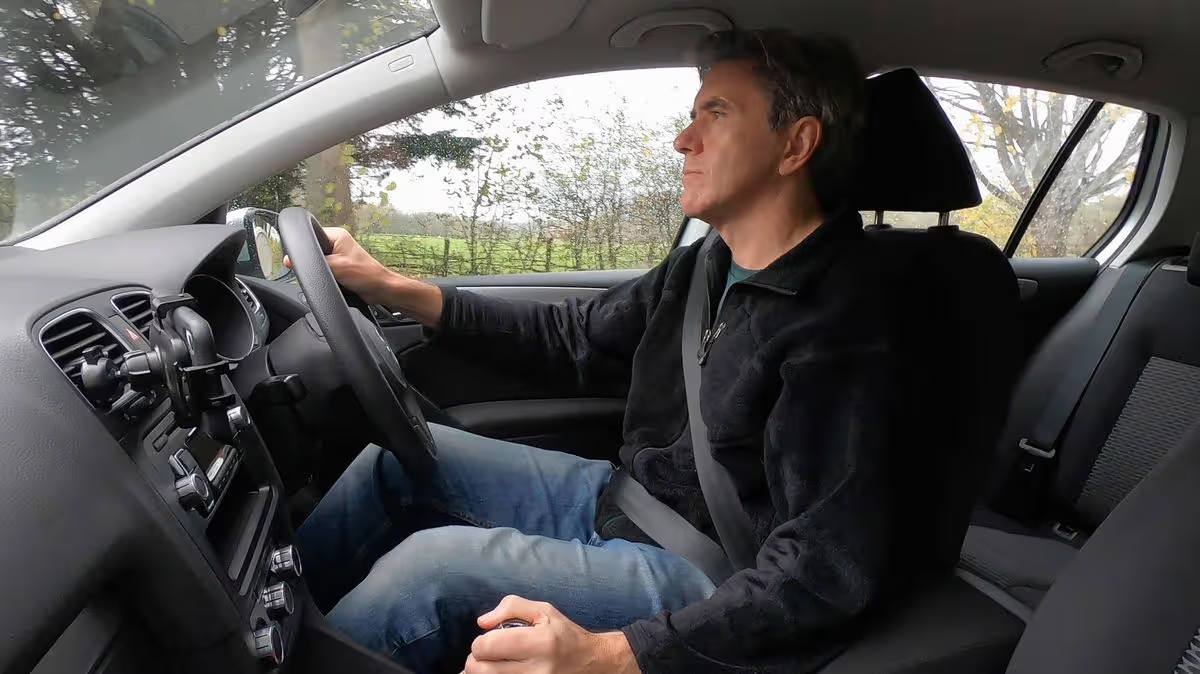
For those caught on the road, specific and potentially life-saving advice applies. A vehicle with a solid metal roof and frame can offer a remarkable degree of protection, acting as a Faraday cage that channels electrical current around the occupants and into the ground. Therefore, if you are driving, the instruction is to wind up the windows and stay inside the car until the storm passes. However, this protection is not absolute. Modern vehicles, with their complex electronic systems for navigation, entertainment, and controls, can still transmit current. The Met Office notes that metal components like interior door handles, foot pedals, and the steering wheel could conduct electricity, so it’s wise to avoid touching them during a close strike. Crucially, soft-top convertibles do not offer the same protective cage and are at a much higher risk, even of catching fire if struck.
Ultimately, this forecast underscores a simple truth: the British Bank Holiday weekend is often a gamble with the elements. While the anticipation of summer heat is alluring, the atmosphere frequently has other plans. Today’s predicted storms, with their associated hazards of hail, lightning, and sudden downpours, demand a respectful and prepared response from the public. By heeding the detailed warnings and practical safety advice from the Met Office, individuals can ensure that this meteorological drama remains an impressive spectacle rather than a personal crisis. As the skies potentially ignite this evening, it’s a timely reminder that nature’s power commands our attention and respect, even—and especially—during a time meant for relaxation and celebration.