



Over the course of four consequential days in the United States, King Charles III navigated a diplomatic landscape far more complex than anyone had anticipated when the state visit was first planned. The world awaiting him was one of heightened global tensions: a new war in the Middle East, enduring aggression in Ukraine, and a notably strained “special relationship” between the UK and the US, exacerbated by divisive rhetoric from former President Donald Trump towards British leadership. Amid calls for him to cancel the trip to avoid the appearance of endorsing a controversial administration, the King’s journey was seen by many as a high-stakes gamble. Yet, according to senior palace officials who accompanied him, what appeared from the outside as a risk was viewed internally as a “phenomenal opportunity”—one that Charles, with a seasoned sense of duty, was prepared to grasp firmly.
The centerpiece of this opportunity was the King’s historic address to a Joint Session of Congress, only the second ever delivered by a British monarch. Against a backdrop of international fracture, Charles spoke with conviction on the urgent need for collaboration, emphasizing steadfast support for Ukraine, the indispensable role of NATO, and the pursuit of peace in the Middle East. He wove in gentle reminders of shared history and common values, themes that resonated powerfully in the chamber, earning him a dozen standing ovations. Remarkably, his messages on climate change and environmental stewardship—topics often contentious in American politics—were received not with skepticism but with applause, even from the Republican side of the aisle. The ultimate validation came from President Trump himself, who declared it the best speech he had ever heard in Congress, signaling a profound and personal reception of the monarch’s words.
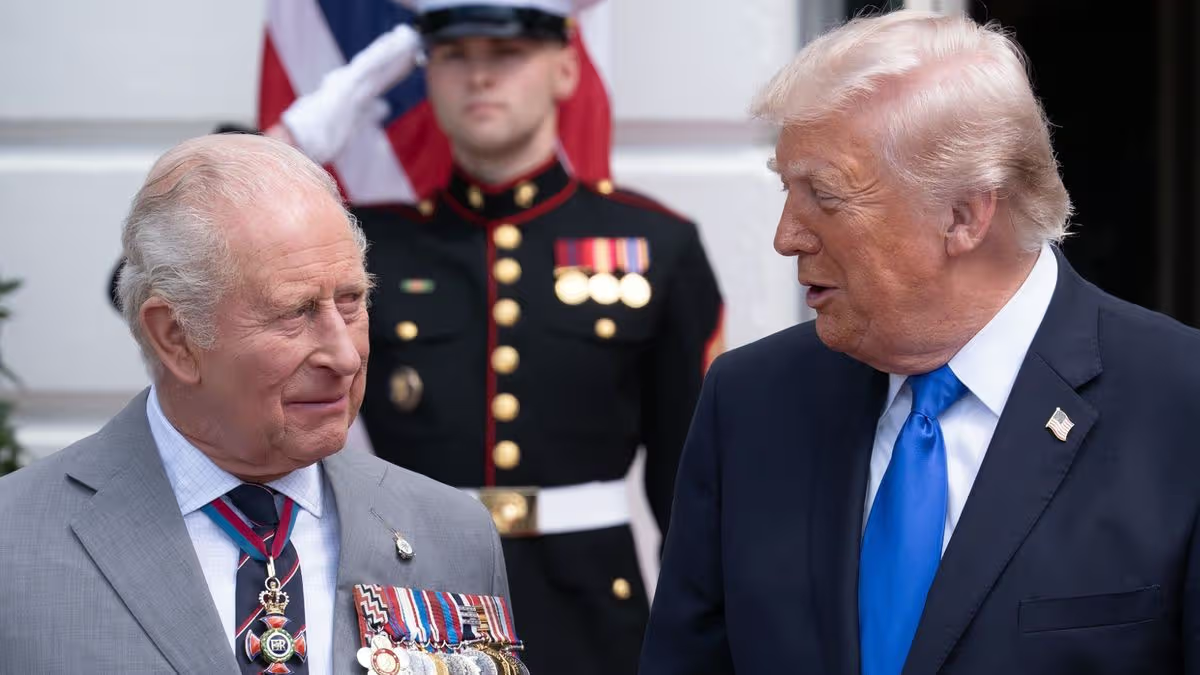
This successful navigation was no accident, but the product of a deliberate and principled approach. Palace sources revealed that the King’s guidance was threefold: to speak the truth, to be guided by conscience, and to anchor his remarks in observable facts. This methodology allowed him to address even the most sensitive issues with an authority that transcended partisan politics. The warmth displayed between Charles, Queen Camilla, and the Trumps was reported to be genuine, with private meetings filled with laughter and mutual respect, demonstrating the King’s adept use of soft-power diplomacy. His mission was not to overshadow the British government but to support it, using his unique platform to foster understanding and goodwill “without some of the noise of current affairs.”
The tangible outcomes of the visit extended beyond rhetoric. Crowds turned out in the thousands to see the royal couple, a visible testament to enduring public affection and interest in the Anglo-American bond. In a concrete diplomatic win, President Trump announced the removal of tariffs on Scottish whisky—a direct economic benefit stemming from the renewed collaborative spirit. A subsequent poll in Britain showed overwhelming public approval, with 74% of Britons believing the King handled the visit well. This cross-party consensus, particularly strong among Conservative voters, underscored the visit’s domestic success and the King’s role as a unifying figure who could operate above the political fray.
For King Charles, this American visit marked the completion of a significant “list of firsts” early in his reign, following state visits to Kenya and Australia. It proved his capability as a modern monarch and a skilled diplomat after a 50-year apprenticeship. Rather than resting on this achievement, those close to him note that his mind is already turning toward future challenges. The next major test will be the Commonwealth Heads of Government Meeting in the Caribbean later this year, a region where recent royal tours have faced protests and where republican sentiments are growing. Yet, bolstered by the success in Washington, the Palace approaches this with confidence, believing the King’s sincere, fact-based, and conscientious diplomacy is a proven model.
In reflection, the state visit accomplished something subtle yet significant. It did not single-handedly mend every fracture in the transatlantic relationship, but it undoubtedly created a warmer, more personal channel of communication at the highest level. By emphasizing enduring shared values over transient political disagreements, King Charles provided a stabilizing force and reminded both nations of the deeper foundations of their partnership. In the view of the Palace, even marginal gains for the bilateral relationship make the immense effort worthwhile. The King returns not with triumphalism, but with the quiet assurance of a duty performed, having used his unique constitutional position to build bridges at a time when they are most urgently needed.