



The Delicate Dance Between Diplomacy and Conflict
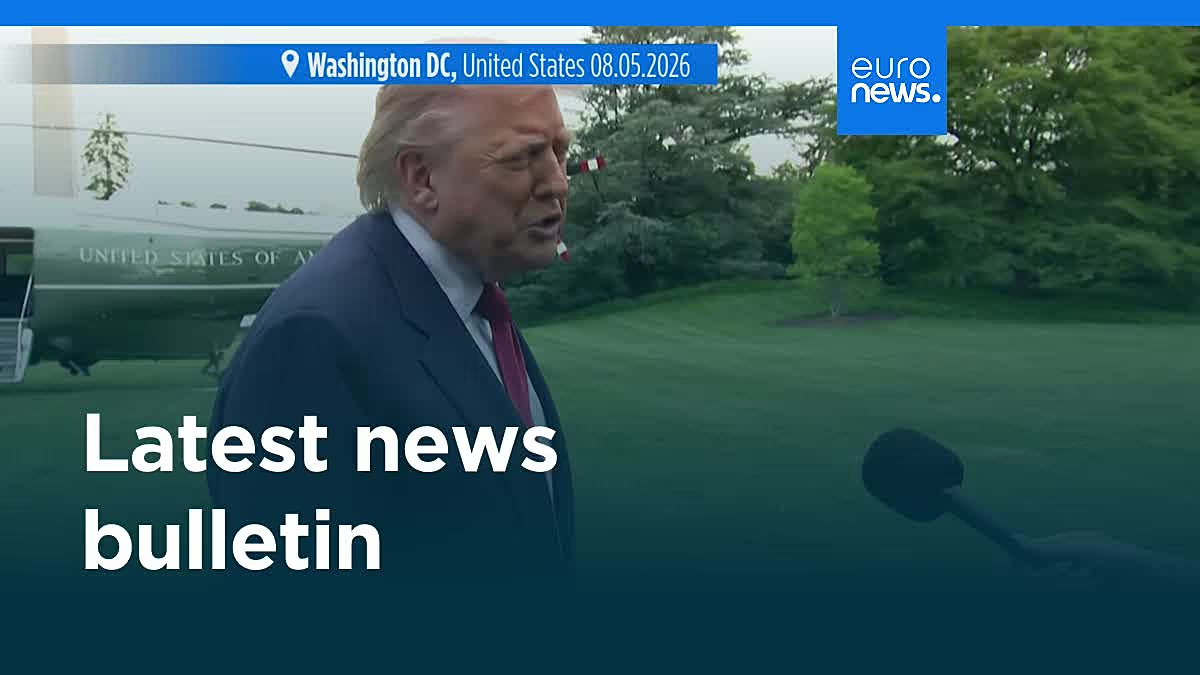
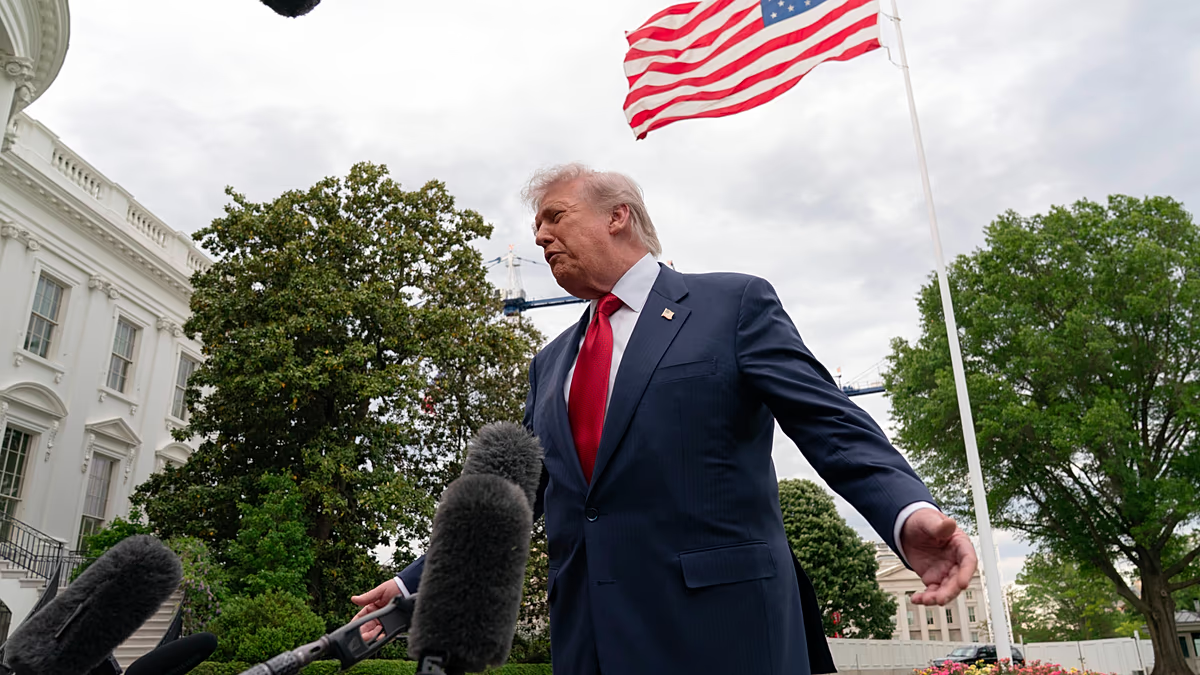
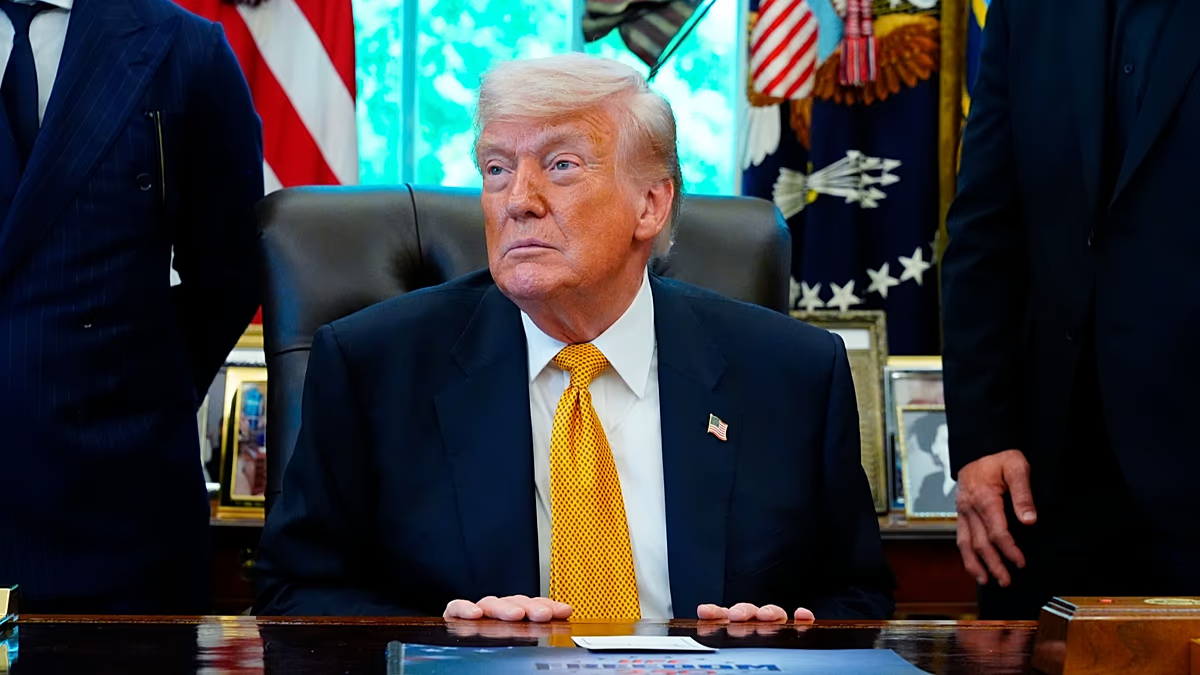
Recent developments in U.S.-Iran relations paint a picture of a tense and volatile situation, where the language of diplomacy is often undercut by threats of military escalation. In a statement from the Oval Office, U.S. President Donald Trump indicated that Washington has held “very good talks” with Iran over the preceding day, suggesting the two long-time adversaries may be nearing a potential peace agreement. While refraining from providing specific details or timelines, Trump emphasized Iran’s apparent desire to make a deal, unequivocally stating that any agreement must prevent Iran from obtaining nuclear weapons. When pressed on deadlines, he offered a cryptic, repetitive assurance: “Never a deadline. It’ll happen. It’ll happen. But never a deadline.” This rhetorical dance—hinting at progress while refusing to be pinned down—characterizes the uncertain and high-stakes nature of the negotiations.
A Stark Ultimatum Amidst Talk of Peace
However, the faint optimism in Trump’s diplomatic remarks stands in stark contrast to the severe warnings he issued just hours earlier on his social media platform, Truth Social. There, he presented Iran with a blunt ultimatum, threatening to restart and intensify bombing campaigns if Tehran refuses to agree to a deal. “If they don’t agree, the bombing starts, and it will be, sadly, at a much higher level and intensity than it was before,” he declared. This juxtaposition of diplomatic overtures and explicit threats of violence creates a powerful pressure tactic, aiming to force concessions by showcasing the devastating alternative. It leaves Iran navigating a narrow path between engaging in talks and appearing to capitulate to overt coercion.
Iran’s Cautious Review and Accusations of Coercion
On the Iranian side, the response to the latest U.S. proposal—reportedly a concise one-page memorandum—has been measured and skeptical. While officials confirmed the plan is under review, they framed the American strategy as one of overwhelming pressure rather than good-faith negotiation. Chief negotiator Mohammad Bagher Ghalibaf accused the U.S. of seeking to force the Islamic Republic to surrender “through a naval blockade, economic pressure and media manipulation.” Foreign Ministry spokesman Esmaeil Baqaei noted that Tehran would communicate its formal position after finalizing its views, without clarifying how this new U.S. document differs from Iran’s own 14-point peace plan submitted the previous week. The broad provisions under discussion, including a halt to uranium enrichment, the lifting of sanctions, the release of frozen funds, and the reopening of critical waterways, point to a comprehensive deal, but one shrouded in mutual distrust.
Military Incidents Fuel Tensions and Global Economic Anxiety
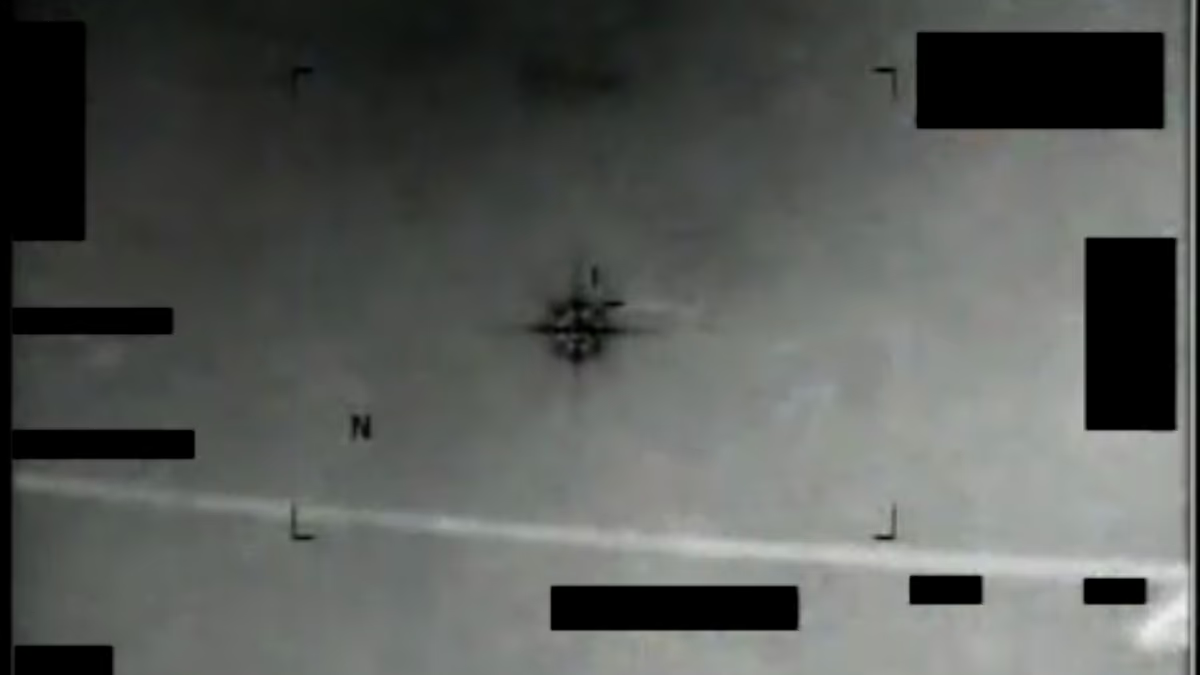
The already fragile diplomatic atmosphere was further inflamed by a direct military incident. The U.S. military reported that its forces fired upon an Iranian-flagged oil tanker in the Gulf of Oman as it attempted to sail toward an Iranian port, alleging the vessel violated the U.S. blockade. A fighter jet reportedly disabled the tanker by shooting out its rudder after multiple warnings. This confrontation underscores how quickly diplomatic posturing can spill over into kinetic action, risking a miscalculation that could derail talks entirely. Meanwhile, the strategic Strait of Hormuz—a chokepoint for roughly one-fifth of the world’s seaborne oil—remains effectively closed by Iran, severely disrupting global energy supplies.
The Global Ripple Effect: Soaring Oil Prices and Market Jitters
This geopolitical standoff has triggered significant economic consequences worldwide. With commercial traffic through the Strait of Hormuz halted, oil prices have skyrocketed. Brent crude, the international benchmark, surged above $114 a barrel, a dramatic increase from around $70 before the conflict escalated in late February. Energy analysts, like Kaho Yu of Verisk Maplecroft, warn that prices are unlikely to stabilize until the tangible risk of attacks in the waterway recedes. “Refiners, shippers and commodity traders will remain cautious until there is clearer evidence that Hormuz disruptions will not re-escalate,” Yu stated. This economic pressure adds another complex layer to the negotiations, affecting global markets and increasing the urgency for a resolution.
A Precarious Crossroads for Peace and Security
In summary, the U.S. and Iran find themselves at a precarious crossroads. While channels of communication are ostensibly open and a skeletal framework for a deal exists, the path forward is mined with threats, military provocations, and deep-seated mistrust. President Trump’s strategy appears to be a high-wire act of combining diplomatic encouragement with the stark reality of military and economic force. Iran, for its part, is carefully weighing its options, resisting the appearance of surrender while facing immense pressure. The coming days will be critical in determining whether these “very good talks” can mature into a genuine peace agreement that secures regional stability and curbs nuclear proliferation, or whether the threats of intensified conflict will become a devastating reality, with profound implications for global peace and the world economy.