



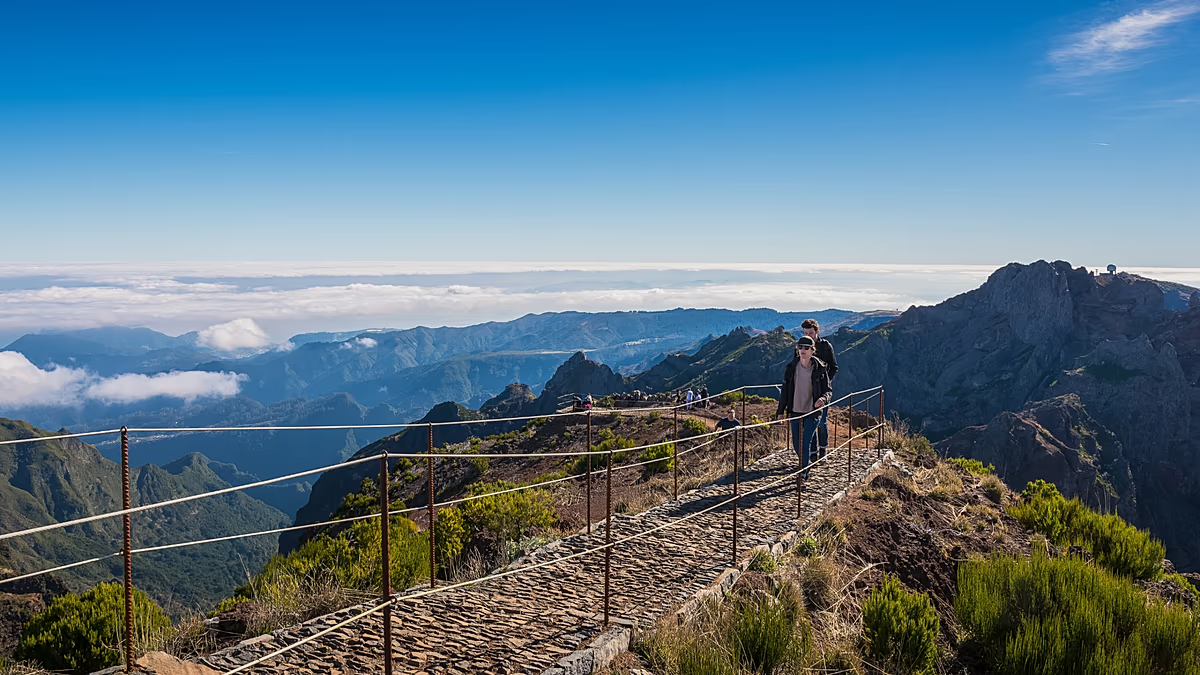
After a two-year closure that left hiking enthusiasts longing for its legendary vistas, Madeira’s iconic PR1 Vereda do Areeiro trail is set to reopen in April. This spectacular 7-kilometer route, often described as a walk above the clouds, connects the island’s three highest peaks: Pico do Areeiro, Pico das Torres, and the summit of Pico Ruivo. Its forced closure in 2024 was a significant loss for the outdoor community, necessitated by damage from a wildfire that required extensive safety and restoration work. Now, with those repairs complete, the trail stands not just restored but revitalized as a flagship example of Madeira’s renewed dedication to sustainable tourism under the campaign banner “Explore. Respect. Preserve.” This reopening is more than a logistical update; it is a celebration of resilience and a carefully managed invitation to once again experience one of Europe’s most dramatic high-altitude hikes.
The journey along the Vereda do Areeiro is an immersive geological and ecological spectacle. Beginning at the Pico do Areeiro viewpoint, hikers embark on a roughly three-and-a-half-hour traverse across the rugged heart of the island. The path winds through ancient tunnels carved into volcanic rock, along narrow ridgelines that drop away steeply on either side, and past lookouts that offer breathtaking panoramas where the ocean of clouds seems to lap at the mountain slopes. This route crosses the Central Mountain Massif, a protected area renowned for its unique habitats. With a keen eye, trekkers might spot birdlife found nowhere else on Earth, such as the Madeiran chaffinch, the Berthelot’s pipit, or the plain swift—living reminders of the archipelago’s isolated evolutionary history. The experience is a powerful testament to the raw, sculpting forces of nature.
Recognizing the fragility of this extraordinary environment, the reopening comes with a strengthened ethos of conservation and responsibility. Visit Madeira explicitly calls on all who walk the trail to become active stewards of the landscape. Guidelines urge visitors to protect the island’s delicate balance by not picking plants or disturbing wildlife, emphasizing that “animals are not attractions.” The plea extends to simple but crucial actions like carrying out all litter. This philosophy is integral to the trail’s future, framing the hiking experience not as a mere consumption of scenery but as a privileged participation in a preserved ecosystem. The goal is to ensure that the awe one feels at the summit is matched by a commitment to leaving no trace, safeguarding the trail’s majesty for generations to come.
To directly support this preservation mission, a new access fee structure has been implemented. Trekking the PR1 Vereda do Areeiro will require a fee of €10.50, which is notably higher than the €4.50 fee for other classified trails on the island. Officials justify this premium by citing the trail’s higher maintenance demands, the new infrastructure installed, and the costs associated with managing its unique challenges and popularity. These contributions are not merely transactional; they are funneled directly into ongoing trail upkeep, safety improvements, environmental protection programs, and crucially, visitor flow management. This financial model creates a sustainable loop where those who benefit from the trail’s beauty directly contribute to its longevity and health.
This fee is part of a broader, forward-thinking regulatory framework for hiking that took effect across Madeira at the start of 2026. The new system employs strategies like staggered visitor access throughout the day to alleviate congestion at popular trailheads and reduce pressure on sensitive ecosystems. For most other major trails, such as the coastal Vereda da Ponta de São Lourenço or the forested Levada do Rei, a standard fee of €4.50 applies, with a discount offered for advance online booking—a clever incentive to aid planning and crowd control. Madeiran residents remain exempt from fees, though preregistration is mandatory for everyone, ensuring that all hikers are accounted for and informed of conditions. These measures represent a mature approach to tourism, prioritizing environmental carrying capacity over unlimited access.
The timing of the trail’s revival is poetically aligned with Madeira’s deep-rooted passion for mountain sports, as it coincides with the 2026 Madeira Island Ultra Trail running challenge in late April. The reopening of the PR1 thus symbolizes a full-circle moment: a path once scarred by fire is now ready to witness the triumphant footsteps of both casual hikers and elite athletes. It stands as a powerful statement about recovery, investment, and balance. Madeira is not simply reopening a trail; it is reintroducing a natural treasure with a renewed social contract—one that invites the world to explore its peaks while sharing the solemn duty to respect and preserve their sublime, fragile beauty.