



Paragraph 1: A Sudden Night Alarm in a Quiet Village
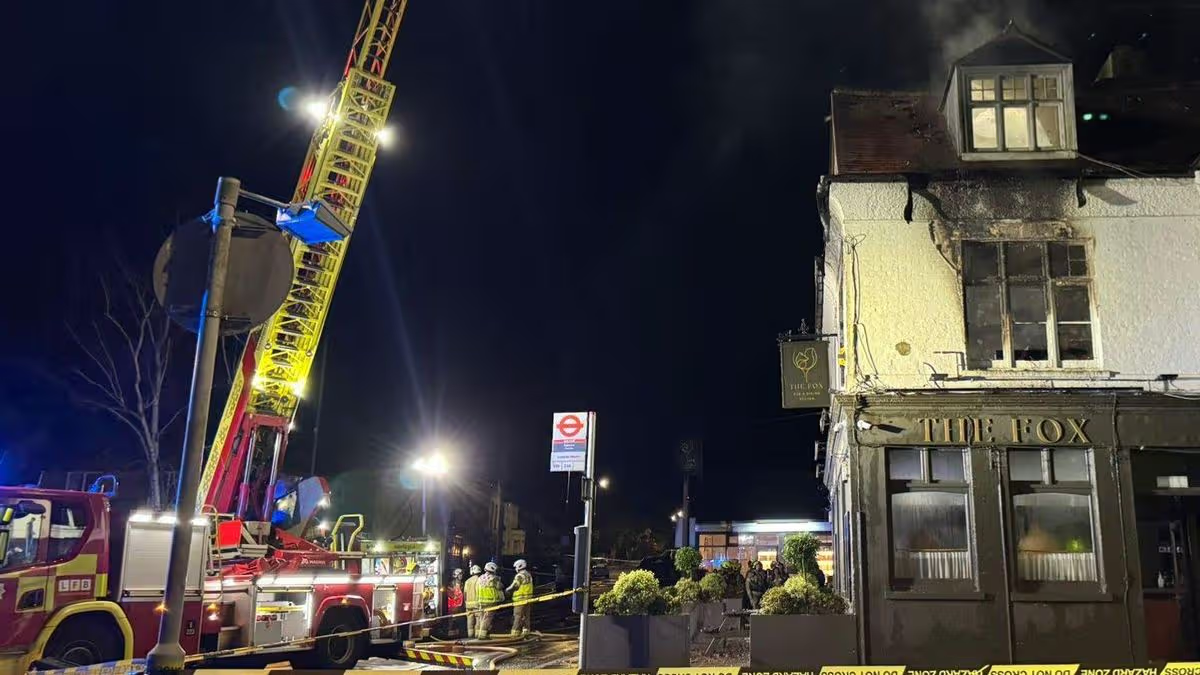
In the quiet, leafy village of Keston, nestled within the London borough of Bromley, a serene Sunday evening was shattered by urgent calls to the emergency services. At 10:33 PM on April 19th, reports flooded in of a serious blaze erupting at The Fox, a cherished family-run pub and dining establishment on Heathfield Road. This local landmark, a hub for community life and camaraderie, had suddenly become the scene of a dramatic and dangerous incident. The London Fire Brigade responded with immediate force, recognizing the severity of the situation from the initial reports. What began as a routine night for residents and pub staff transformed into a race against time, with flames already threatening to consume a building steeped in local history and personal memories.
Paragraph 2: A Major Mobilization to Combat the Blaze
The scale of the response underscored the seriousness of the fire. The London Fire Brigade deployed a significant contingent of firefighters and equipment to the village, mobilizing eight fire engines—approximately 60 firefighters—from stations in Biggin Hill, Bromley, Orpington, and surrounding areas. This substantial force arrived at the scene to confront a fire that was already well-established and aggressively spreading. Crews faced a daunting task: the blaze had taken hold across multiple levels of the pub structure. At its height, firefighters confirmed that parts of the first floor, the second floor, and the roof of The Fox Keston Pub and Dining were fully alight, presenting a complex, multi-level challenge that threatened the complete destruction of the building.
Paragraph 3: Strategic Firefighting from Above and Below
To gain control over the raging fire, firefighters employed a combination of ground-level action and strategic oversight from above. One of the Brigade’s specialized 32-metre turntable ladders was deployed not for direct water discharge, but as a crucial observation tower. This elevated platform allowed commanders and crews to assess the fire’s spread across the roof and upper floors from a vantage point, coordinating the attack more effectively and safely. Below, teams worked tirelessly in the intense heat and smoke, directing streams of water into the heart of the blaze. Their coordinated efforts, blending traditional firefighting with tactical aerial observation, proved effective. By 12:14 AM on Monday morning, just under two hours after the first alarm, the Brigade had brought the fierce fire under control, preventing its spread to neighboring properties and averting a potential catastrophe for the wider village.
Paragraph 4: The Aftermath: Damping Down and Initial Reflections
Even after the main blaze was subdued, the firefighters’ work was far from over. The threat of reignition from hidden hotspots within the charred and unstable structure remained. Crews remained on site through the night and into the morning, diligently “damping down” — a process of soaking lingering embers and heated debris to ensure the fire was completely extinguished. As the sun rose over Keston, the stark reality of the damage became clear. The pub, once a warm and inviting space, now stood as a gutted shell, its roof and upper floors severely compromised. The immediate physical danger had passed, but the emotional and communal impact was just beginning to settle over the village. The firefighters, having secured the scene, could now begin the transition from emergency response to investigation.
Paragraph 5: The Crucial Question: Investigating the Cause
With the fire controlled and the site made safe, the attention of the London Fire Brigade formally shifted to a critical question: how did this devastating event start? A spokesperson confirmed that the cause of the fire is now under investigation. This process is a meticulous and essential phase, involving specialist fire investigation officers who will examine the scene, analyze the patterns of burn, and interview witnesses and staff. Determining the origin—whether an electrical fault, an accidental mishap, or another cause—is not merely procedural. It is vital for providing answers to the devastated pub owners and the concerned community, for informing future fire safety measures, and for the possible restoration of the building itself. The investigation represents the first step on a long path toward understanding and recovery.
Paragraph 6: A Community Loss Beyond Brick and Timber
While the summary of events involves times, crew numbers, and tactical procedures, the true story of this fire is about people and place. The Fox was not just a commercial premises; it was a “family-run village pub,” a phrase that speaks to its role as a personal livelihood and a communal heart. For generations, such pubs have served as the backdrop for local life—for celebrations, quiet pints, family meals, and community meetings. Their loss is felt not only in economic terms but in the erosion of a shared social fabric. As the investigation proceeds and the physical cleanup begins, the community of Keston faces the task of supporting those who ran The Fox and mourning the sudden absence of a familiar gathering place. The firefighting was a professional triumph, preventing greater disaster, but the incident remains a profound human and local loss, marking a difficult chapter in the village’s story.