



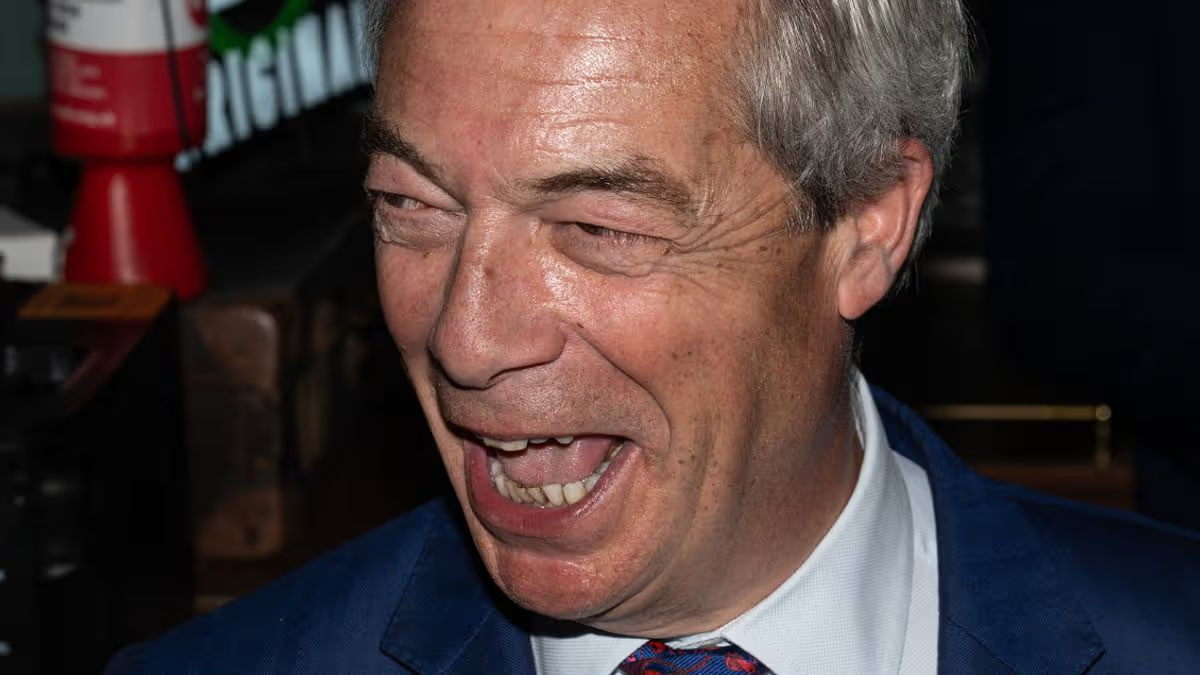
The figure of Nigel Farage has long been a disruptive force in British politics, but recent reporting suggests his latest venture, the Reform UK party, may be less a political movement and more a sophisticated financial vehicle. Central to these concerns is Farage’s open and aggressive promotion of cryptocurrency, specifically through a company called Stack BTC, in which he holds shares reportedly worth over £200,000. Critics argue that Farage is emulating his mentor, Donald Trump, by leveraging his political platform to directly boost his personal investments. The potential profits from this endeavor are speculated to dwarf the seven-figure sums he already earns from various sidelines, including promoting gold and paid speeches. This brazen fusion of political ambition and personal profiteering raises profound questions about conflicts of interest, challenging the long-standing, if imperfect, convention in British politics that leaders should at least attempt to separate their public duty from private financial gain.
These concerns are amplified by the source of Reform UK’s funding. The party’s coffers have been significantly bolstered by multimillion-pound donations from cryptocurrency tycoons, including a £12 million gift from a Thai-based speculator and £4 million from a mogul pardoned by Donald Trump. Coincidentally, Reform’s policy platform promises to slash taxes on cryptocurrency and deregulate the sector—measures that would directly benefit these donors and, presumably, Farage’s own holdings. This creates a stark picture: a political party, led by a man with a direct financial stake, funded by industry magnates, and advocating for policies that would enrich them all. It frames Reform not as a “people’s movement,” but as a venture where the political agenda appears tailored to serve a specific financial interest, fundamentally challenging the integrity of democratic processes.
Farage’s defense hinges on a claim of total transparency—that because his promotions and investments are public, voters can make an informed choice. However, this argument is seen by many as insufficient. Transparency about a conflict does not resolve the conflict itself; it merely reveals it. The Liberal Democrats have formally asked the Financial Conduct Authority to investigate whether Farage’s use of his political platform to promote a specific asset he owns constitutes market abuse. Furthermore, the involvement of former Conservative Chancellor Kwasi Kwarteng—who once derided cryptocurrency as a “total crapshoot” before becoming Chairman of Stack—adds a layer of irony and underscores the opportunistic nature of the project. This spectacle of a would-be Prime Minister actively driving his own gravy train represents a profound shift in Britain’s political norms.
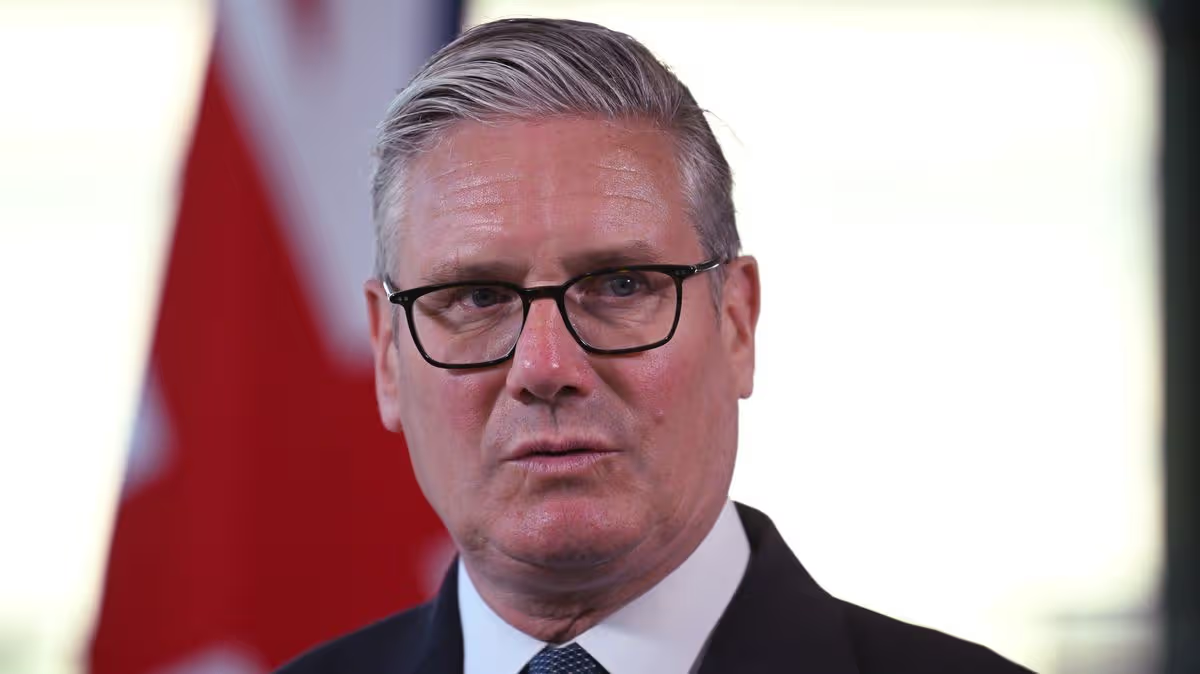
Meanwhile, the Labour government under Keir Starmer is grappling with crises of competence and authority that threaten to undermine its tenure from the outset. A telling moment was observed at a recent funeral, where the Prime Minister appeared visibly ashen and weighed down. This pallor was later attributed to the shocking discovery that his appointed ambassador to Washington had failed the highest level of security vetting and was subsequently dismissed over alleged ties to Jeffrey Epstein. The scandal leaves Starmer in a damning dilemma: either he was unaware of the grave security lapse, suggesting a disturbing lack of control, or he was informed and proceeded regardless. This episode, compounded by anticipated difficult local election results, paints a picture of a Prime Minister already besieged, struggling to project the assured governance he promised.
Across the Atlantic, the potential return of Donald Trump portends a global instability fueled not just by the former president’s own rhetoric, but by the extremists he empowers. A glaring example is the reported elevation of figures like Pete Hegseth, a firebrand Fox News personality, to a potential role as Secretary of Defense. Hegseth, who has espoused radical Christian nationalist views, symbolizes how a second Trump administration could fuse evangelical fundamentalism with military might, pursuing what some term an “ungodly Holy War.” This prospect moves beyond policy disagreements into the realm of ideological crusade, threatening to embroil allies like the UK in conflicts driven by dogma rather than diplomacy. It is a chilling reminder that the greatest threats may come not from the top figure alone, but from the ideological warriors he installs in positions of immense power.
Amidst this high-stakes political drama, a significant factual truth is being drowned out by inflammatory rhetoric: immigration to the UK is substantially falling. Small boat crossings for 2024 are down by over a third compared to the same period last year, and crucially, legal migration has plummeted by roughly two-thirds—a decrease of 401,000 people. This data directly contradicts the narrative of an endless “exodus” or ever-rising numbers pushed by Reform and elements of the Conservative Party. The persistent demonisation of migrants, a tactic used to fuel division, continues to overshadow this reality. The true challenge for responsible governance, therefore, is not just managing borders but winning a battle for public perception, countering a hate-filled narrative with facts, and acknowledging that a vibrant, diverse Britain has always been shaped by movement and change. The danger lies in allowing political and financial opportunism to exploit myths for power and profit, eroding democratic trust in the process.