



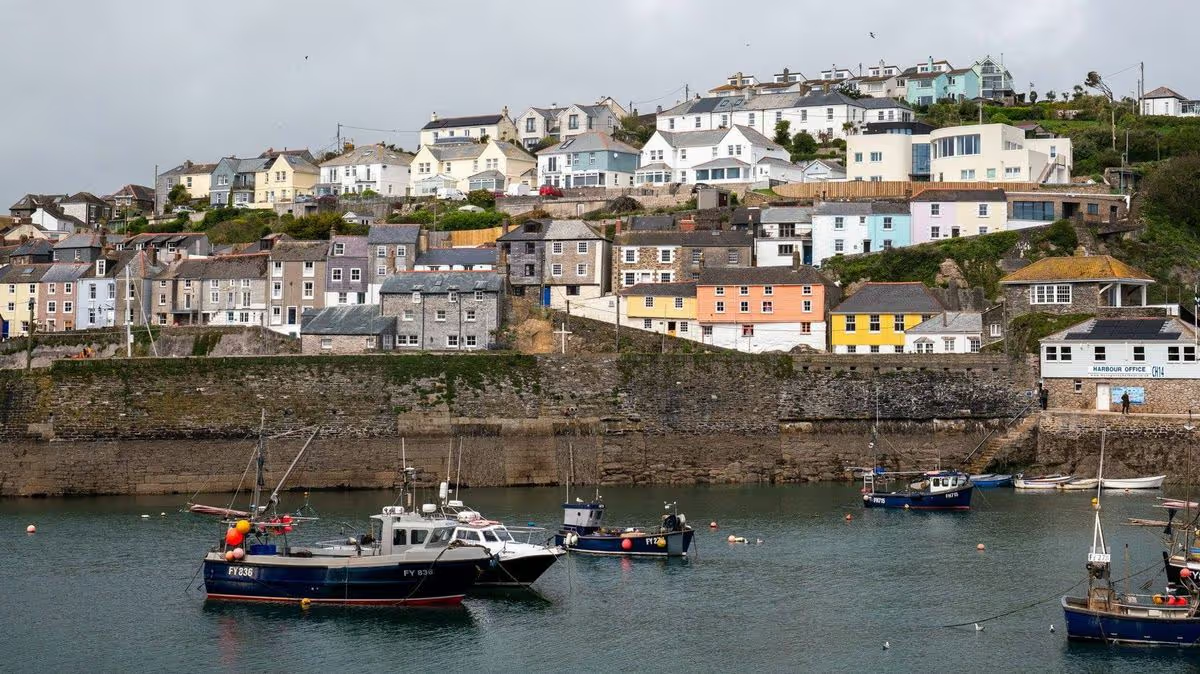
In the picturesque Cornish fishing village of Mevagissey, a contentious battle over land, landscape, and community future reached a critical point this April. The proposal by Westcountry Land Enterprises (SW) Ltd to build up to eight new luxury homes on a prized clifftop site was met with fierce and unified local opposition, culminating in its rejection by Cornwall Council’s planning committee. Residents, led by voices like former parish council member Garth Shephard, argued passionately that the development would create yet another “millionaire’s row,” capitalizing on breathtaking sea views for multimillion-pound sales while doing nothing to address the acute housing crisis forcing local people out of their own village. This rejection was not merely about blocking houses; it was a community drawing a line in the sand against the unchecked transformation of its home into an unaffordable enclave for the wealthy.
The heart of the residents’ protest lies in a profound and urgent local crisis. Mevagissey, a thriving harbour village famed as a film location and a magnet for tourists and celebrities alike, is buckling under the weight of skyrocketing property prices and a surge in second-home ownership. Over a quarter of all houses in the village are now second homes, a statistic that hollows out the community, especially during the quiet winter months. The average detached home costs over half a million pounds—a figure utterly detached from the incomes of those who work in the village’s lifeblood trades of fishing and hospitality. As Shephard pointed out, even so-called “affordable” homes are priced relative to this inflated market, putting them far out of reach. The proposed clifftop homes, he noted, would follow the pattern of a nearby property built by the same developer that sold for £1.2 million, a trend that prices out locals and risks turning Mevagissey into a “lights out” village.
Adding weight to the community’s stance is the site’s location within the Cornwall National Landscape, formerly an Area of Outstanding Natural Beauty. While planning officers, citing a previous appeal decision, had recommended approval on the grounds that development would not cause significant harm, councillors ultimately sided with the visceral fear of environmental degradation. The clifftop plot, described by the developer as an “obvious development site” and a “missing tooth” flanked by existing buildings, was seen by objectors as a precious piece of the village’s scenic heritage that belongs to everyone. They argued that constructing highly visible luxury homes would permanently scar a landscape that defines Mevagissey’s character, sacrificing natural beauty for private profit without delivering any meaningful public benefit or addressing core local needs.
The developer, represented by Justin Dodge, presented a counterargument rooted in broader national policy, emphasizing the severe housing crisis and Cornwall’s inability to demonstrate a five-year housing land supply—a situation that often triggers a presumption in favour of development. Dodge contended that the “modest” scheme was permissible within the National Landscape and would provide desirable family housing opposite the local school. However, this narrative clashed directly with the community’s lived reality. Michael Roberts, chair of Mevagissey Parish Council, highlighted a history of vigorous resistance to the developer’s plans on this site, including a successful judicial review. He pointedly noted the failure of past “affordable” units to remain truly affordable, citing one that sold for around £500,000. For the parish, this was not about blocking all growth, but about ensuring growth serves the community, not outside speculators.
Ultimately, the council’s decision, finalized by the chair’s deciding vote, signifies a hard-won victory for localism and community planning. It reflects a growing insistence across Cornwall and similar hotspots that housing policy must prioritize the needs of permanent residents over speculative investment. The people of Mevagissey are not opposed to new homes; they are desperate for them. But they are fighting for housing that teachers, fishers, and hospitality workers can afford—homes that sustain a year-round community, not empty second homes that stand dark for most of the year. This rejection is a clear statement that the scenic beauty and social fabric of their village are not commodities to be cherry-picked by the highest bidder.
The story of Mevagissey’s clifftop is a microcosm of a much larger struggle playing out in coastal communities across the UK. It is a conflict between market forces driven by external wealth and the fundamental right of communities to remain rooted and viable. The Council’s refusal, supported by a galvanized populace, underscores a pivotal choice: to protect the character and inclusivity of a historic village or surrender it to becoming a luxury preserve. For now, the cliff’s edge remains undeveloped, and the community’s voice has been heard—a testament to the power of collective action in defending not just a view, but a way of life. The fight, however, is far from over, as pressures from housing shortages and development interests continue to loom on the horizon.