




Of course. Here is a humanized and expanded summary of the provided content, structured into six paragraphs and elaborating on the themes to reach the approximate word count.
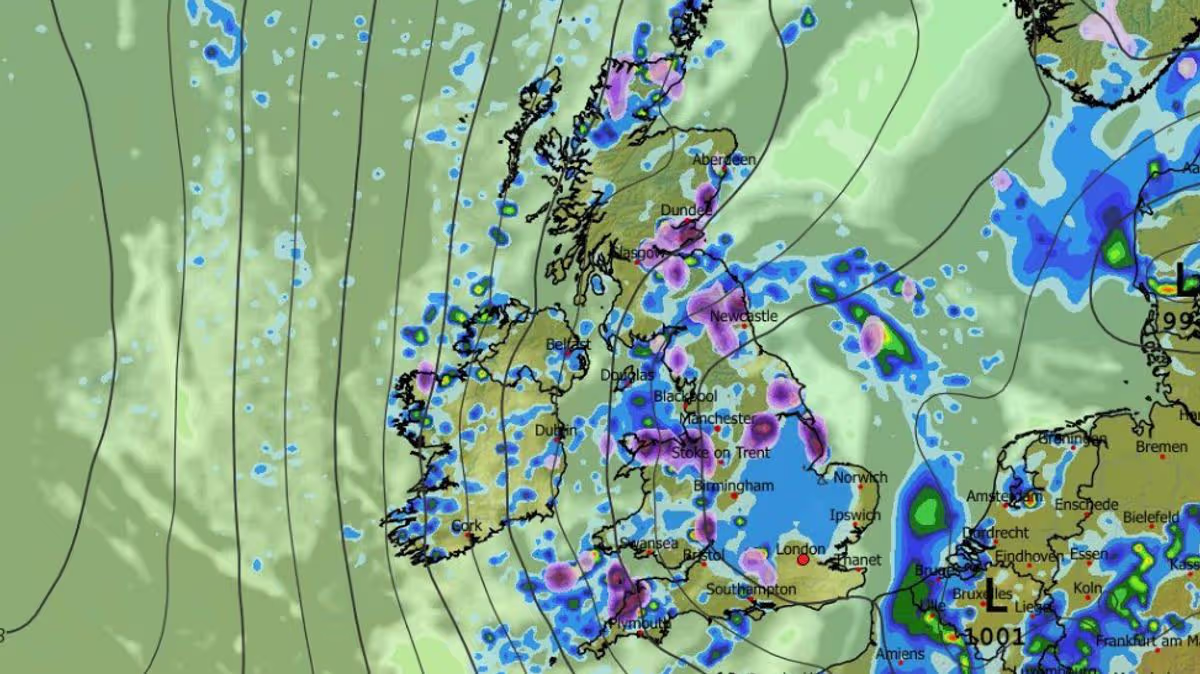
The familiar narrative of spring—one of budding flowers, lengthening days, and a gradual, gentle warmth—faces a potential and dramatic interruption as we approach May. According to sophisticated weather forecasting models, particularly from the European Centre for Medium-Range Weather Forecasts (ECMWF), the United Kingdom could be bracing for an astonishing late-season cold snap. The most startling projection is that this wintry surge may not confine itself to the usual northern suspects but could sweep southwards, with the possibility of snowflakes touching the streets of London and gracing the south coast around Brighton. The very notion of snow in May, especially in the capital, feels like a meteorological prank, a throwback to a deeper past that challenges our modern perceptions of seasonal norms. This forecast transforms the first days of May from a period associated with early bank holiday leisure into one of keen weather-watching and potential disruption.
The timeline of this projected event reads like a slow-motion wave of winter returning. The maps suggest the initial flurries would begin on the evening of Friday, May 1st, materializing in the far north of Scotland—regions like Aberdeen and Inverness, which are no strangers to cold but would find it notably unseasonal. From this northern foothold, the cold air is modelled to drift southwards through the night. By the early hours of Saturday, May 2nd, the snow is shown impacting Northern Ireland and coastal Wales, while also creeping into the northwest of England. The system appears relentless in its southward march, with forecasts indicating that by midday that Saturday, regions like Yorkshire, the Midlands, and the southwest could be seeing flakes. This paints a picture of a broad, diffuse blanket of cold affecting a vast swathe of the nation simultaneously, rather than a single focused storm.
The sheer geographic spread is what makes this potential event so remarkable. If the models verify, an extraordinary list of up to 27 cities and towns, from the Scottish Highlands to the English Channel, could witness May snowfall. This includes not just northern hubs like Glasgow, Edinburgh, and Newcastle, but cities profoundly unaccustomed to snow at this time of year: Bristol in the west, Norwich on the east coast, and even historic Winchester. The symbolic centrepiece, however, is the mention of London. The image of light flurries dusting the parks and streets of the capital as evening falls on May 2nd is a powerful and disruptive one, threatening not just travel plans but the very psychological turn towards summer. Alongside London, the prospect for Brighton and other south coastal areas underscores how penetrating this cold air is forecast to be.
It is crucial to contextualize these dramatic model outputs with the cautious, broader outlook from the national forecaster, the Met Office. Their guidance for the period from late April into early May speaks of high pressure likely sitting to the north, promising generally dry conditions for many. However, they too note a risk of “wintry showers” in parts of Scotland and colder conditions affecting the north at times. This official forecast acts as an important anchor, reminding us that the eye-catching ECMWF snow maps represent one potential scenario within a broader, more complex atmospheric setup. The disparity between the model’s specific, startling detail and the Met Office’s more general language highlights the inherent challenge and uncertainty of long-range forecasting, especially for rare events. It is a conversation between a detailed “what if” and a measured “most likely.”
The social and practical implications of such an event, should it occur, are significant. Early May often coincides with community fairs, outdoor sports events, and the beginning of the gardening and tourism season. A blanket of snow, however light, would cause immediate disruption to transport, particularly on roads unprepared for winter conditions at this time of year. Agriculture, with early crops in the ground and livestock turned out to pasture, would face a stressful frost threat. Beyond the tangible impacts, there is a psychological dimension—a late snow can feel peculiarly disorienting, a jarring step backwards in the annual cycle that resonates deeply on a human level. It sparks conversations about climate variability, memories of past anomalous seasons, and a shared sense of British resilience in the face of famously unpredictable weather.
In conclusion, while the prospect of snow from Inverness to London in early May is a striking and headline-grabbing forecast, it remains within the realm of possibility rather than certainty. The weather models provide a fascinating and coherent narrative of a cold plunge, offering a specific timeline and startling geographic reach that captures the imagination. Yet, they are best read as a plausible but not guaranteed story written by atmospheric data. The final chapter will be authored by the complex interplay of pressure systems, wind flows, and temperatures in the coming days. For now, it serves as a compelling reminder of the UK’s enduring meteorological surprises, urging preparedness over alarm, and wonder over assumption, as winter stages a potential, fleeting encore in the theatre of spring.