



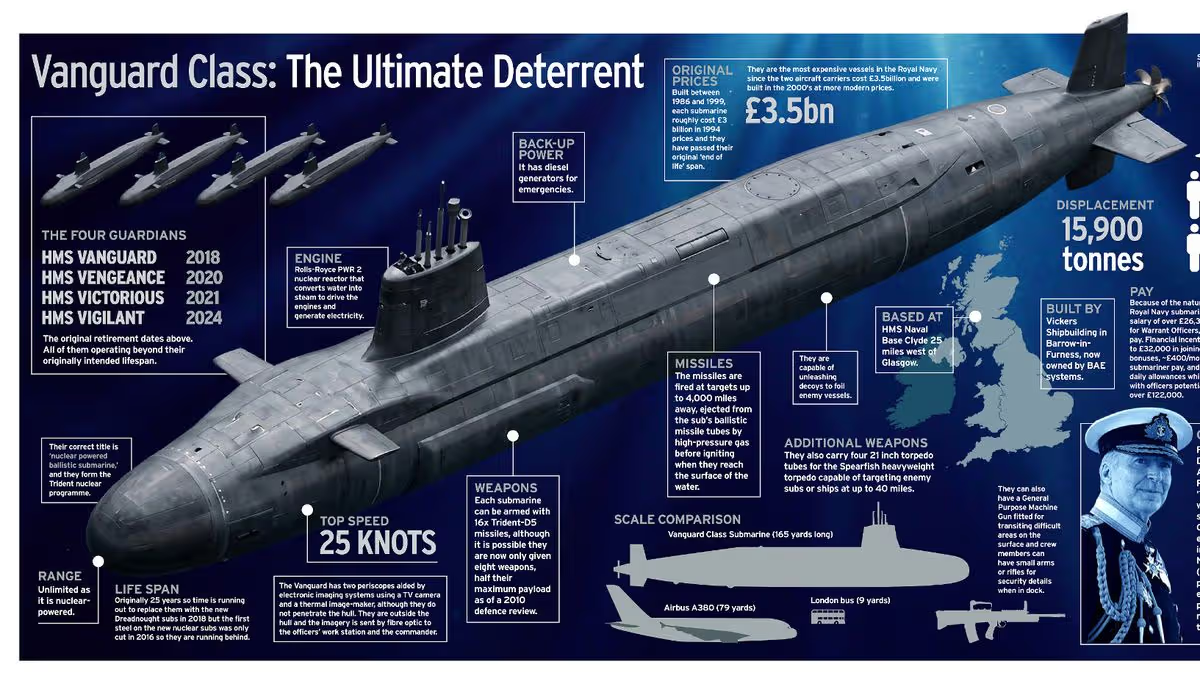
Deep beneath the world’s oceans, a silent and formidable presence guards the United Kingdom. This is the Vanguard-class ballistic missile submarine, a £6 billion leviathan of the deep and the most powerful weapon ever deployed by the Royal Navy. At any given moment, one of these 16,000-ton vessels is on a covert patrol, its exact location known only to a handful of individuals, chief among them the Prime Minister. These submarines are the physical embodiment of Britain’s nuclear deterrent, a system designed to ensure that any aggressor faces the certainty of devastating retaliation. The sheer scale of their mission is staggering—a single patrol by HMS Vanguard recently lasted a record 204 days, underscoring the relentless, silent vigil maintained in an increasingly unstable world. This continuous at-sea deterrence, a policy upheld since 1969, operates on a simple, grim logic: an unseen, undetectable threat is the ultimate deterrent against nuclear attack.
The human element within this cold steel framework is extraordinary. The crew of a Vanguard submarine embark on missions knowing they bear a somber, world-altering responsibility. They operate with methodical precision, isolated for months in a submerged citadel, aware that their duties, if ever called upon, would involve unleashing unimaginable destruction. As one defence source noted, these personnel are acutely conscious that carrying out their ultimate mission would mean returning to a world irrevocably transformed, if they returned at all. Theirs is a unique form of service, sustained by the grim belief that their very presence prevents the catastrophe they are trained to execute. Based at HMNB Clyde in Faslane, Scotland, and controlled by a command centre in Northwood, these crews are the custodians of a terrifying promise, maintained in secrecy to preserve its psychological weight against any adversary.
The strategic doctrine underpinning this immense effort is one of Mutually Assured Destruction (MAD), a chilling concept that has nonetheless kept the nuclear peace for decades. The principle is that the certainty of a devastating retaliatory strike from an unseen submarine deters any first strike against the UK. This deterrent traces its lineage back to the immediate post-1945 era, when British military planners, fearing Soviet dominance, first advocated for “absolute weapons.” Initially, this responsibility fell to the Royal Air Force’s “V-bombers” from the 1950s until 1968. However, the vulnerability of air-based systems led to the transition to submarines, beginning with HMS Dreadnought in 1963. The more capable Resolution-class Polaris submarines followed, until the current Vanguard-class, armed with Trident missiles, entered service in 1994, representing the pinnacle of stealth and survivability.
Despite its proven track record, the UK’s Trident system is not without significant controversy and complex dependencies. The annual running cost of the Continuous At-Sea Deterrence approaches £3 billion, consuming a substantial portion of the defence budget and sparking perennial debate about its necessity versus the opportunity cost for conventional forces. Furthermore, while operationally independent—the British Prime Minister alone holds the authority to launch—the system is technically intertwined with the United States. The Trident II D5 missiles are American-built and maintained, raising questions about strategic autonomy. Think tanks like Chatham House have explored alternatives, such as European nuclear partnerships, but conclude these come with their own profound political and operational challenges. Thus, the UK remains committed to an independent, yet technically collaborative, deterrent.
Looking to the future, the Vanguard-class is already being prepared for succession. The baton will pass to the new Dreadnought-class submarines, colossal 17,200-tonne vessels currently under construction and designed for even greater stealth and endurance. These submarines are being crafted for a world where threats are evolving beyond traditional domains, including cyber and space warfare. They are intended to secure the UK’s nuclear deterrent for at least another three decades, a period anticipated to be marked by heightened geopolitical tensions. As global fault lines shift and new threats emerge, from state-level aggression to attacks on critical undersea infrastructure, the rationale for this hidden shield persists. The investment in the Dreadnought programme signals a steadfast, long-term commitment to this ultimate form of security.
In conclusion, the Vanguard submarines represent more than just advanced machinery; they are a profound statement of national strategy and a heavy moral burden. They operate in the silent darkness, a hidden but constant factor in global calculus, intended to make their awful weaponry never need to be used. The crews who man them, the taxpayers who fund them, and the leaders who command them all participate in a grim pact for peace, betting on the theory that the certainty of mutual annihilation is the best guarantee against its occurrence. As these vessels quietly patrol the deep, and as their successors take shape, they remain the UK’s final, formidable answer to existential threats in an uncertain and increasingly dangerous world.