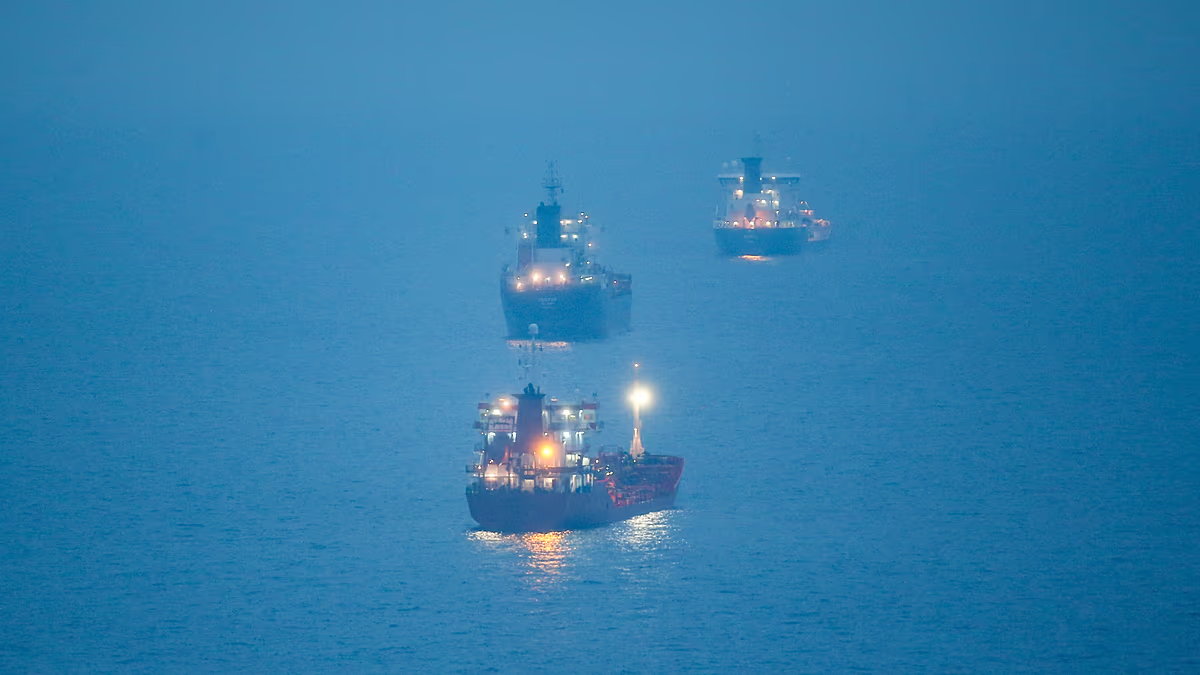


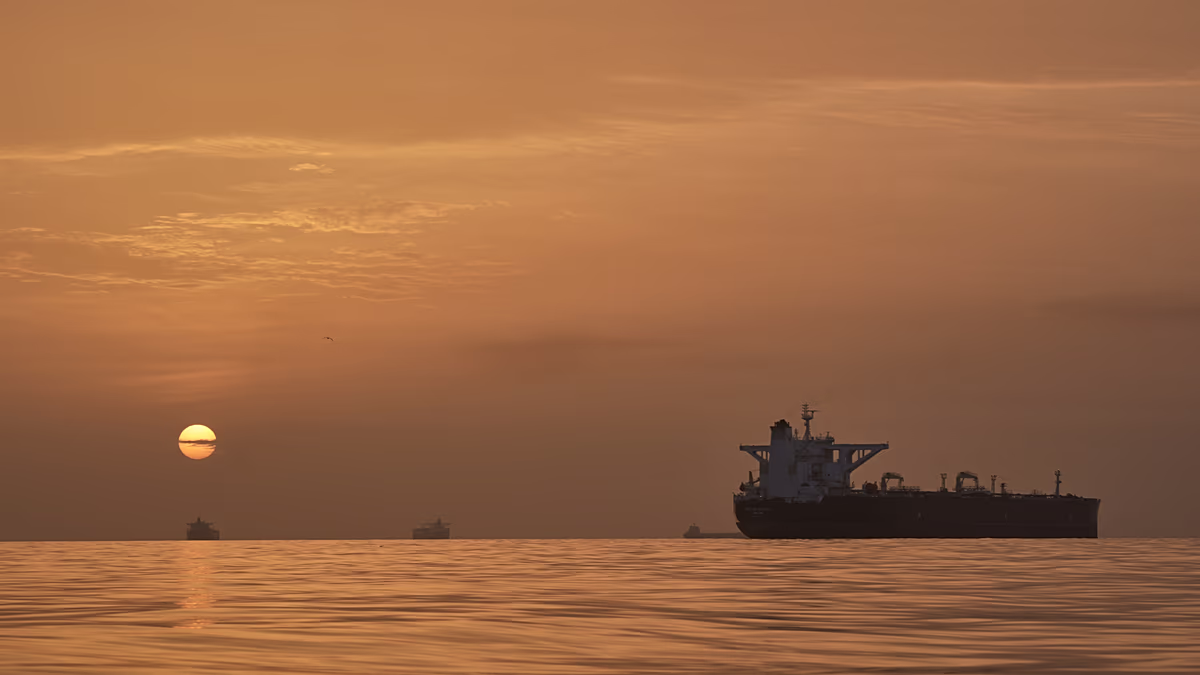
In the tense, sun-baked waters of the Strait of Hormuz, a fleeting moment of hope has been shattered by the crackle of gunfire and the roar of conflicting statements. After a brief global sigh of relief followed the strait’s conditional reopening—a fragile path brokered by diplomats—Iran’s Revolutionary Guard Corps (IRGC) violently reasserted control. On Saturday, they fired upon and harassed commercial ships attempting to traverse the vital corridor, directly contradicting their own foreign minister’s assurances from just the day before. This brazen act, occurring with just three days left on a precarious ceasefire and no new peace talks scheduled, has plunged the region back into a dangerous standoff, raising urgent questions about who truly holds the reins of power in Tehran.
The heart of this new crisis is a stark and very public division within the Iranian regime. On one side stands the diplomatic apparatus, led by Foreign Minister Abbas Araghchi, which had coordinated a temporary shipping corridor with international parties, an move seemingly endorsed by U.S. President Donald Trump. On the other stands the IRGC, a powerful military institution answering solely to the Supreme Leader, which signaled its contempt for these negotiations. The Guard declared the strait “reverted to its previous state of strict military control,” warning that any vessel approaching would be considered “cooperation with the enemy.” By Sunday, hardline political figures, including parliamentary speaker Mohammed Bagher Qalibaf, had aligned with the IRGC, explicitly linking the strait’s reopening to the lifting of the U.S. naval blockade. This internal power struggle, played out on the world stage, reveals a regime at odds with itself, where hardliners can openly sabotage diplomatic overtures.
The human and geopolitical cost of this rift became terrifyingly clear with the attack on the Indian-flagged oil tanker Sanmar Herald. In desperate audio recordings, the ship’s captain pleaded with Iranian forces to stop firing, insisting he had permission to cross. This marked a significant escalation, as India is a historic and major importer of Iranian oil. The subsequent summoning of Iran’s ambassador by New Delhi underscores how quickly the crisis is widening, pulling in global powers and threatening vital economic arteries. Meanwhile, President Trump dismissed Iran’s actions as getting “a little cute,” maintaining that “very good” conversations were ongoing, a statement that rang hollow against the sounds of gunfire and the stark warnings emanating from Tehran.
Those warnings grew more ominous as Iranian commanders appeared on state television, threatening to unleash newly built missiles and promising that any resumed war would “become global this time.” This rhetoric is not mere bluster, according to U.S. intelligence assessments cited by The New York Times, which estimate Iran has managed to recover a significant portion of its pre-war arsenal, including long-range drones and ballistic missiles, from hardened and buried sites. On the other side, the U.S. military posture remains uncompromising. The Wall Street Journal reported preparations to board Iran-linked tankers and seize ships in international waters, while aviation tracking data shows a continued, sustained flow of U.S. military hardware into the region, mirroring the buildup seen at the height of hostilities.
Thus, the final 72 hours before the ceasefire deadline expire are unfolding within a Tehran that resembles a house of mirrors. Each statement from a diplomat is refracted and reversed by the military; each gesture toward de-escalation is met with a provocation. The autonomous IRGC is telegraphing, with increasing boldness, that it holds the upper hand in this internal struggle, willing to risk international condemnation and broader conflict to assert its dominance and its conditions for peace. The diplomatic channel, so recently active, now appears frozen, sidelined by the military’s actions on the water.
As Sunday drew to a close, the Strait of Hormuz, a narrow passage that carries a fifth of the world’s traded oil, was once again a flashpoint, not just between nations but within one. The military buildups on both sides showed no sign of abating, and the mechanisms for dialogue seemed broken. The world is left watching a volatile standoff where the greatest immediate threat may not be a calculated decision for war, but a miscalculation or an internal power play spiraling out of control in these final, critical hours. The path to peace has been blocked not by a foreign adversary, but by Iran’s own deep and divisive rivalries, played out on the treacherous waters of the Gulf.