



Paragraph 1: The Immediate Incident and Regional Response
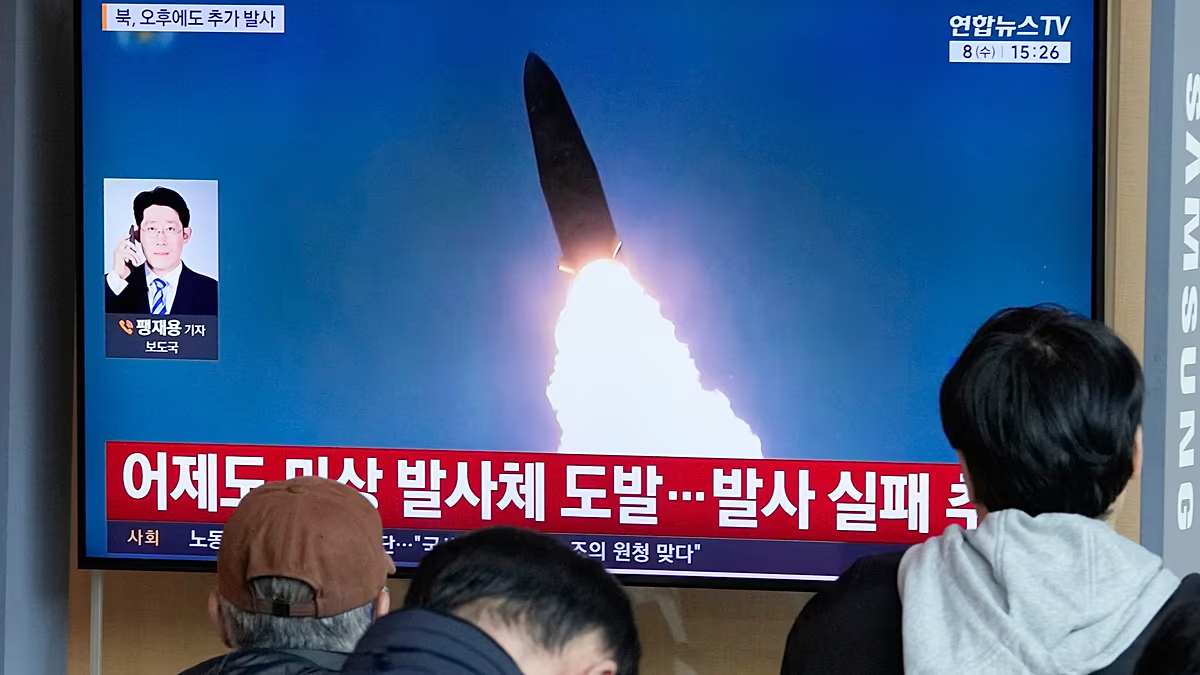
On Sunday morning, the tranquil waters of the East Sea, also known as the Sea of Japan, were shattered by another act of military provocation. South Korea’s military detected the launch of several short-range ballistic missiles from North Korea’s Sinpo region, a coastal area often used for such tests. The missiles traveled approximately 140 kilometers before falling into the sea, prompting immediate analysis by South Korean and U.S. intelligence agencies to determine their precise capabilities. In Seoul, the national security apparatus sprang into action, convening an emergency meeting to assess the threat. South Korea’s Joint Chiefs of Staff affirmed that, alongside their American allies, they maintain a “firm combined defense posture” and are prepared to “respond overwhelmingly to any provocation.” This statement underscores the deep-seated anxiety that each launch injects into the region, triggering a swift and coordinated defensive response from the Seoul-Washington alliance, which includes roughly 28,000 U.S. troops stationed in South Korea.
Paragraph 2: A Pattern of Provocation and Strategic Signaling
This latest launch is not an isolated event but part of a calculated and escalating pattern. In recent weeks, North Korea has conducted a flurry of weapons tests, showcasing a diverse arsenal that includes ballistic missiles, anti-warship cruise missiles, and cluster munitions. These actions collectively represent a blatant rejection of international sanctions and a deliberate snub to Seoul’s recent, tentative efforts at dialogue. For instance, South Korea’s recent expression of regret over accidental civilian drone incursions into the North was initially met with a positive comment from Kim Yo Jong, the leader’s influential sister. However, that faint glimmer of diplomatic possibility was quickly extinguished this month when a senior North Korean official reverted to harsh rhetoric, branding South Korea as “the enemy state most hostile” to Pyongyang. Thus, the missile tests serve a dual purpose: they are technical exercises for the military and potent political symbols, communicating Pyongyang’s unwavering hostility and its dismissal of Seoul’s overtures for peace.
Paragraph 3: The International Law and North Korea’s Defiance
Central to this crisis is North Korea’s persistent and flagrant violation of international law. The country is subject to multiple United Nations Security Council resolutions that explicitly prohibit its development of nuclear weapons and the use of ballistic missile technology. Each launch, therefore, is not just a regional security issue but a direct challenge to the global order. In response, South Korea’s defense ministry issued a stern rebuke, stating, “Pyongyang must immediately halt its successive missile provocations that are heightening tensions.” It further called on the North to “actively engage in the South Korean government’s efforts to establish peace.” This appeal highlights the fundamental disconnect: one side appeals to established international norms and dialogue, while the other continues to operate through a paradigm of militaristic defiance, viewing its weapons programs as essential to its sovereignty and survival, regardless of the global consequences.
Paragraph 4: Naval Expansion and Kim Jong Un’s Military Ambitions
The recent tests also illuminate Kim Jong Un’s specific ambition to transform North Korea into a potent maritime power. Earlier in April, Kim personally oversaw tests of strategic cruise missiles fired from a naval warship, the Choe Hyon. This vessel is one of two 5,000-ton destroyers launched last year, representing a significant leap in the country’s naval capabilities. Official photographs from the event depicted Kim, flanked by military officials, intently observing the launch—a image meant to project his hands-on command and the regime’s technological progress. The ambition extends beyond existing assets; North Korea is actively constructing two additional destroyers of the same class. A South Korean lawmaker, citing satellite imagery intelligence, reported that construction at the western port of Nampo appears to be accelerating. This naval buildup signifies a strategic shift, aiming to project power beyond the peninsula’s land borders and into the surrounding seas.
Paragraph 5: The Shadow of External Alliance: Russia’s Role
A critical and troubling dimension of this naval modernization is the alleged support from Russia. According to analysis presented by South Korean lawmaker Yoo Yong-won, North Korea is “accelerating the naval forces’ modernisation on the back of military technology assistance from Moscow.” This claim points to a burgeoning, transactional alliance born from the war in Ukraine. North Korea has reportedly sent significant quantities of artillery shells and other military supplies to aid Russia’s invasion. In return, observers believe Pyongyang is receiving technical know-how and possibly key components for its weapons programs, including advanced naval technology. This cooperation creates a dangerous feedback loop: North Korean arms fuel a conflict in Europe, while Russian expertise enhances a threat in Asia, eroding global security norms and sanctions regimes in both theaters.
Paragraph 6: The Human Cost of a Perpetual Standoff
Beyond the technical specifications of missiles and the tonnage of destroyers lies the profound human cost of this endless cycle of tension. For the people of South Korea, each launch is a reminder of the existential threat posed by a nuclear-armed neighbor, reinforcing a daily life framed by security concerns. For the citizens of North Korea, these vast military expenditures drain resources from a society already grappling with economic hardship and isolation. The international community, meanwhile, faces the wearying task of managing a persistent crisis that destabilizes Northeast Asia and undermines global arms control efforts. The Sunday missile launch, therefore, is more than a news headline; it is another chapter in a protracted and dangerous stalemate. It represents the failure of dialogue, the erosion of international law, and the deepening of military alliances that cross-continental conflicts. Until a path to genuine diplomacy is found, these tests will continue to be both a symptom and a catalyst of a peace that remains painfully out of reach.