



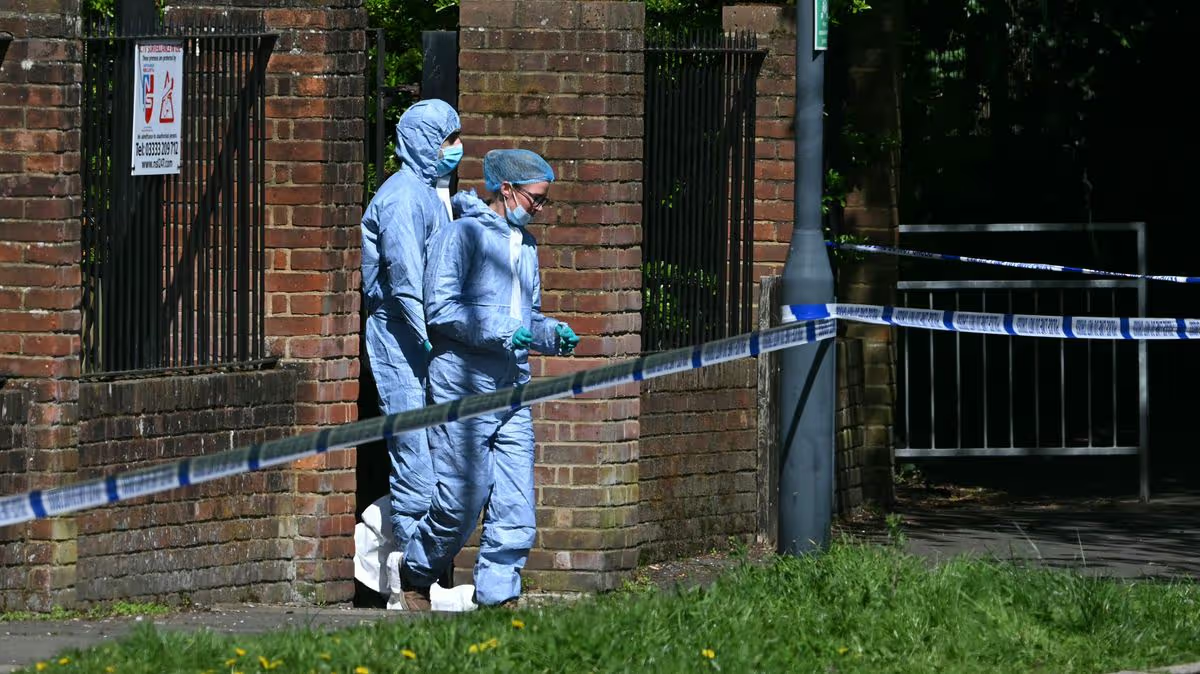
In London, a wave of deliberate and harrowing attacks is testing the resolve of a community that has called the city home for generations. The latest target was the Kenton Synagogue in Harrow, a place of worship and community for over fifty years, where an armament was hurled through a window just past midnight. By a stroke of fate, the device failed to ignite fully, preventing what could have been a catastrophic fire. For 82-year-old Rhona Brickman, a congregant for half a century, the attack was a deeply personal violation. “I am absolutely horrified and terrified,” she confessed, her words echoing the shock rippling through her community. Yet, in the same breath, she affirmed a steadfast courage: “But I will still keep going to the synagogue. We need to show we are strong and we are not going to be intimidated.” Her defiance is not just about personal faith; it is a statement of resilience against a growing tide of fear.
This incident is not isolated but part of what UK Chief Rabbi Sir Ephraim Mirvis has described as a “cowardly” series of assaults that are “gathering momentum” against Jewish institutions. Within a critical 48-hour period, several similar attacks were reported, all claimed online by a group calling itself Ashab al-Yamin, which has also taken responsibility for targeting Jewish sites across Europe. Metropolitan Police Deputy Assistant Commissioner Vicki Evans revealed that authorities are actively investigating potential links between these assailants and Iran, noting the regime’s known tactic of employing criminal proxies. “This is recruiting violence as a service,” Evans explained, painting a grim picture of individuals with little ideological commitment being paid to carry out acts of terror, effectively making them “thugs for hire.”
The narrow escape at Kenton Synagogue underscores how close London came to tragedy. Another congregant, who wished to remain anonymous, pointed out that the device landed in a sparse medical room. “We are so lucky… If it had been thrown in the next window, the library, a huge fire could have been set off,” they said, haunted by the thought of the entire building engulfed in flames. This brush with disaster has amplified concerns about safety and the palpable deterioration of social cohesion. Rhona Brickman voiced a fear echoing beyond her community: “I am very afraid though for our country. I am shocked how things have deteriorated so much in such a short time.” She pointed to permissive atmospheres around hate speech and marches as poison that encourages such crimes.
In response to this alarming pattern, London’s police force has mobilized with visible determination. Deputy Commissioner Matt Jukes stated plainly that the Met is facing “a concerted campaign” targeting both the Jewish community and the city at large. “London is better than this,” he asserted, pledging a robust and sustained police presence. He announced hundreds of additional patrols, both seen and unseen, for the nights and weeks ahead, noting that it was precisely such vigilance that led to the swift discovery of the Kenton attack. Prime Minister Sir Keir Starmer echoed this stance, expressing being “appalled” and committing to increased visible policing to protect communities and restore a sense of security.
The authorities delivered a stern warning to those who might be tempted to participate in such hired violence. Commissioner Jukes was unequivocal, calling it a “mug’s game.” He reminded the public that the police have successfully prosecuted and imprisoned individuals who thought they could profit from intimidation and arson. This firm message aims to deter potential perpetrators by stripping away any illusion of easy money or anonymity, emphasizing that the full force of the law will be applied to those who attack the fabric of London’s diverse society.
Ultimately, this moment crystallizes a profound struggle between fear and fortitude. On one side stands a campaign of intimidation, exploiting geopolitical tensions and employing mercenary violence to seed terror. On the other stands the enduring courage of individuals like Rhona Brickman, the solemn commitment of community leaders, and the reinforced resolve of law enforcement. The attacks have shaken, but not shattered, the community’s spirit. As police work to unravel the networks behind these crimes and protect the streets, the quiet, defiant act of an 82-year-old woman continuing her journey to synagogue becomes a powerful testament to the resilience that hatred has failed, and will continue to fail, to extinguish.