

A Crisis of Courage in Kyiv: Police Response to Supermarket Shooting Sparks National Reckoning
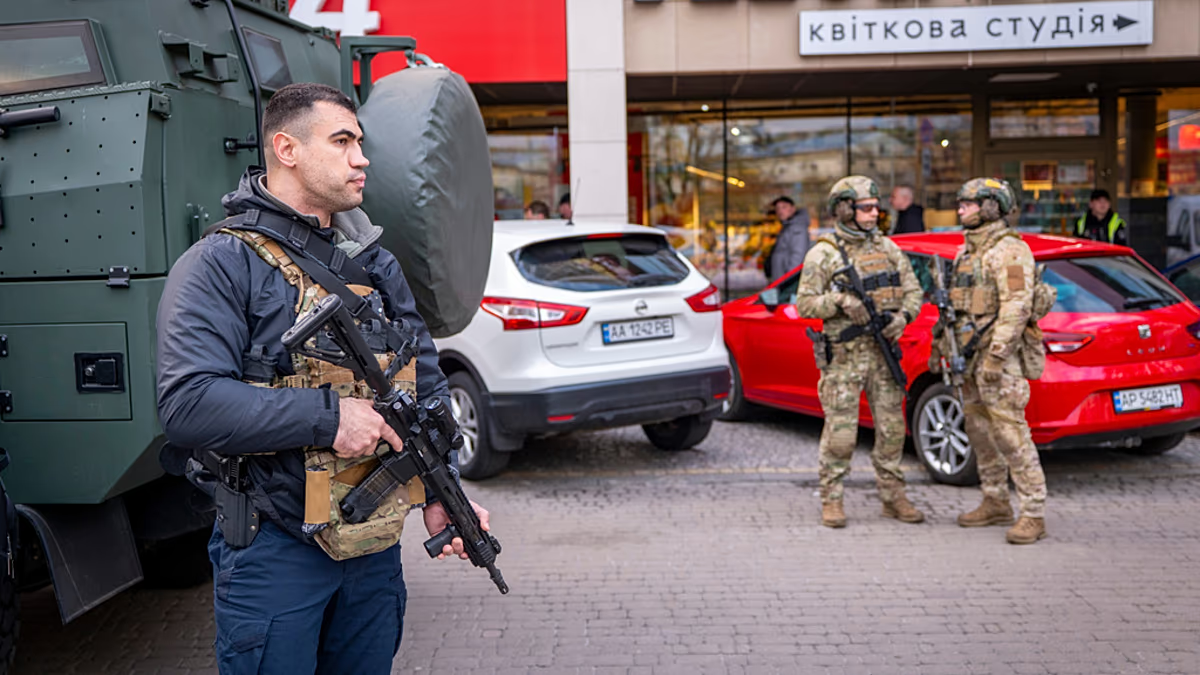
In the wake of a horrific attack that shattered the ordinary Saturday routine of a Kyiv supermarket, Ukraine finds itself grappling with a trauma that extends beyond the immediate tragedy. An armed man opened fire and took hostages in a residential district of the capital, leaving six people dead before being shot dead during an attempt to arrest him. Yet, the national conversation has swiftly pivoted from the lone attacker to a profound crisis of confidence in the guardians of public safety. This stems from a video, broadcast by Ukrainian media, which captured a moment of abject failure: two police officers, a male and a female in uniform and yellow vests, are seen standing next to a person lying on the ground. As shots ring out, they turn and flee the scene, leaving behind civilians, including a child, in mortal danger.
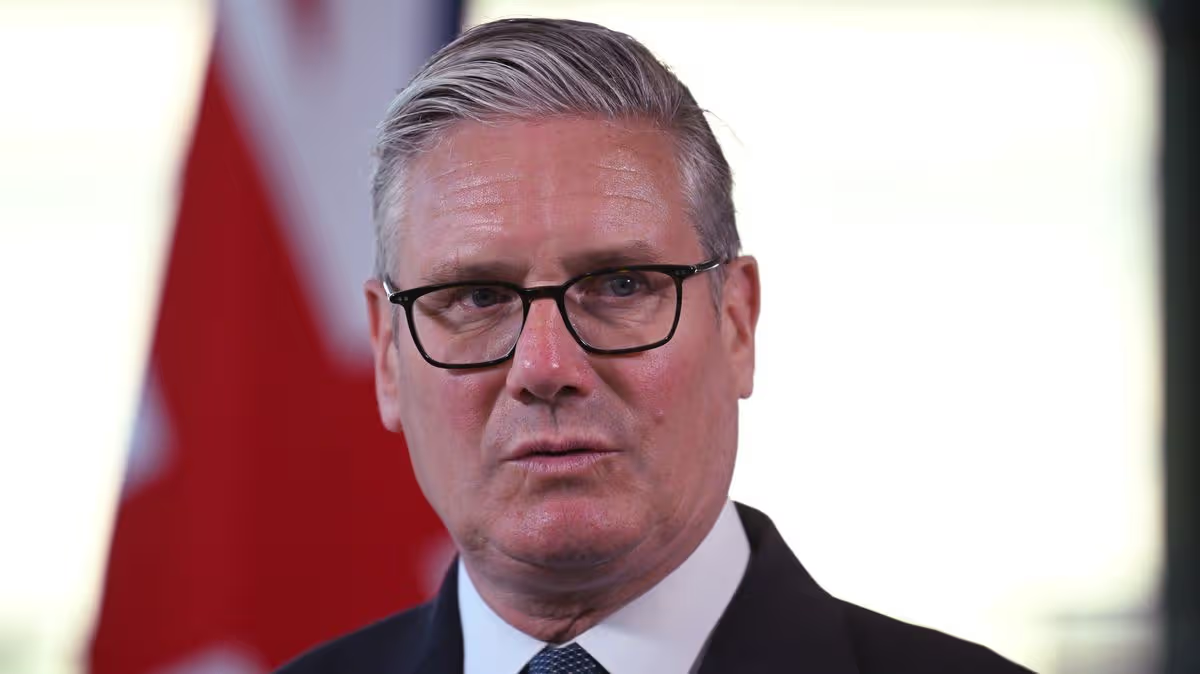
The public and institutional response to this footage was immediate and severe, reflecting a nation that, while enduring a brutal war for its very existence, holds its domestic institutions to the highest standards of bravery and duty. Interior Minister Ihor Klymenko denounced the officers’ actions as “shameful, unworthy behaviour. It is a disgrace for the whole system.” The officers were suspended pending investigation, and the head of Ukraine’s patrol police department, Yevhen Zhukov, resigned in disgust, calling their conduct “shameful.” He detailed a heartbreaking failure of protocol: the patrol officer should have drawn his weapon, fired a warning shot, and engaged the assailant. Instead, he “lost his bearings.” This incident triggered a cascade of official probes, with the Prosecutor General launching a criminal investigation into alleged failures to fulfil professional duties, focusing specifically on the abandonment of the young child and the delayed neutralisation of the attacker.
Minister Klymenko, while vehemently condemning the individual officers, made a careful plea against generalization, stressing that the behaviour of just two should not tar the entire police force. This nuance highlights the delicate balance between accountability and morale in a nation where every institution is under immense strain. The focus then expanded from individual failure to systemic questions. The attacker, now officially classified as a terrorist act, was stated by Klymenko to be “clearly suffering from mental instability.” This raised immediate and urgent questions about firearm controls in a country awash with weapons due to the war. The minister pointedly asked, “It is necessary to examine how he obtained the medical certificates required to renew his gun licence,” signalling a potential flaw in existing vetting processes for legal gun ownership.
This tragedy has forcibly reopened a complex and painful national debate about firearms in a society transformed by invasion. Minister Klymenko pledged “expert discussions” on legislation involving MPs, citizens, journalists, and veterans. His personal stance was revealing: “I believe people should have the right to defend themselves with weapons. Especially after seeing, at the start of the full-scale invasion, civilians being given weapons for the national resistance.” This statement underscores the paradoxical reality of Ukraine: a nation that armed its populace for collective survival now must confront the dangers of that same armed populace in peacetime settings. The minister simultaneously promised no “systematic checks” on registered owners, aiming to avoid a sweeping panic, but the incident has undoubtedly cast a shadow over the post-war landscape of civilian gun ownership.
The human dimensions of this event are layered and profound. It is a story of victims caught in sudden violence; of officers, one seasoned since 2015 and another newer since 2024, who froze under pressure and broke their oath; of commanders who felt compelled to fall on their swords in response; and of a public whose trust has been deeply wounded. In a country where police and civilians alike have shown extraordinary valor on the battlefield, this domestic failure feels particularly galling. It strikes at the heart of the social contract—the belief that those sworn to protect will do so, especially for the most vulnerable, like the child left behind on that supermarket floor.
Ultimately, the Kyiv supermarket shooting has become a catalyst for a necessary, albeit painful, national introspection. Ukraine is examining not only a moment of cowardice but also the broader frameworks of mental health, weapon regulation, and police preparedness in a society still bleeding from a larger conflict. The investigations will determine individual culpability, but the larger question remains: how does a nation rebuild and refine its internal pillars of safety and trust while still fighting for its very survival? The answer will require more than expert discussions; it will demand a reaffirmation of the courage and duty that, until this Saturday, Ukrainians believed was woven into the fabric of their defenders.