

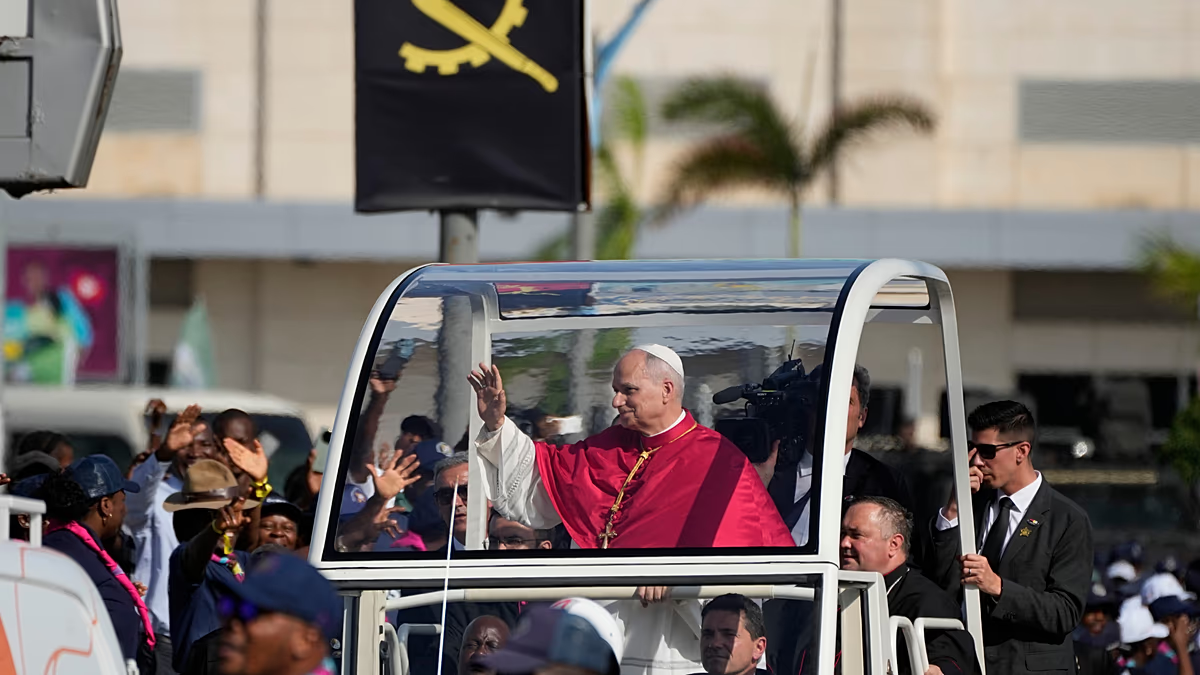
Pope Leo XIV’s journey to Angola represented far more than a standard pastoral visit; it was a profound engagement with a nation defined equally by its immense material wealth and its deep historical wounds. As the third stop on his African tour, the Pope’s agenda moved directly into the heart of Angola’s paradox: a land blessed with abundant oil, diamonds, and critical minerals, yet where over thirty percent of the population survives on less than two euros a day. In his first major address to the country’s governing authorities, including President João Lourenço, the Pontiff framed his entire mission in a “spirit of peace,” but one charged with moral clarity. He acknowledged the painful history of colonial extraction and a devastating 27-year civil war, warning that the world continues to look upon Angola “to give, or, more frequently, to take.” With these words, he set the stage for a central theme of his visit: the urgent need to break a global and local “cycle of vested interests” that reduces both natural resources and human lives to mere commodities.
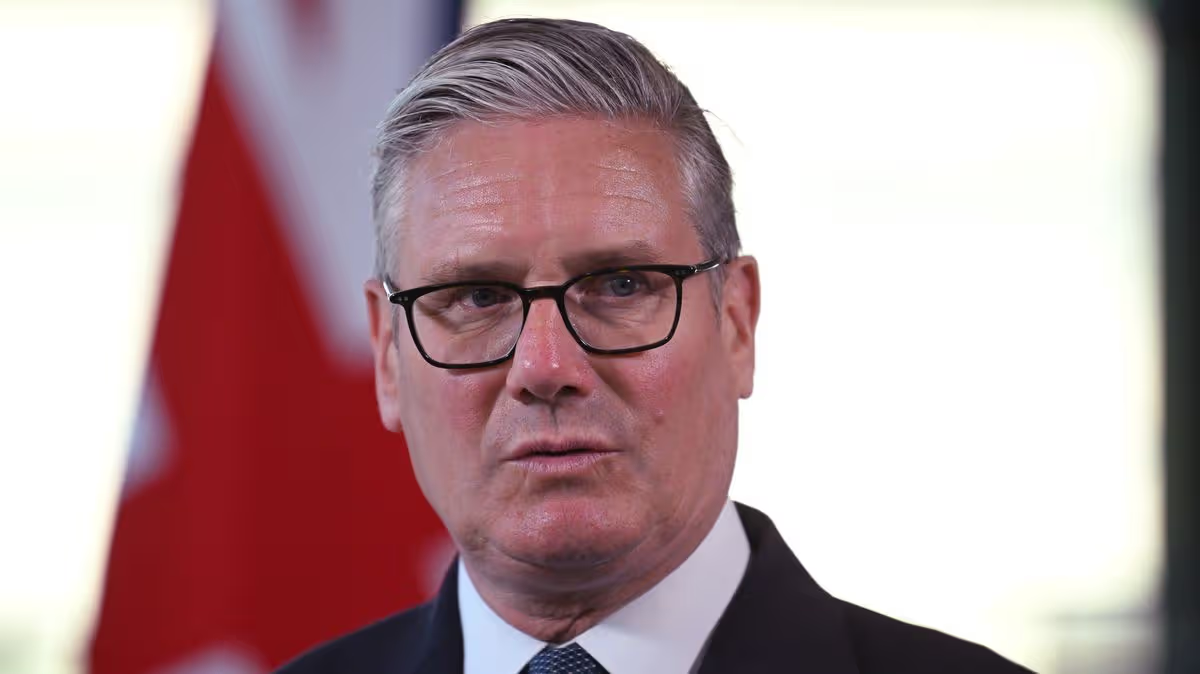
This critique resonated against a backdrop of ongoing political and economic challenges. President Lourenço’s administration, which came to power in 2017, has publicly committed to battling the systemic corruption that allegedly saw over twenty billion euros embezzled under his predecessor, José Eduardo dos Santos. While the government positions this as a crusade for accountability, critics argue that these efforts often serve to consolidate political power by sidelining rivals, rather than enacting transformative, systemic change. Standing beside the Pope, Lourenço acknowledged the “complex and difficult challenge” of improving living standards for all Angolans. He also broadened the scope of the dialogue, calling for an end to the conflict in Iran and urging the Pontiff to use his moral authority for global peace. This moment highlighted the dual nature of the visit: a local reckoning with governance and equity, framed within the wider papal mission of international reconciliation.
The spiritual core of the visit unfolded the following day, beginning with a Sunday Mass in the neighborhood of Kilamba. Here, Pope Leo XIV spoke directly to the people, weaving together appeals for international peace in Ukraine and the Middle East with a pointed message for Angola. In Portuguese, he called for a national healing, envisioning a future “where the old divisions are overcome for good, where hatred and violence disappear, where the wound of corruption is healed by a new culture of justice and sharing.” This linkage was powerful, suggesting that internal corruption is itself a form of violence and instability, as destructive as open warfare. By speaking of healing a “wound,” he personalized the national trauma, framing the path forward not just as a political project, but as a spiritual and moral recovery essential for the soul of the nation.
The most symbolically charged moment of the pilgrimage, however, was the journey to the shrine of Mamã Muxima, or “Mother of the Heart,” a site considered the highlight of the Angolan trip. Muxima is not only the largest Catholic pilgrimage center in southern Africa but also a place steeped in the continent’s most painful history. Located in a region that was the epicenter of the transatlantic slave trade, from which over five million enslaved Africans were forcibly shipped on Portuguese vessels, the shrine embodies the profoundly complex relationship between Roman Catholicism and the history of exploitation in Africa. For the Pope to choose this location for a prayerful recitation of the rosary was a deliberate act of acknowledging this fraught legacy, placing the Church’s ministry in the very heartland of a centuries-old tragedy.
This gesture was deeply personal for Pope Leo XIV himself. Born Robert Francis Prevost in the United States, his own genealogical history includes both Black and white ancestry, with forebears who were enslaved people and, conversely, slave owners. This unique personal narrative allowed his presence at Muxima to transcend a purely symbolic act; it became a lived testament to reconciliation and complex identity. He prayed at a site where the reported apparition of the Virgin Mary in the 1830s had offered a beacon of hope and solace to generations of the oppressed and their descendants. His pilgrimage there served as a silent, powerful homily on the possibility of grace and redemption emerging from the deepest suffering, and the Church’s role in that ongoing process.
In conclusion, Pope Leo XIV’s visit to Angola masterfully wove together threads of political critique, spiritual solace, and historical reckoning. He confronted the raw economic injustices of the present while guiding the national gaze toward a future built on justice and sharing. Simultaneously, by making the pilgrimage to Muxima, he courageously anchored that future in an honest engagement with a past marked by profound sin and suffering. His messages in Luanda and Kilamba called for an end to the cycles of greed and conflict, while his prayers at the ancient shrine acknowledged the source of so many of those cycles. The visit ultimately stood as a holistic appeal: for Angola to harness its true “treasures”—not the minerals beneath its soil, but the dignity, resilience, and faith of its people—to build a new and enduring peace.