


Summary and Humanization of the Kyiv Supermarket Shooting
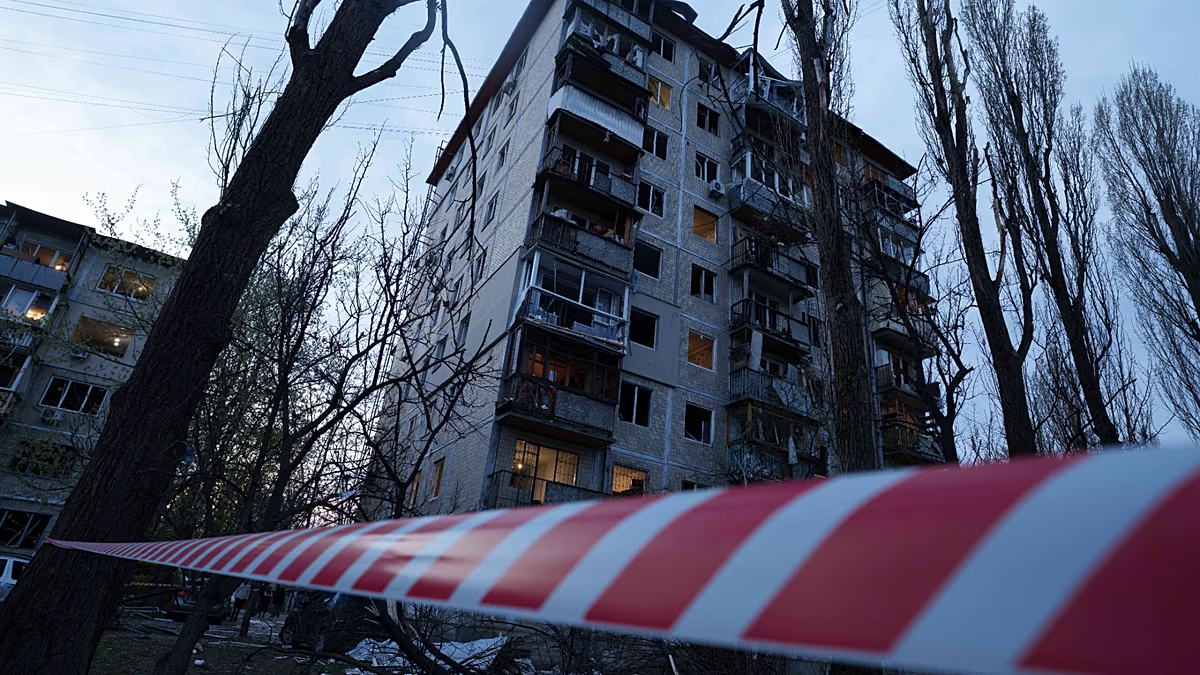
A profound and chilling sense of dread returned to the streets of Kyiv today, not from the distant thunder of artillery, but from the intimate, close-range violence of a lone gunman. In the Holosiivskyi district, an ordinary supermarket, a place of mundane errands and daily life, was violently transformed into a scene of terror and tragedy. At least five people have been killed, their lives abruptly ended in a burst of senseless violence, while a child was wounded and rushed to the hospital. The stark, official language of the initial reports—casualty figures, ongoing operations—cannot mask the raw human devastation of such an event. Each number represents a person with a family, a story, and a future violently erased, leaving behind a widening circle of grief that will touch countless others. The injury to a child, a detail that pierces the heart of any community, underscores the indiscriminate nature of the attack, turning a simple shopping trip into a nightmare.
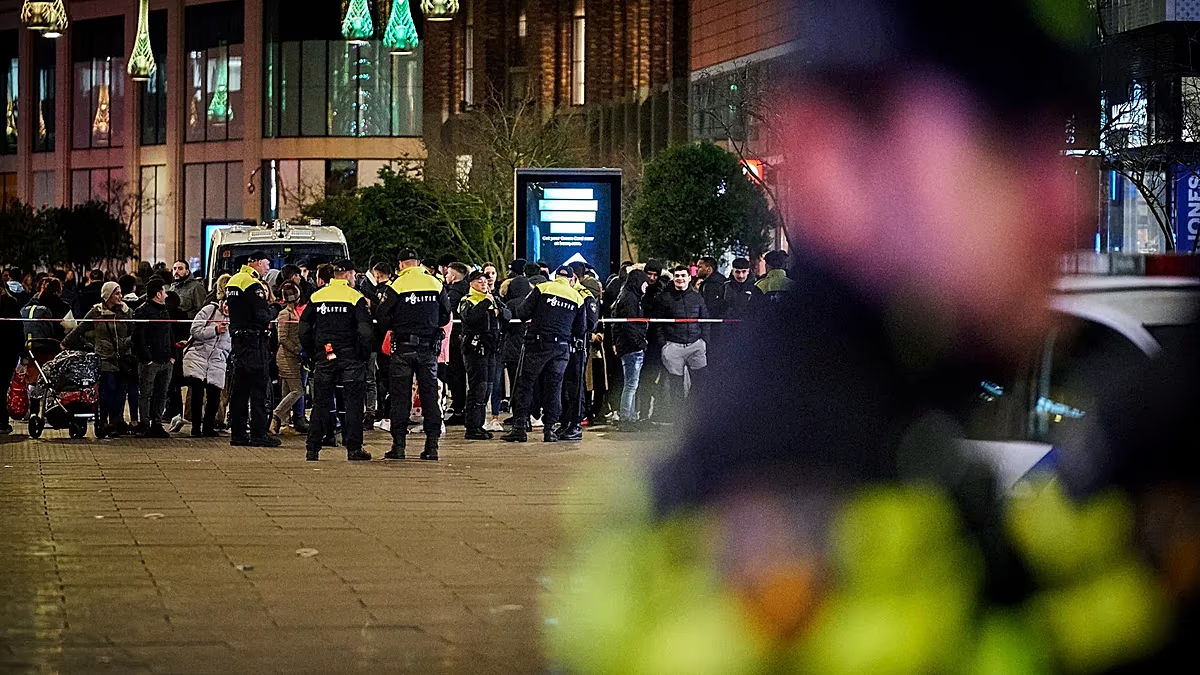
The immediate response was one of urgent, organized chaos, as the mechanisms of a city hardened by war yet again swung into action, this time for a threat from within. Kyiv Mayor Vitali Klitschko confirmed that while the wounded child was being transported for critical care, other injured adults were being treated on site by emergency medics, a testament to the rapid deployment of first responders who daily navigate extreme peril. Yet, this scene was uniquely harrowing; the assailant was not an unseen force launching missiles from afar, but an individual reportedly barricaded inside the supermarket itself, turning the building into a fortified, active crime scene. Mayor Klitschko’s statement that “a special operation to apprehend the man… is ongoing” conveyed a tense, precarious stalemate, with armed police and special forces sealing off the area, their priority the containment of the threat and the preservation of any remaining lives.
This incident forces a painful and complex duality upon a capital already carrying the immense weight of nearly two years of full-scale invasion. The people of Kyiv have demonstrated unimaginable resilience in the face of aerial bombardments, drone attacks, and the constant anxiety of war. They have learned to distinguish between types of explosions, to find shelter in metro stations, and to mourn collectively. Yet, this act of isolated, criminal violence introduces a different kind of fear—one that is unpredictable, personal, and erupts in the very spaces designated as havens from the war. It is a cruel layer of insecurity on top of an existing national trauma, a reminder that human danger can manifest in forms beyond the geopolitical. The supermarket, a symbol of normalcy and sustenance, becomes a locus of a different kind of battle, one fought not for territory, but for immediate survival against a single, armed individual.
As the special operation continues, the questions begin to form, heavy with sorrow and a search for meaning where there may be none. Who is this man, and what could possibly motivate such an act of carnage in a city already suffering so profoundly? While authorities will undoubtedly pursue every investigative angle, from personal grievance to broader malign influence, the community is left in the agonizing interim, grappling with the sheer randomness of the violence. The victims were not soldiers on a front line; they were civilians engaged in the simple, universal act of procuring food for their families. This attack strikes at the foundational sense of communal safety, the unspoken trust that allows a society to function in its most basic ways. In a nation fighting for its very existence, such an assault on internal peace feels like a particularly vicious betrayal.
The aftermath will be a long and painful journey through grief, investigation, and the arduous process of healing. For the families of those killed and for the recovery of the injured child, life has been irrevocably altered in a few moments of terror. The broader community of Kyiv, and indeed all of Ukraine, which has shown such profound solidarity in the face of external aggression, must now find a way to process this internal wound. The incident will likely prompt urgent discussions about public security, mental health resources strained by war, and the societal fractures that can be exacerbated by prolonged conflict and stress. Healing will require not just justice from the legal system, but also the continued compassion and support that Ukrainians have so remarkably extended to one another throughout this war.
In the end, this tragedy in Holosiivskyi is a stark, heartbreaking reminder that even amidst a struggle for national survival, the human capacity for violence in its most intimate and devastating forms persists. It casts a shadow over a city that has become a global symbol of courage, reminding us that the burdens of war are not limited to the battlefield. They seep into the very fabric of daily life, sometimes erupting in ways that defy the broader narrative of unity and defense. As Kyiv mourns these new losses, its people are confronted with a multifaceted grief—for the victims of this specific horror, and for the renewed assault on their hard-won moments of normalcy. Their resilience, already tested beyond measure, faces yet another profound challenge.