


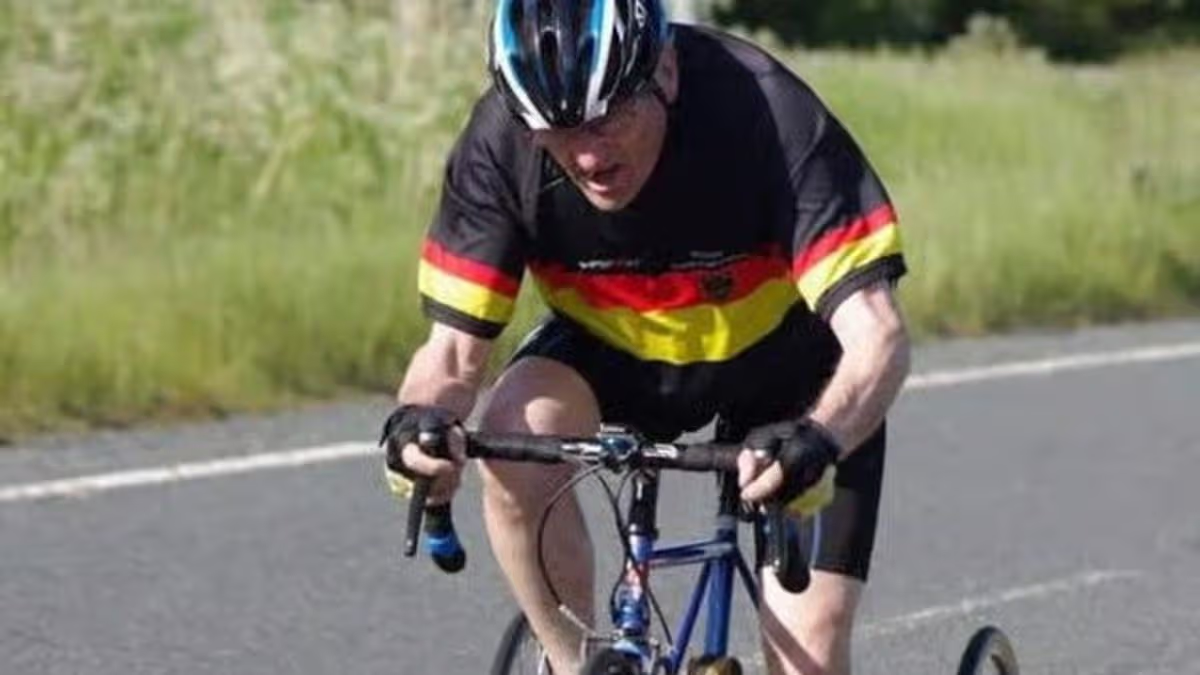
On a quiet Saturday morning in September 2024, the peaceful routine of the Morecambe coast was shattered by a sequence of events that would end one life and irrevocably alter others. James Lawley, an 81-year-old lifelong cycling enthusiast, set out on his distinctive racing blue tricycle. A familiar and beloved figure in local cycling clubs, he was on his way to marshal at a race in Hampson Green, a role that spoke to his enduring passion and commitment to the sport. His morning ride along Oxcliffe Road was meant to be a prelude to a day spent supporting fellow cyclists. Instead, it became the site of an unimaginable tragedy, born from a profound and reckless disregard for the responsibility of driving.
The danger approached in the form of a black Seat Altea, driven by 28-year-old Matthew Isherwood. In the crucial minutes leading to 7:45 am, as Isherwood navigated the road, his attention was catastrophically diverted from the task at hand. A digital forensic investigation would later paint a damning picture of those final moments. In the mere four minutes of his journey, Isherwood was engrossed in his smartphone: he took and sent a selfie on Snapchat, sent messages to multiple contacts, browsed photos and videos on Instagram, and sent a final Instagram message just seconds before his vehicle struck James Lawley. This was not a momentary lapse, but a sustained, conscious choice to prioritize social media engagement over the safety of everyone on the road. The impact sent the elderly cyclist tumbling onto the tarmac, helpless and critically injured.
Tragedy was compounded by further devastation in the immediate aftermath. As James Lawlay lay motionless on the road, other alert drivers managed to navigate around him. However, Kevin Dawson, 64, driving a silver Mercedes C200, failed to notice the scene ahead. Due to what the court would later deem careless inattention, Dawson’s vehicle ran over Mr. Lawley. In a decision that further compounded his culpability, Dawson did not stop. He would later claim to officers that he believed he had only hit rubble in the road, a statement that underscored the dangerously low standard of his driving awareness. Meanwhile, in a chilling postscript to the violence he had caused, Isherwood sent a new Snapchat message just three minutes after the initial collision, stating, “I’ve just hit someone.”
Emergency services rushed to the scene, but despite their best efforts, James Lawley was pronounced dead. The investigation that followed was comprehensive, involving forensic collision reconstruction and detailed digital analysis. The evidence against Isherwood was unequivocal, revealing a driver who had systematically endangered lives for the sake of social media notifications. Dawson’s actions, while distinct in nature, played a direct and significant role in the fatal outcome. His failure to perceive a human being lying in the road, and his subsequent failure to stop, sealed a fate that might otherwise have been different.
At Preston Crown Court, the consequences for these actions were delivered. Matthew Isherwood, having pleaded guilty to causing death by dangerous driving, was sentenced to five years and two months in prison. He was also disqualified from driving for seven years and seven months and will be required to pass an extended retest. Kevin Dawson, who pleaded guilty to the lesser charge of causing death by careless driving, received an eight-month prison sentence, suspended for 20 months, along with an electronic curfew and an 18-month driving ban, also requiring an extended retest. While the sentences reflect the stark difference in the severity of their negligence, both men were held accountable for their roles in the tragedy.
Detective Sergeant Matt Davidson, from the Serious Collision Investigation Unit, expressed a sentiment that resonates far beyond this single case. He noted the grim familiarity of investigating a death caused by smartphone use at the wheel, emphasizing that the dangers are clear but too often ignored. James Lawley’s story is not merely one of a traffic accident; it is a devastating parable for our times. It underscores how swiftly ordinary lives can be destroyed by the split-second decision to glance at a screen, or by a pervasive lack of attention. His death is a profound loss to his family, his friends, and the cycling community he loved. It stands as a somber, urgent reminder that a vehicle is a potentially lethal instrument, and operating one demands our full and unwavering respect for the lives sharing the road.