




Paragraph 1: A Timely Warning Amidst Shifting Energy Costs
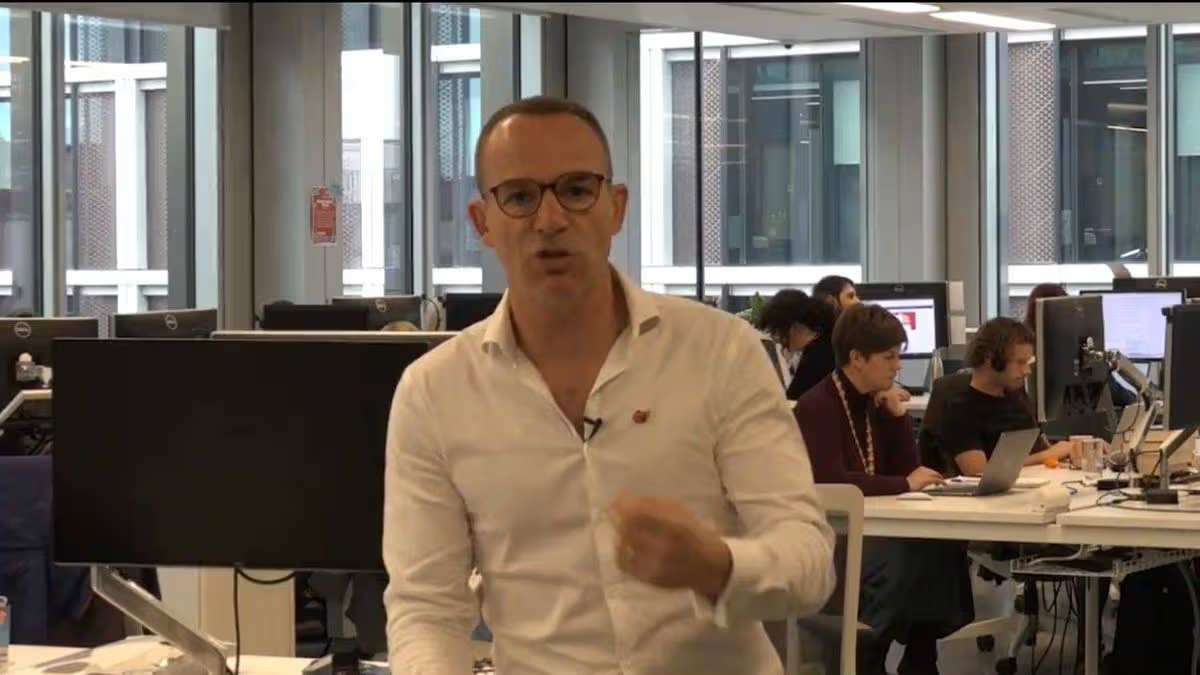
The team at MoneySavingExpert (MSE), founded by consumer champion Martin Lewis, has issued a crucial alert to UK households regarding the volatile energy market. While a recent reduction in the Energy Price Cap provided a measure of relief in April, analysts are forecasting a significant rise from July onwards. This anticipated increase is attributed to ongoing geopolitical tensions, persistently high wholesale energy costs, and predicted rises in network charges over the coming years. This forecast transforms the current moment from one of brief respite into a critical window for financial planning. MSE’s guidance serves as a proactive nudge, encouraging families to assess their energy use and explore long-term strategies to insulate themselves from the coming price hikes, framing energy efficiency not as a luxury but as an essential component of modern household budgeting.
Paragraph 2: Harnessing the Sun: A Practical Path to Savings
In response to these challenging forecasts, MSE highlights a powerful tool already available to over 1.6 million UK homes: solar panels. The advice is straightforward for those who already have them: maximise their use. Every unit of electricity generated from your own roof is a unit not purchased at the rising grid rate. Importantly, MSE clarifies a common misconception—solar panels do not require constant, blazing sunshine to function; they can still generate meaningful power on cloudy, typical British days. For these households, the system is already in place, turning their property into a personal, mini power station. The call to action is to consciously leverage this asset, perhaps by timing high-energy activities like running appliances or charging an electric vehicle for daylight hours to directly consume the free, clean energy being produced.
Paragraph 3: Understanding the “How” and “Why” of Solar Power
For the uninitiated, the technology behind solar panels is both elegant and accessible. Photovoltaic (PV) panels contain materials that release electrons when struck by sunlight. This movement of particles creates a direct electrical current, which is then converted into the alternating current that powers our homes. Any surplus electricity generated beyond the home’s immediate needs can be fed back into the national grid. This process demystifies solar power, presenting it not as complex magic but as a reliable and smart conversion of abundant sunlight into tangible household utility. It’s a daily interaction with physics that results in lower bills and a reduced environmental footprint.
Paragraph 4: The Multifaceted Benefits Beyond the Bill
The advantages of solar panels extend well beyond simply trimming the energy statement. Firstly, through the Smart Export Guarantee (SEG), energy suppliers pay homeowners for the surplus electricity they export, creating a potential small income stream. Environmentally, each kilowatt-hour generated from the sun represents a direct reduction in fossil fuel consumption and associated carbon emissions, allowing households to contribute actively to national climate goals. Practically, the systems are remarkably low-maintenance, requiring little more than occasional cleaning. There is also evidence that solar installations can enhance a property’s market appeal and value, as prospective buyers increasingly prize energy efficiency and lower running costs, though MSE wisely notes this should not be the primary financial justification for installation.
Paragraph 5: A Cautious Approach: Solar Isn’t for Everyone
Crucially, MSE adopts a balanced and responsible tone, explicitly advising that solar panels are not a universally wise investment. The key, they stress, is diligent personal arithmetic. Factors like your home’s roof orientation, shading, your household’s daytime energy consumption, and the upfront installation cost must all be carefully weighed. The goal is to ensure the long-term savings outweigh the initial expenditure. This honest appraisal prevents the message from becoming an unthinking sales pitch, instead framing it as a considered financial decision. It empowers individuals to research based on their unique circumstances, understanding that for some, alternative efficiency measures like improved insulation or smarter energy-use habits might offer a better return.
Paragraph 6: Navigating the Market with Eyes Open
Finally, MSE couples its optimistic guidance with a vital warning about consumer vigilance. The growing interest in renewable energy has, unfortunately, attracted fraudulent operators. Scams range from fake “too-good-to-be-true” installation offers to deceptive emails pushing unnecessary “health checks” or servicing for existing panels. The team urges anyone exploring solar options to conduct thorough research, use reputable, certified installers, and ignore unsolicited pressure tactics. This concluding note encapsulates the MSE philosophy: empowering people with knowledge to seize genuine opportunities while equipping them with the savvy to avoid pitfalls. By providing clear, cautious, and actionable advice, they help navigate a path toward greater energy independence and financial resilience in an uncertain market.