




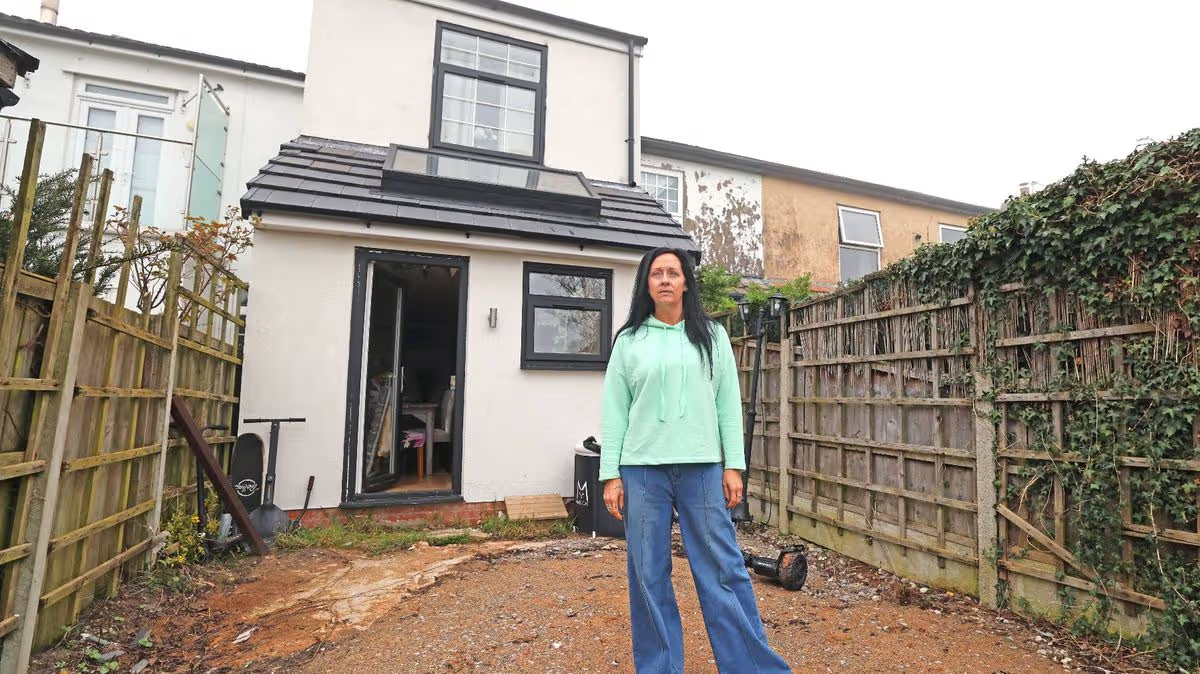
For nearly twenty years, Suzie Cavadino’s home on Sunnyside in Aughton was the heart of her family life. A mother of four children, now aged between 12 and 19, she had moved from Bootle to create a stable, loving environment. Like many families, as her children grew, their space needs evolved. The old conservatory, a common feature in many UK homes, was no longer fit for purpose. It was underutilized, often cold, and did not provide the practical living space her bustling household required. Dreaming of a permanent solution—a proper kitchen, essential utility space for the boiler, and crucially, more bedrooms—Suzie embarked on what she believed was a straightforward project to replace the conservatory with a two-storey extension. This decision, made with the hope of improving her family’s quality of life, would instead become the source of an unimaginable and protracted nightmare.
The project, costing approximately £180,000, was a significant financial undertaking for the family. Work began over two years ago, following assurances from the builder she had hired. Suzie has stated that this professional explicitly told her that planning permission would not be required to swap the existing conservatory for the new structure. Trusting in this expertise, she proceeded. The build was not without its difficulties, suffering delays and builder problems, but was finally completed in December 2022. The result was a functional space that addressed the family’s core needs: a new ground-floor kitchen housing the boiler, and an upstairs bedroom that had been divided into two rooms for her children. For a brief period, the extension served its purpose, allowing her growing teenagers their own space and bringing a sense of order to the household. However, this semblance of normalcy was shattered when West Lancashire Council made contact.
The council informed Suzie that the extension required planning permission after all, and subsequently issued a planning enforcement notice. The central objection was that the two-storey design was deemed “out of keeping with the character of the surrounding area.” The notice initially demanded the complete demolition of the entire extension by April 24, 2026. For Suzie, this was not just a bureaucratic setback; it was a direct threat to her family’s home and stability. The financial quote to demolish the structure was around £50,000—a devastating sum on top of the original build cost—leading her to launch a GoFundMe page in a desperate attempt to raise funds. She fought the decision through appeals and meetings, but the Planning Inspectorate, an independent body, ultimately upheld the council’s enforcement notice.
Recently, a small concession was granted. Following the passed deadline, the council clarified that the ground-floor kitchen area, which contains the essential boiler, could remain. However, the first floor—the bedrooms for two of her children—must still be demolished. She has been given a further six months to arrange this herself before the council steps in to carry out the work, likely adding the cost to her council tax bill. While relieved to keep the kitchen, Suzie’s distress is profound. The loss of the upstairs rooms means her family unit, as it currently exists, cannot be sustained under one roof. “They finally responded and said we can keep the kitchen but upstairs has to go,” she said. “It’s good that we’re keeping the kitchen but we’re still in a position where our family is going to be split up forever.” The emotional toll is heavy; she speaks of putting on a brave face for her children while privately feeling her “head has fallen off,” bearing the burden alone.
The human impact of this situation extends far beyond bricks and mortar. Suzie confirms she is ineligible for any form of council housing assistance, temporary or permanent, because she is a homeowner. This leaves the family in a terrifying limbo: unable to accommodate everyone in the modified house, yet with no obvious alternative. Her GoFundMe appeal underscores this desperation, explaining how trust in a builder’s faulty advice has put her “entire family at risk of losing everything.” From the council’s perspective, their hands are tied by the legally binding decision of the independent Planning Inspectorate. In correspondence, Paul Charlson, the council’s assistant director of planning, stated they have provided “all the advice, flexibility and support that is available within the planning process.” A council spokesperson reiterated the importance of seeking pre-application advice, urging residents to contact planning departments before any work begins.
This case stands as a heartbreaking cautionary tale about the critical importance of verifying planning regulations independently. It highlights the severe consequences that can arise from relying on a contractor’s word alone, no matter how assured they seem. For Suzie Cavadino and her children, the battle has shifted from saving the entire extension to managing the aftermath of a partial demolition. The family home, once a source of security, is now a site of anxiety and loss. Her story is a stark reminder of the complex intersection between property law, personal trust, and family well-being, where a single piece of misadvice can ripple outwards, threatening the very foundation of a home. As she puts it, summarizing her grim reality, “We either sink or swim.”