

Paragraph 1: A Proactive Measure Amidst Global Tensions
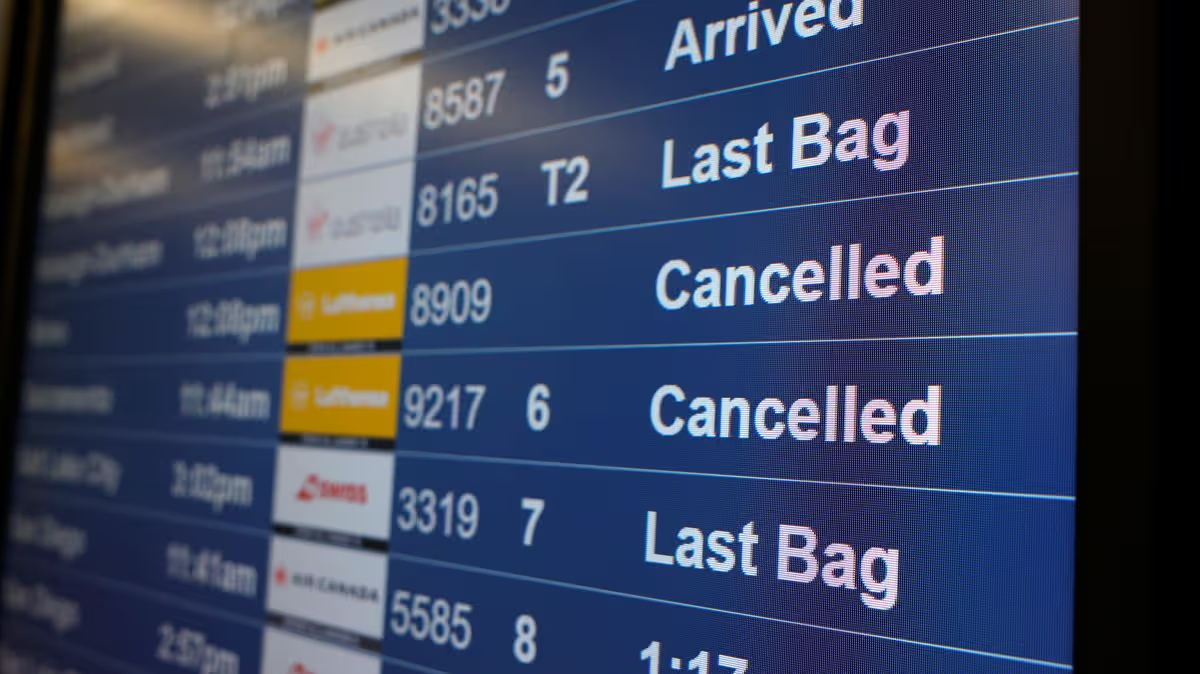
As the summer of 2026 approaches, the UK government has taken a significant, pre-emptive step to safeguard the travel plans of millions of Britons. In response to a looming jet fuel shortage linked to the ongoing geopolitical crisis in the Strait of Hormuz, authorities have introduced a temporary rule change for airlines. This measure allows carriers to proactively consolidate passengers from multiple, under-booked flights onto fewer aircraft. The core aim is to avoid the far greater chaos of last-minute cancellations due to actual fuel scarcity by reducing unnecessary flights and conserving fuel. While the government and industry frame this as responsible contingency planning, it serves as a stark reminder of how distant conflicts can directly impact everyday life, casting a shadow of uncertainty over the much-anticipated summer holiday season.
Paragraph 2: Understanding Passenger Rights and Protections
Recognising the potential for disruption, the Department for Transport has moved swiftly to remind travellers of their robust legal rights. Passengers affected by any cancellation are entitled to a choice between a full refund or being re-routed to their destination on an alternative flight. Furthermore, in the event of significant delays—at least two hours for short-haul, three for medium, and four for long-haul flights—airlines are legally obligated to provide “care and assistance.” This includes the provision of food and drink vouchers, refunds for essential communication, and, crucially, overnight accommodation with transport if necessary. These protections are designed to act as a safety net, ensuring that travellers are not left stranded or out of pocket due to circumstances beyond their control.
Paragraph 3: Industry Perspective: Planning for Stability
The airline industry’s response has been one of cautious reassurance. Tim Alderslade of Airlines UK emphasised that carriers are currently operating normally and not experiencing immediate fuel supply issues. He welcomed the government’s flexible approach, describing the slot alleviation rule as a tool that enables airlines to “adjust schedules responsibly” and “avoid unnecessary flying.” The industry’s stance is that this forward-looking flexibility is precisely what will allow them to protect overall network connectivity and reliably deliver the summer holidays that passengers have booked. They argue that by planning for potential turbulence now, they can ensure greater stability and efficiency when passenger numbers are at their peak.
Paragraph 4: Analyst Insight: A Necessary Pragmatism
Aviation analyst John Strickland provided clear context for the government’s decision, calling it a “very good idea.” He explained that with a substantial portion of the world’s jet fuel traditionally routed through the volatile Strait of Hormuz, airlines are facing a complex supply chain challenge. The proactive measure allows them to identify and, if absolutely necessary, cancel the least viable flights well in advance, rather than being forced into chaotic, last-minute groundings. Strickland acknowledged the delicate balance airlines must strike, noting they are highly motivated to operate their full, profitable summer schedules but must weigh this against the risk of passengers missing connections due to a deeper crisis later.
Paragraph 5: Consumer Advocacy and Airline Reassurances
Not all reactions have been supportive. The consumer group Which? has voiced criticism, cautioning that rules should not be “bent in favour of airlines” at the potential expense of passenger convenience and certainty. This highlights the tension between operational pragmatism and consumer protection. Meanwhile, individual airlines like Wizz Air have issued statements aiming to reassure the public. A Wizz Air spokesperson confirmed their operations remain “fully stable and unaffected,” with plans to operate their complete summer schedule. This underscores the industry’s desire to project business-as-usual confidence while utilising the new rules as a behind-the-scenes contingency tool.
Paragraph 6: Navigating the Summer of 2026
Ultimately, the situation presents a nuanced picture for the British traveller. On one hand, there is a real, external threat of disruption stemming from international conflict, met with a pragmatic, if inconvenient, policy response. On the other, there are firm passenger rights enshrined in law and airlines publicly committed to a smooth summer. The path forward requires vigilance from all parties: travellers should stay informed, know their rights, and consider appropriate travel insurance; airlines must exercise their new flexibility transparently and responsibly; and the government must ensure the temporary measure truly serves the public interest. The summer of 2026 will be a test of how resilient and passenger-focused the aviation system can be when navigating the unforeseen challenges of a connected world.